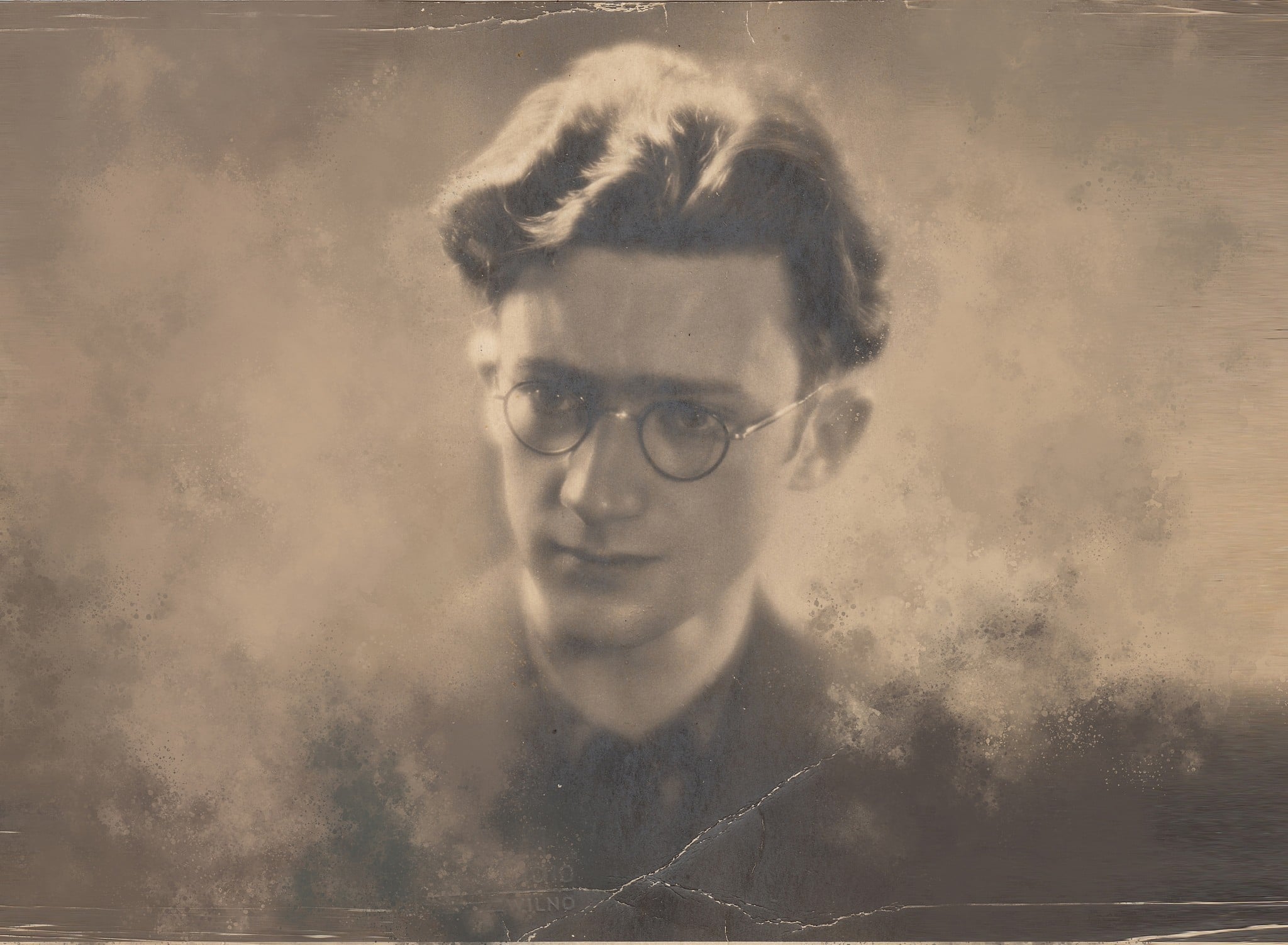
Abraham Sutzkever
 Israel
Also known as: Avrom Sutskever, Avrohom Sutzkever
Birthday
July 15, 1913
Birth Sign
Cancer
Birthplace
Smarhon, Russian Empire (now Belarus)
Age
Died at 96
About
Abraham Sutzkever was a towering figure in Yiddish poetry, widely hailed as the greatest poet of the Holocaust. Born in 1913 in Smarhon, he survived the Vilna Ghetto, rescued Jewish cultural treasures, and testified at the Nuremberg Trials. His poetry, written in Yiddish, captured the horrors and resilience of his people, earning him the Israel Prize and international acclaim. His work remains a cornerstone of Yiddish literature, studied and admired worldwide.
After emigrating to Israel in 1947, Sutzkever founded and edited the journal Di goldene keyt, becoming a cornerstone of Yiddish culture. His works, including Siberia and The Fiddle Rose, have been translated into many languages, ensuring his voice endures. He died in Tel Aviv in 2010, leaving a legacy of over 1,000 poems and a testament to the power of art in the face of atrocity. His influence continues through new translations and scholarly attention, cementing his place as a central figure in modern Jewish letters.
Early Life & Background
Abraham Sutzkever was born Avrom Sutzkever on July 15, 1913, in Smarhon, a small town in the Russian Empire (now Belarus). His family fled to Siberia during World War I, and his childhood in the Siberian wilderness left a deep imprint on his imagination, later surfacing in his poetry. After the war, the family returned to Vilna, the city known as the Jerusalem of Lithuania, where Yiddish culture flourished.
In Vilna, Sutzkever came of age among a vibrant circle of young Yiddish writers and poets. He published his first poems in the early 1930s, showing a lyrical brilliance that set him apart. His early work, influenced by both the landscape of Siberia and the intellectual ferment of Vilna, earned him recognition in Yiddish literary circles. By the late 1930s, he had established himself as a promising new voice, though his world was about to be shattered by the Nazi occupation. His formative years in Vilna, marked by cultural immersion and personal loss, shaped his poetic vision and his commitment to Yiddish as a living language.
Career Growth
Sutzkever's breakthrough came under the most harrowing circumstances. Confined to the Vilna Ghetto in 1941, he led the Paper Brigade, a group that risked their lives to smuggle manuscripts and artworks out of the ghetto, saving them from Nazi destruction. He also wrote poetry in the ghetto, using verse to survive. After escaping in 1944, he joined partisan fighters and continued to write.
After the war, Sutzkever testified at the Nuremberg Trials, providing crucial eyewitness testimony. In 1947, he emigrated to Israel, settling in Tel Aviv. There, he founded and edited the literary journal Di goldene keyt in 1949, which became a vital platform for Yiddish literature. His major works, including Siberia and The Fiddle Rose, cemented his reputation. In 1985, he received the Israel Prize, and his poetry has been translated into dozens of languages, reaching readers worldwide. He also won the Itzik Manger Prize for Yiddish literature, and in 2026, Netanya named a street after him.
Career Timeline
Public Image & Style
Sutzkever is revered as a heroic figure in Yiddish literature and Holocaust studies. His public persona is that of a literary giant and a rescuer of cultural treasures, a man whose poetry bore witness to the darkest chapter of Jewish history. His style is marked by vivid imagery and unflinching honesty, and he is celebrated for his dedication to the Yiddish language. While he had no official fandom, he is honored in literary and academic circles, with streets named after him and documentaries made about his life. The 2023 documentary Ver Vet Blaybn? and the 2022 English translation of his memoir have expanded his reach to new audiences, reinforcing his image as a timeless voice of witness and resilience. His work is also preserved in recordings, such as those available through Smithsonian Folkways, ensuring his voice is heard by future generations.
Fame & Fandom (iFAMOUS Rankings)
Abraham Sutzkever commands a legacy defined not by the roar of crowds or the mechanics of celebrity culture, but by the quiet reverence of scholars, students of Yiddish literature, and survivors who view him as a moral authority. His audience consists of those dedicated to preserving Jewish history rather than followers seeking entertainment, meaning no formal fandom name exists in the records. There are no organized fan campaigns, birthday billboards, or chart pushes associated with his name; instead, his influence manifests through academic institutions, literary societies, and cultural organizations that maintain his work. The closest equivalents to fan rituals are pilgrimages to streets named in his honor across Israel, where readers gather to reflect on his role as a leader of the Paper Brigade and a savior of Jewish culture. While he lived as a private citizen until his death at age 96, his profound impact on over 1,000 poems chronicle life in the Vilna Ghetto and Siberian exile, ensuring his voice remains accessible to a global audience. iFANN has evaluated this figure within its Global Fame Engine, yet Abraham Sutzkever is currently unranked according to August 2026 data. He does not hold a placement in the published rankings for the Global Top 1,000 or any Top-100 scope list. This absence of a specific rank reflects his unique position outside modern commercial fame metrics, standing instead as a historical giant whose legacy is measured in cultural preservation rather than viral moments or public spectacle.
Interesting Facts and Legends
Abraham Sutzkever's fierce devotion to Yiddish once led him to refuse playing his Stradivarius violin in Hebrew, insisting on the language of the Jewish masses even for Israeli audiences. He used poetry as a vital survival tool in the Vilna Ghetto, composing verses to regulate his breathing and steps during forced marches. His collection The Fiddle Rose reflects this deep connection to music. A legendary story from his time in the ghetto involves his leadership of the Paper Brigade, where he and fellow intellectuals smuggled thousands of books and artworks out to hide them in forests, literally saving the soul of Jewish civilization. Another defining moment was his testimony at the Nuremberg Trials, where he provided a firsthand account of atrocities against the Jewish people. In 1959, he delivered a major lecture in Israel that cemented his post-war reputation. Additionally, his poetry has been recorded and shared on platforms like the Poetry Foundation, ensuring his voice remains accessible to a global audience. A widely retold legend describes how, in 1943, Sutzkever faced an execution squad in the ghetto and improvised a poem on the spot; the guards were so captivated by its rhythm and intensity that they postponed his death, allowing him to survive that immediate threat.
Notable Quotes
“Poetry saved my life.”
“I write in Yiddish because it is the language of my soul.”
“The poet must be the voice of the voiceless.”
Family & Personal Life
Sutzkever married Freydke, and the couple had a daughter named Rina, born in 1946. They emigrated together to Israel in 1947, building a new life in Tel Aviv. Freydke was a constant support throughout his life, and their marriage remained strong until his death. His family was deeply affected by the Holocaust, and his poetry often reflects the loss of his community. He was survived by his daughter and grandchildren. The family's resilience and unity were central to his personal story, providing him with stability and inspiration amid the upheavals of war and migration.
Notable Connections
Sutzkever was closely associated with his wife Freydke, who supported him through the war and emigration. His daughter Rina was a source of pride. In his later years, he worked with scholars like Justin Cammy of Smith College and filmmaker Christa P. Whitney, who helped bring his story to a wider audience. His work was championed by institutions like the Poetry Foundation and Smithsonian Folkways.
Relationships & Dating History
Sutzkever was married to Freydke, and their marriage was a lifelong partnership. They met before the war and married in the early 1940s, surviving the Holocaust together. They had a daughter, Rina, in 1946. The family emigrated to Israel in 1947, settling in Tel Aviv. Freydke was his constant companion and support, and they remained married until his death in 2010. There are no records of any other romantic relationships. Their bond, forged in the crucible of war, was a source of strength for Sutzkever, and Freydke's presence in his life is often reflected in the stability and tenderness of his later poetry.
- MarriedFreydke Sutzkever1942 - 2010Married before the war, survived the Holocaust together, had a daughter Rina.
Death & Aftermath
Died
January 20, 2010 (aged 96)
Death Place
Tel Aviv, Israel
Cause of Death
Unknown
The literary world marked the passing of Abraham Sutzkever with immediate and profound tributes, recognizing him as the last great master of the Yiddish language. The Guardian published a major obituary on March 2, 2010, while Justin Cammy, a professor at Smith College, issued statements in April 2010 describing Sutzkever as the most important poet of the Holocaust and perhaps the most significant poet in any language regarding that era. These accounts highlighted his unique role in smuggling arms into the ghetto and saving rare Jewish manuscripts for the YIVO collection. Abraham Sutzkever died on Wednesday morning, January 20, 2010, in Tel Aviv, Israel, at the age of 96. Reports characterize his passing as a peaceful end to a long life following his history of survival through the Vilna Ghetto and partisan resistance.
There were no reported disputes regarding the circumstances of his death, and he is described as having passed away peacefully without indication of foul play. Funeral or memorial services were held shortly after his death in January 2010 in Tel Aviv, though specific details regarding attendees or performances remain unconfirmed in public records. His legacy has been sustained through posthumous recognition and releases, including the renaming of a street in Netanya, Israel, in his honor. A documentary film titled Ver Vet Blaybn? continues to generate engagement with screenings occurring as late as 2023 in locations such as Palo Alto. Additionally, his memoirs, including From the Vilna Ghetto to Nuremberg: Memoir and Testimony, have been translated and re-published, ensuring his testimony remains accessible to new generations.
Net Worth (Estate Value)
N/A
iFANN Editorial Team estimate
As a poet and editor, Abraham Sutzkever's income during his lifetime came from royalties on his published works and translations. His estate has continued to earn from new editions and posthumous publications, such as the 2022 English translation of his memoir, From the Vilna Ghetto to Nuremberg. The documentary Ver Vet Blaybn? also generates revenue for the estate. iFANN's editorial research traces these earnings to the enduring demand for his literary legacy rather than commercial entertainment cycles. However, specific net worth figures are not publicly documented, and his estate's value remains modest compared to commercial entertainers. The most significant financial impact has been the preservation and promotion of his literary works, which have grown in the years since his death. Posthumous interest has led to increased sales of his books and recordings, though exact amounts are not disclosed. His estate likely benefits from ongoing royalties, but without public records, any precise valuation is speculative.
Awards Won (2)
Sutzkever received the Israel Prize in 1985, among the highest honors in Israel, for his lifetime contribution to Yiddish literature. He also won the Itzik Manger Prize for Yiddish literature. His work has been recognized internationally, and his legacy was honored with a street naming in Netanya in 2026.
1985 · Yiddish literature
Lifetime achievement
1969 · Yiddish literature
Poetry
Known For
Vilna Ghetto poetry
1941 · Poet
Di goldene keyt
1949 · Founder and editor
Siberia
1952 · Poetry collection
The Fiddle Rose
1965 · Poetry collection
Keywords
Sources
Quick Facts
- Profession
- poet, writer
- Born
- +1913-07-15
- Birthplace
- Smarhon
- Died
- +2010-01-20
- Death Place
- Tel Aviv
- Gender
- Male
- Birth Sign
- Cancer
Personal Details
- Full Name
- Avrom Sutzkever
- Spouse
- Freydke Sutzkever
- Children
- Rina Sutzkever
Frequently Asked Questions
What is Abraham Sutzkever known for?
Did Abraham Sutzkever survive the Holocaust?
What awards did Abraham Sutzkever win?
Was Abraham Sutzkever married?
Where did Abraham Sutzkever live after the war?
Join the community
fans discussing