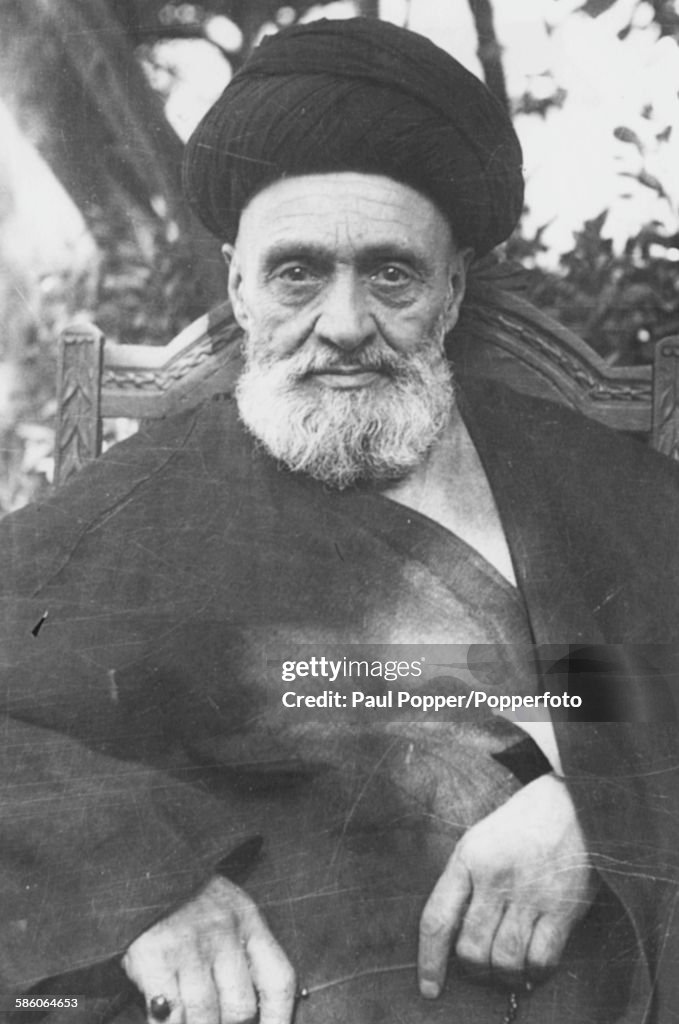
Abol-Ghasem Kashani
 Iran
Iranpolitician•theologian•Islamic jurist
Also known as: Ayatollah Kashani, Abu al-Qasim Kashani
Birthday
November 19, 1882
Birth Sign
Scorpio
Birthplace
Tehran, Iran
Age
Died at 79
About
Abol-Ghasem Kashani was an Iranian politician and a Shia Marja, one of the highest ranks in Shia Islam. Born in Tehran in 1882, he navigated Iran's turbulent mid-20th century as both a religious authority and a political power broker. He is chiefly remembered for his involvement in the 1953 coup that toppled Prime Minister Mohammad Mosaddegh, a turning point in modern Iranian history.
Kashani's influence stretched from the late Qajar era through the Pahlavi dynasty. He spent years in exile for his anti-British activism, yet returned to become a central figure in the oil nationalization movement. His legacy remains contested: some view him as a nationalist hero, others as a divisive cleric who shifted allegiances in a volatile political landscape.
Early Life & Background
Born into a prominent clerical family in Tehran, Kashani grew up during the Qajar dynasty's decline. His father, Sayyid Mostafa Kashani, was a respected cleric, and young Abol-Ghasem received a traditional religious education, studying Islamic law and theology. He quickly rose through the ranks, earning the title of Marja, which gave him significant authority among Shia followers.
Kashani's early political awakening came during the Constitutional Revolution of 1905-1911, when he sided with the constitutionalists against the monarchy. This stance set the tone for a lifetime of political engagement. In the 1920s, he became a vocal opponent of British influence in Iran, particularly the Anglo-Persian Oil Company, which he saw as exploiting the country's resources. His activism led to imprisonment and, eventually, exile.
Career Growth
Kashani's political career reached its peak in the early 1950s. He aligned with Prime Minister Mohammad Mosaddegh to nationalize Iran's oil industry, a move that electrified the nation. However, their alliance frayed over power and ideology. In 1953, Kashani sided with royalist factions and the CIA-backed coup that ousted Mosaddegh, a decision that reshaped Iran's future.
After the coup, Kashani's influence waned. He continued to serve in parliament but never regained his earlier prominence. He spent his final years in Tehran, where he died in 1962. His legacy is a study in contradictions: a religious leader who dabbled in secular politics, a nationalist who allied with foreign powers, and a man whose actions helped set the stage for decades of upheaval.
Career Timeline
Public Image & Style
Kashani cultivated an image as a man of the people, often speaking in mosques and bazaars rather than government halls. His speeches were known for their emotional intensity, blending religious fervor with nationalist calls against foreign domination.
To his supporters, he was a fearless champion of Iran's sovereignty. To his detractors, he was an unpredictable and power-hungry cleric. This duality followed him throughout his career and still sparks debate among historians and Iranians today.
Fame & Fandom
Abol-Ghasem Kashani currently holds no placement in the iFANN Global Top 1,000 or any published Top-100 scope list, a status confirmed by the August 2026 evaluation cycle of the iFANN system. While his historical footprint remains immense within Iranian political and religious studies, he does not register as a ranked entity in contemporary global fame metrics that prioritize modern celebrity consumption patterns. The absence of a formal ranking reflects the distinction between enduring historical influence and the transient popularity measured by current digital engagement signals.
No documented fandom exists for Abol-Ghasem Kashani, nor is there an official name for any group of admirers. As a statesman and Marja from a century ago, he did not cultivate a fanbase through entertainment performances, social media interaction, or organized supporter campaigns typical of modern public figures. There are no fan rituals, birthday drives, or branded charitable projects associated with him, and no online communities claim the title of his official fan club. His legacy is maintained through academic discourse and historical memory rather than the active participation of a fan community. The lack of a named fandom underscores his role as a serious historical actor whose impact is studied rather than celebrated in the manner of pop culture icons.
Interesting Facts and Legends
Kashani was renowned for his fiery rhetoric and frequently wore traditional clerical robes, creating a striking visual contrast to the Western suits favored by many politicians of his era. He reportedly spent 28 years in exile, traversing Iraq, Lebanon, and other nations, yet managed to maintain significant influence through letters and emissaries despite his physical absence. Despite his high religious standing, he operated as a pragmatic politician who formed alliances with both secular nationalists and conservative royalists depending on the shifting political winds. His death in 1962 drew thousands of mourners in Tehran, reflecting his enduring popularity among traditionalist Shia communities.
The most widely retold chapter of his legend centers on his pivotal role in the 1953 coup d'état, where he acted as a critical force in the overthrow of Prime Minister Mohammad Mosaddegh. Historical records describe this period as one where he served as the leading political cleric, collaborating with foreign intelligence agencies to shape the outcome of the crisis. Another verified event often cited in accounts of his mobilization is the 1953 student protests at Tehran University, known as Student Day, which resulted in the martyrdom of three students during a revolt against U.S. imperialism. These incidents are documented in government archives and encyclopedic entries rather than folklore, illustrating the volatile political climate he helped define.
Family & Personal Life
Kashani came from a distinguished clerical family. His father, Sayyid Mostafa Kashani, was a well-known ayatollah in Tehran, and his son, Ahmad Kashani, later served in the Iranian parliament. The family's religious and political connections helped shape Abol-Ghasem's own path.
Details about his wife and children are scarce, but his descendants have remained active in Iranian religious and political circles. His grandson, Mahmoud Kashani, ran for president in 2013, highlighting the family's continued prominence.
Notable Connections
Kashani is closely associated with Mohammad Mosaddegh, the prime minister he first supported then helped topple. He also had ties to the British and American intelligence services during the 1953 coup, though his exact role remains debated. His political maneuvering placed him alongside figures like Ayatollah Boroujerdi and other prominent clergy of the era.
Relationships & Dating History
There is no documented information about Kashani's romantic relationships or marriage. Historical records focus on his political and religious activities, and his personal life remains largely private. He was a married man, as was customary for clergymen of his time, but details about his wife and family are not well-documented.
Death & Aftermath
Died
March 14, 1962 (aged 79)
Death Place
Unknown
Cause of Death
Unknown
Abol-Ghasem Kashani, a prominent Iranian politician, theologian, and Islamic jurist, died on March 14, 1962. While the exact date of death is consistently recorded across multiple sources as March 14, 1962, specific details regarding the precise location of his death within Iran, his age at death, the official medical cause, or the circumstances of his final days are not explicitly detailed in the provided search results. The Encyclopaedia Iranica notes his birth year as 1877, while Wikipedia lists it as 1882; consequently, his age at death is calculated variously as either 84 or 85 years old depending on the source cited.
There is no information in the available documents regarding a hospital statement, family declaration, coroner's ruling, autopsy, or inquest establishing the cause of death. Similarly, accounts of his last public appearance or the specific nature of his final days prior to death are absent from the provided text. Public reaction and tributes following his death are not described in the provided sources. Information concerning his funeral or memorial service is limited but confirms his burial location. He was buried in Ray, Iran. Details regarding whether the funeral was public or private, the list of notable attendees, performances, or the specific date of the interment relative to his death on March 14, 1962, are not provided in the available data.
In terms of posthumous legacy, the provided search results do not list specific films, books, awards, hall-of-fame inductions, or foundations created in his name immediately after 1962. However, he remains a significant historical figure referenced in discussions regarding the 1953 coup and US-Iran relations, with modern news outlets and historical analyses continuing to discuss his impact on Iranian politics.
Net Worth (Estate Value)
There is no reliable information about Kashani's personal wealth. As a cleric and politician of the mid-20th century, his financial status was not a subject of public record. He did not engage in business ventures or accumulate visible assets, and his lifestyle appeared modest compared to later political figures.
His legacy is primarily political and religious, not financial.
Awards & Accolades
Known For
Role in the 1953 Iranian coup
1953 · Political ally of royalist factions
Oil nationalization movement
1951 · Supporter of nationalization
Keywords
Sources
Quick Facts
- Profession
- politician, theologian, Islamic jurist
- Born
- November 19, 1882
- Birthplace
- Tehran, Iran
- Died
- March 14, 1962
- Death Place
- Tehran, Iran
- Gender
- Male
- Birth Sign
- Scorpio
Personal Details
- Full Name
- Abol-Ghasem Kashani
Frequently Asked Questions
Who was Abol-Ghasem Kashani?
What was Abol-Ghasem Kashani known for?
When and where was Abol-Ghasem Kashani born?
When did Abol-Ghasem Kashani die?
What was Abol-Ghasem Kashani's role in Iranian politics?
Similar People
Join the community
fans discussing