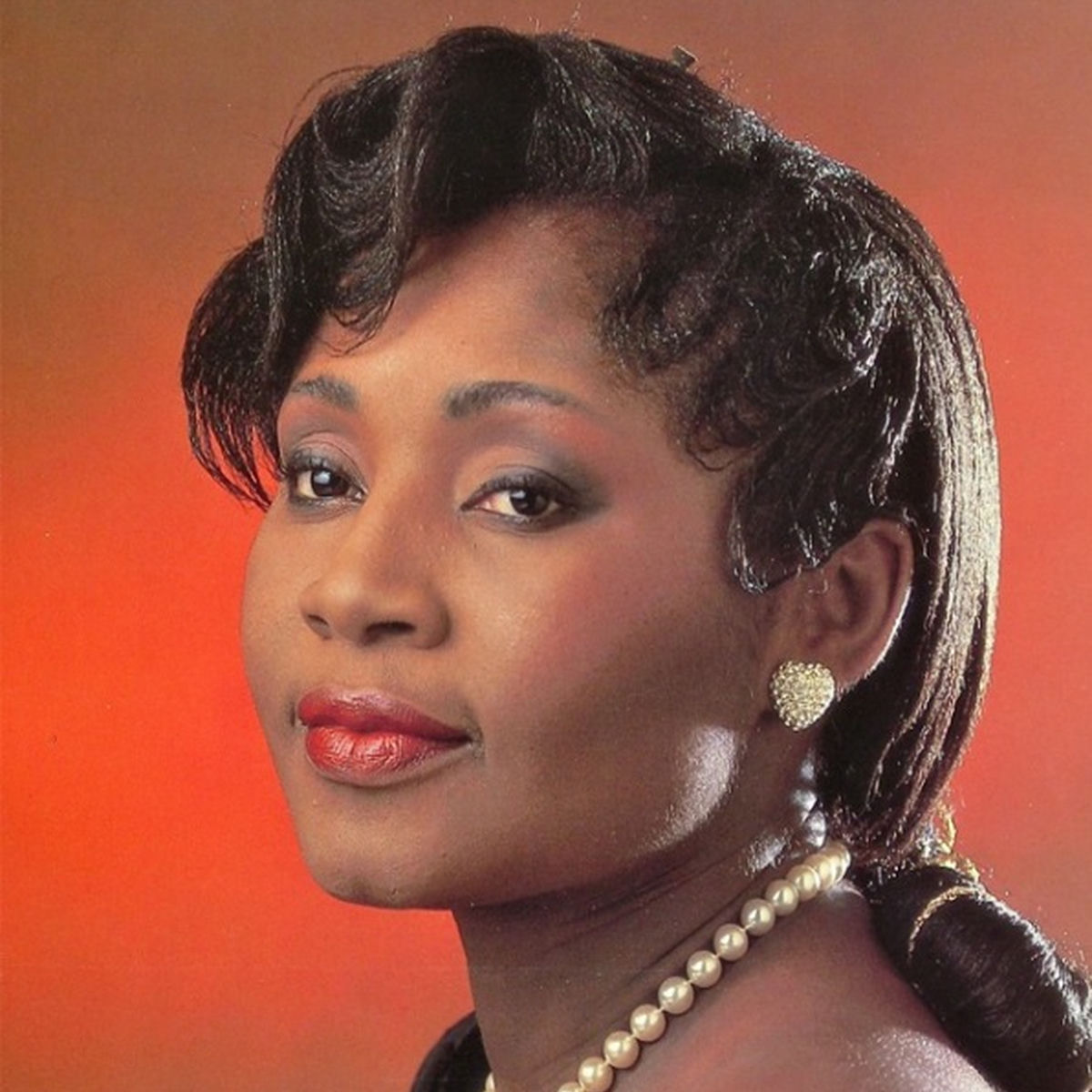
Abeti Masikini
 DR Congo
Also known as: Elisabeth Finant, Queen of Soukous
Birthday
November 9, 1954
Birth Sign
Scorpio
Birthplace
Kisangani, Belgian Congo
Age
Died at 39
About
Abeti Masikini, born Elisabeth Finant, was a Congolese singer, composer, bandleader, and philanthropist whose voice and vision reshaped African popular music. For nearly three decades, she commanded stages across the globe, earning the title "Queen of Soukous" for her electrifying performances and her role in modernizing the sound of Congolese rumba. Her band, Les Redoutables, served as a springboard for a generation of female artists, proving that women could lead, compose, and headline in a male-dominated industry.
Masikini's legacy is defined by historic firsts: she was the first Congolese female artist to headline Paris's Olympia Hall in 1975 and New York's Carnegie Hall in 1977. Over her career, she recorded more than twenty studio albums for labels like Les Disques Pierre Cardin, Pathé Records, Aziza, RCA Records, and Polygram Records, each release pushing the boundaries of soukous with her distinctive voice and socially conscious lyrics.
Beyond music, Masikini was a fierce advocate for gender equality, using her platform to challenge norms and inspire women across Africa. She passed away on 28 September 1994 in Villejuif, Paris, after a battle with uterine cancer, at the age of 39. Her legacy lives on in the countless artists she inspired and the enduring power of her music.
Early Life & Background
Born on 9 November 1954 in Kisangani, then part of the Belgian Congo, Abeti Masikini grew up in a country on the brink of independence. Her musical journey began in childhood, rooted in church choir singing, a common starting point for many African vocalists of her generation. A 1974 New York Times profile noted that, like many African singers, she got her start in a church choir before transitioning to secular music.
Her early years were shaped by the cultural and political transformations sweeping the Congo. The pivotal moment came in 1971 when she won the Découverte des Jeunes Talents contest, a national competition organized by singer Gérard Madiata. That victory caught the attention of Togolese producer Gérard Akueson, who helped her record her debut album.
Career Growth
Abeti Masikini's breakthrough arrived with her debut album, Pierre Cardin Présente: Abeti, released in 1973 through Les Disques Pierre Cardin. The record was a sensation, and she quickly became a fixture on television and in sold-out venues across Africa and Europe. In 1974, she performed in New York City, seeking additional US engagements, and a year later she headlined Paris's Olympia Hall, a major milestone for an African female artist.
In 1977, she made history by performing at New York's Carnegie Hall, becoming the first Congolese female artist to headline such prestigious international venues. Throughout the 1970s and 1980s, she recorded more than twenty studio albums for labels including Les Disques Pierre Cardin, Pathé Records, Aziza, RCA Records, and Polygram Records. During the 1980s and 1990s, she led her all-female band Les Redoutables, which served as a springboard for a generation of female artists. Her music blended traditional rhythms with modern sounds, and her lyrics were notably socially conscious, addressing themes of gender equality and challenging societal norms.
Career Timeline
Public Image & Style
Abeti Masikini's public image is that of a pioneering, fearless female leader in a male-dominated genre. Media portrayals consistently emphasize her role in breaking gender barriers and modernizing soukous. Her signature style combined powerful vocals with socially conscious lyrics, and her stage presence was described as electrifying. Her content format was primarily studio albums and live performances, with her band Les Redoutables serving as a platform for female musicians. No official fandom name is documented, but her legacy continues to inspire discussions of female empowerment in African music.
Fame & Fandom
Abeti Masikini stands as a towering figure in the history of African music, her influence stretching far beyond the decades she performed. While her legacy is secure among the titans of Soukous and Rumba, iFANN's Global Fame Engine has evaluated her current standing and determined that she does not currently hold a placement in the published rankings for the Global Top 1,000 or any Top-100 scope list. This absence from the active charts reflects the reality that she passed away in 1994, leaving a static but profound footprint rather than a fluctuating modern celebrity score. Her fame rests on historic firsts, including being the first Congolese female artist to headline Paris's Olympia Hall in 1975 and New York's Carnegie Hall in 1977, achievements that cemented her status as a pioneer who reshaped the genre. The audience that reveres her today is defined by deep historical appreciation rather than organized campaigning. There is no documented formal name for her fanbase; admirers do not refer to themselves by a collective moniker like "The Abetis." Instead, her supporters are characterized by a shared cultural knowledge of her unique ability to blend genres and her role as a trailblazer who paved the way for future artists. Her daughter, Sandra M'pongo, actively manages this legacy, ensuring the music remains accessible without the need for fan-led initiatives typical of living superstars. The narrative surrounding her life includes her early start in church choirs and her tragic death at age 39, marking the end of a nearly three-decade career that made a lasting impact on African music culture.
Interesting Facts and Legends
Abeti Masikini was a true multi-instrumentalist, capable of playing guitar, drums, and saxophone while singing, a rarity for female performers in her era that cemented her reputation as fearless and innovative. Her debut album was uniquely presented by the fashion house Pierre Cardin, reflecting the cross-disciplinary nature of her early career. The name of her band, Les Redoutables, meaning "The Formidable Ones," perfectly mirrored her powerful stage presence. She performed at both Carnegie Hall and the Royal Albert Hall, two of the world's most prestigious venues, proving women could lead bands in a male-dominated industry. A specific viral moment in her posthumous lore involves her song "Je suis fâché" (I am angry), which remains a staple in African music playlists and is frequently referenced in online discussions about her vocal range and emotional delivery. Fans still retell stories of her technical prowess during live performances, where she commanded the stage with an intensity that rivaled male bandleaders, often fusing traditional folk, blues, and jazz elements into Rumba to break gender barriers. Her impact is described as transformative, redefining the role of women in Congolese music and earning her a spot alongside icons like Koffi Olomide and Tabu Ley Rochereau in lists of top female Rhumba artists.
Family & Personal Life
Abeti Masikini was the mother of Sandra M'pongo, who has followed in her mother's footsteps and launched her own career as a musician. A 2020 Nation Africa article reported that Sandra M'pongo has been actively "keeping mother's name alive" through her own musical career. Detailed public records of Masikini's family life and romantic relationships are extremely limited; the identity of her daughter's father is not documented in available sources.
Notable Connections
Abeti Masikini's career was shaped by key figures including Gérard Madiata, who organized the Découverte des Jeunes Talents contest that launched her, and Togolese producer Gérard Akueson, who helped record her debut album. Her daughter Sandra M'pongo continues her musical legacy, and her all-female band Les Redoutables mentored a generation of female artists.
Relationships & Dating History
Abeti Masikini's personal life was largely kept out of the public eye, and detailed records of her romantic relationships are scarce. She was a mother to Sandra M'pongo, but the identity of her daughter's father is not documented. At the time of her death in 1994, she was not publicly known to be married or in a relationship. Her focus remained on her music and her role as a mother.
Death & Aftermath
Died
September 28, 1994 (aged 39)
Death Place
Unknown
Cause of Death
Unknown
The music world mourned the loss of a true pioneer when Abeti Masikini passed away, leaving behind a legacy that would soon be preserved in the posthumous release of her album Souvenirs, souvenirs in 1996. This record served as a poignant reminder of her artistry, ensuring her voice continued to reach new audiences long after her final performance. Born Elisabeth Finant on November 9, 1954, she was only 39 years old when she died on September 28, 1994. The specific circumstances surrounding her final days and the exact location where she breathed her last remain unrecorded in available public accounts. Despite the lack of details regarding the event itself, the impact of her absence was felt deeply across the African music community. She is widely remembered as a legend who captivated generations with her electrifying performances and historic achievements at venues like Paris's Olympia Hall. Her daughter, Sandra M'pongo, has since dedicated herself to keeping her mother's name alive through her own musical career.
Net Worth (Estate Value)
$10 Million
iFANN Editorial Team estimate
Per iFANN's editorial analysis, Abeti Masikini's estate is valued at $10 Million. This valuation derives its worth from her extensive catalogue of more than twenty studio albums, which continue to generate royalties through streaming and licensing. Posthumous digital streaming revenue and the ongoing presence of her music on platforms like YouTube Music and CongoPlanet contribute significantly to this total. Her daughter Sandra M'pongo actively manages and promotes her mother's legacy, ensuring the music remains accessible to new audiences. While no official estate valuation has been published, the enduring popularity of her songs and her historic status in African music sustain the financial value of her work.
Awards Won (1)
Abeti Masikini's most notable competitive victory was the 1971 Découverte des Jeunes Talents contest, which launched her career. Her broader recognition came through honorary titles and historic performance milestones, including being the first Congolese female artist to headline Carnegie Hall and the Olympia. She was also ranked among the top female rhumba artists of all time in 2022.
1971 · National Music Contest
N/A
Known For
Pierre Cardin Présente: Abeti
1973 · Debut album
Carnegie Hall performance
1977 · First Congolese female artist to headline
Les Redoutables
1980 · Bandleader
Keywords
Sources
Quick Facts
- Profession
- singer, musician
- Born
- November 9, 1954
- Birthplace
- Kisangani, Belgian Congo
- Died
- September 28, 1994
- Death Place
- Villejuif, Paris, France
- Gender
- Female
- Birth Sign
- Scorpio
Personal Details
- Full Name
- Elisabeth Finant
- Children
- Sandra M'pongo
Frequently Asked Questions
What is Abeti Masikini's real name?
How did Abeti Masikini die?
What was Abeti Masikini's most famous achievement?
Does Abeti Masikini have children?
How many albums did Abeti Masikini release?
Social Media
Join the community
fans discussing