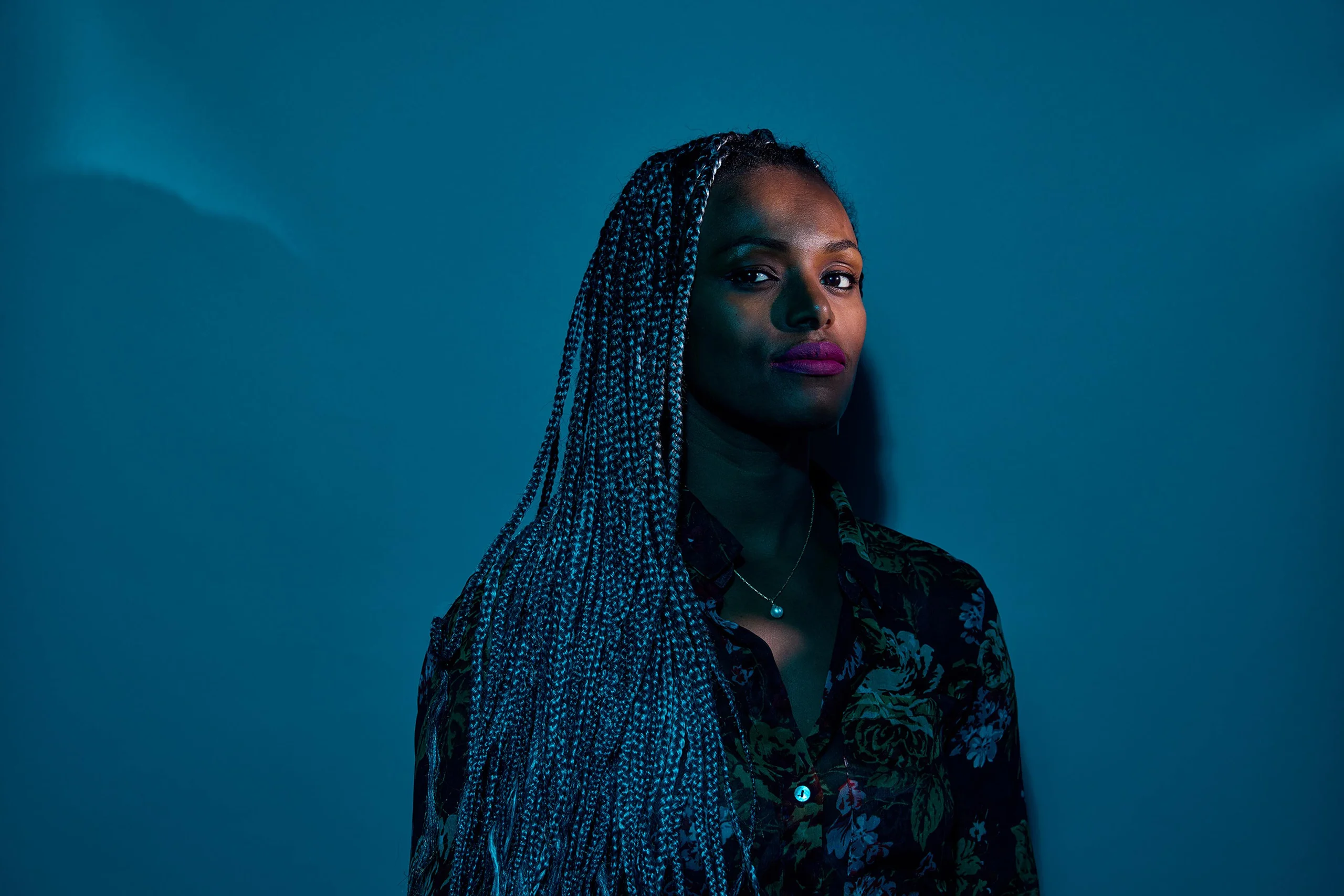
Abeba Birhane
 Ethiopia
computer scientist•artificial intelligence researcher•cognitive scientist
Birthday
Birth Sign
Birthplace
Ethiopia
Age
0 years old
About
Abeba Birhane is an Ethiopian-born cognitive scientist and AI researcher who has become one of the most influential voices in the movement for accountable, ethical artificial intelligence. As an assistant professor at Trinity College Dublin and founder of the AI Accountability Lab, she studies how machine learning systems inherit and amplify societal biases, and she has built a reputation for asking the uncomfortable questions that tech companies would rather avoid.
Birhane's work sits at the intersection of cognitive science, critical race studies, and computer science. She rose to prominence after exposing racist and misogynistic content inside massive AI training datasets, and she has since become a go-to expert for journalists, policymakers, and international bodies seeking clarity on AI's real-world harms. TIME magazine named her one of the 100 most influential people in AI in 2023, and she regularly advises the Mozilla Foundation on AI accountability.
Today, Birhane leads a research group that audits AI systems for bias and accountability, and she continues to challenge the industry's hype with evidence-based critique. Her fans and followers see her as a rare combination: a rigorous scientist who is also a fierce advocate for social justice.
Early Life & Background
Abeba Birhane was born in Ethiopia, a country whose complex histories of colonialism and inequality would later shape her academic interests. She moved to Ireland to pursue higher education, where she initially studied cognitive science, drawn to questions about how humans and machines process information.
During her undergraduate and master's years, Birhane grew increasingly interested in the social dimensions of technology. She noticed that AI systems were often treated as neutral tools, when in reality they were products of human decisions, historical data, and power structures. This realization pushed her to read deeply in critical race theory and postcolonial studies, which became the intellectual foundation for her later work.
Birhane began her PhD at University College Dublin in the late 2010s, studying the relationship between adaptive systems and machine learning. She was particularly interested in how biases creep into AI not just through algorithms, but through the very datasets used to train them. Her early academic writings started to circulate in research circles, and she quickly gained a following for her clear, forceful arguments about why AI ethics could not be an afterthought.
Career Growth
Birhane's breakthrough came in 2021 when she and collaborator Vinay Prabhu published a study exposing the dark underbelly of ImageNet and 80 Million Tiny Images, two of the most widely used AI image datasets. The research showed that these datasets contained racist, misogynistic, and otherwise offensive labels and imagery, often scraped from the internet without consent. The findings sent shockwaves through the AI community and led to the takedown of 80 Million Tiny Images.
After earning her PhD in 2022, Birhane joined Trinity College Dublin as an assistant professor, where she founded the AI Accountability Lab. The lab conducts audits of AI systems, investigating everything from facial recognition to large language models for evidence of bias and harm.
In 2023, TIME magazine named her one of the 100 most influential people in AI, cementing her status as a leading public intellectual. She also took on the role of senior advisor in AI accountability at the Mozilla Foundation, where she helps shape the organization's advocacy work.
Birhane has become a sought-after voice in policy debates. In 2025, she spoke at the Vatican's AI summit, and she has been critical of how AI companies use hype to influence regulation. In 2026, she was involved in research identifying 27 patterns of corporate influence in AI legislation, comparing the tactics to those of Big Tobacco.
Career Timeline
Public Image & Style
Birhane is widely regarded as one of the most principled and fearless voices in AI ethics. Her public persona is that of a rigorous academic who refuses to be co-opted by industry money or hype. She has a reputation for being direct and sometimes blunt, especially when calling out tech companies for their behavior.
On social media, especially X, Birhane is known for her sharp commentary and her willingness to engage with critics. She often posts about new research, policy developments, and the latest AI controversies, always with an eye toward accountability.
Her fans, many of whom are researchers, activists, and students, see her as a role model who demonstrates that it is possible to work in AI without losing your moral compass. They appreciate that she brings a critical race and postcolonial perspective to a field that has historically been dominated by white, Western men.
Birhane's aesthetic is understated, typically academic attire, but her words carry the weight. She is frequently invited to speak at major conferences and has been featured in outlets like Fast Company and TIME.
Fame & Fandom
Abeba Birhane has been evaluated by iFANN's Global Fame Engine, but she does not currently hold a placement in the published rankings for the Global Top 1,000 or any specific Top-100 scope list. While she commands immense respect as a thought leader in AI ethics and cognitive science, her influence remains rooted in professional circles rather than mass celebrity culture. Her audience consists primarily of researchers, policymakers, and industry professionals who engage with her work on algorithmic bias and data accountability through academic citation and policy advocacy. Unlike pop stars or athletes, Dr. Birhane does not have a formal fanbase with organized rituals, streaming campaigns, or branded merchandise. There is no documented fandom name associated with her following, nor are there records of fan-funded projects or personal interactions typical of celebrity worship. Instead, her legacy is built on rigorous scientific auditing and public critiques of the tech industry, highlighted by her inclusion in Time magazine's list of the 100 Most Influential People in AI. Her engagement style is strictly professional, focused on presenting research at high-level summits ranging from the UN to the Vatican, where she challenges narratives around artificial general intelligence and regulatory frameworks.
Interesting Facts and Legends
Dr. Birhane once described herself as a lapsed physicist in a podcast interview, a nod to her early interest in the natural sciences before she turned to cognitive science. She is known for using the phrase AI hype as a recurring theme in her talks, arguing that terms like artificial general intelligence are more about marketing than science. Her X handle, @Abebab, is a play on her name that has become a recognizable brand among AI ethics followers. A widely retold story in the field involves her exposure of dirty data, where her research revealed how major AI models are trained on massive quantities of unfiltered internet content containing harmful biases. In July 2025, she became the center of a significant controversy at the UN's flagship AI conference after being accused of pressure to censor parts of her presentation regarding criticism of Israel and big tech over the Gaza war. Another notable moment occurred in June 2026 when she publicly dismissed warnings from Anthropic regarding AI escaping human control as a clever marketing trick. She is also a fan of the Ethiopian dish injera, which she has mentioned in interviews as a comfort food that reminds her of home. Once, she tweeted a photo of her desk cluttered with books on critical theory and machine learning, captioning it the true stack.
Notable Quotes
“AI is not a neutral technology. It is a product of human decisions, and those decisions carry the weight of history.”
“If we train AI on data that reflects the worst of society, we should not be surprised when it reproduces that harm.”
“We need to move beyond the hype and have honest conversations about what AI can and cannot do.”
“Accountability is not a buzzword. It is a practice that requires constant vigilance.”
“The burden of proof should be on AI companies to show that their systems are safe, not on the public to prove they are harmful.”
Family & Personal Life
Birhane keeps her personal life private, but she has spoken about growing up in Ethiopia as part of a close-knit family. In interviews, she has credited her parents with instilling in her a strong sense of justice and curiosity about how the world works.
She is known to have siblings, though she rarely discusses them publicly. Birhane moved to Ireland as an adult, and she has described the experience of being an immigrant in Europe as formative for her understanding of power and exclusion.
As of 2026, Birhane is based in Dublin, where she lives with her partner. She has no children. In a rare personal moment on social media, she once mentioned that she shares her home with a cat named Ada, after Ada Lovelace.
Notable Connections
Birhane is closely associated with Vinay Prabhu, with whom she co-authored the influential dataset audit that exposed bias in ImageNet and 80 Million Tiny Images. She is also associated with the Mozilla Foundation, where she serves as a senior advisor, and with Trinity College Dublin, where she leads the AI Accountability Lab. Her work has been cited by numerous researchers and journalists in the field of AI ethics.
Relationships & Dating History
Birhane is a very private person, and she has never publicly discussed her romantic relationships in any detail. What is known is that as of 2026, she is in a relationship with a partner who is not a public figure. She has mentioned her partner in passing on social media, but has not shared their name or occupation.
There are no public records of Birhane having been married or divorced. She has no children. Given her focus on her career and her advocacy work, she has managed to keep her personal life largely out of the spotlight, which is rare for someone with her public profile.
As of 2026, Birhane is reportedly in a relationship, though she has not made any formal public announcement. Her partner is believed to be supportive of her work, and she has occasionally posted photos that hint at a shared love of travel and good food.
Salary, Net Worth In 2026
$1 Million
iFANN Editorial Team estimate
As of 2026, Abeba Birhane's net worth is estimated at $1 Million per iFANN's editorial analysis. Her income primarily comes from her academic salary as an assistant professor at Trinity College Dublin, as well as speaking fees for her many invited talks at conferences, universities, and industry events. Birhane does not have the typical revenue streams of a tech entrepreneur. She has not founded a commercial AI company, and she has been vocal about her refusal to take funding from big tech companies, which she believes could compromise her independence. Her work with the Mozilla Foundation as a senior advisor likely provides a modest stipend, though the exact figure is not public. She also earns occasional honoraria for articles and editorial work. Given her growing fame as a public intellectual, Birhane's speaking fees have likely increased in recent years. In 2026, she is in high demand for keynotes on AI ethics, and it is reasonable to assume she commands a five-figure fee for major events. Birhane's net worth is modest compared to many in the AI industry, which is consistent with her public stance against the commercialization of AI research.
Awards Won (2)
Birhane has received relatively few formal awards, but those she has earned carry significant weight. In 2023, TIME magazine named her one of the 100 most influential people in AI, a recognition that placed her among the most prominent figures in the field. In 2025, she was named among Irish Tatler's Women of the Year, an honor that celebrates women who are making a difference in Ireland. These accolades reflect her growing influence beyond academia and into the public sphere.
2023 · Influence
AI research and advocacy
2025 · Recognition
AI accountability work
Known For
AI Accountability Lab
2022 · Founder and leader
Exposing bias in ImageNet and 80 Million Tiny Images
2021 · Lead researcher
TIME 100 Most Influential People in AI
2023 · Honoree
Keywords
Sources
Quick Facts
- Profession
- computer scientist, artificial intelligence researcher, cognitive scientist
- Birthplace
- Ethiopia
- Gender
- Female
- Education
- PhD, University College Dublin (2022)
- Current Institution
- Trinity College Dublin
- Research Focus
- Algorithmic bias, AI accountability, critical race studies
Personal Details
- Education
- PhD, University College Dublin (2022)
Frequently Asked Questions
Who is Abeba Birhane?
What is Abeba Birhane's net worth in 2026?
Where does Abeba Birhane work?
What is Abeba Birhane best known for?
Is Abeba Birhane still active in AI research in 2026?
Social Media
Similar People
Join the community
fans discussing