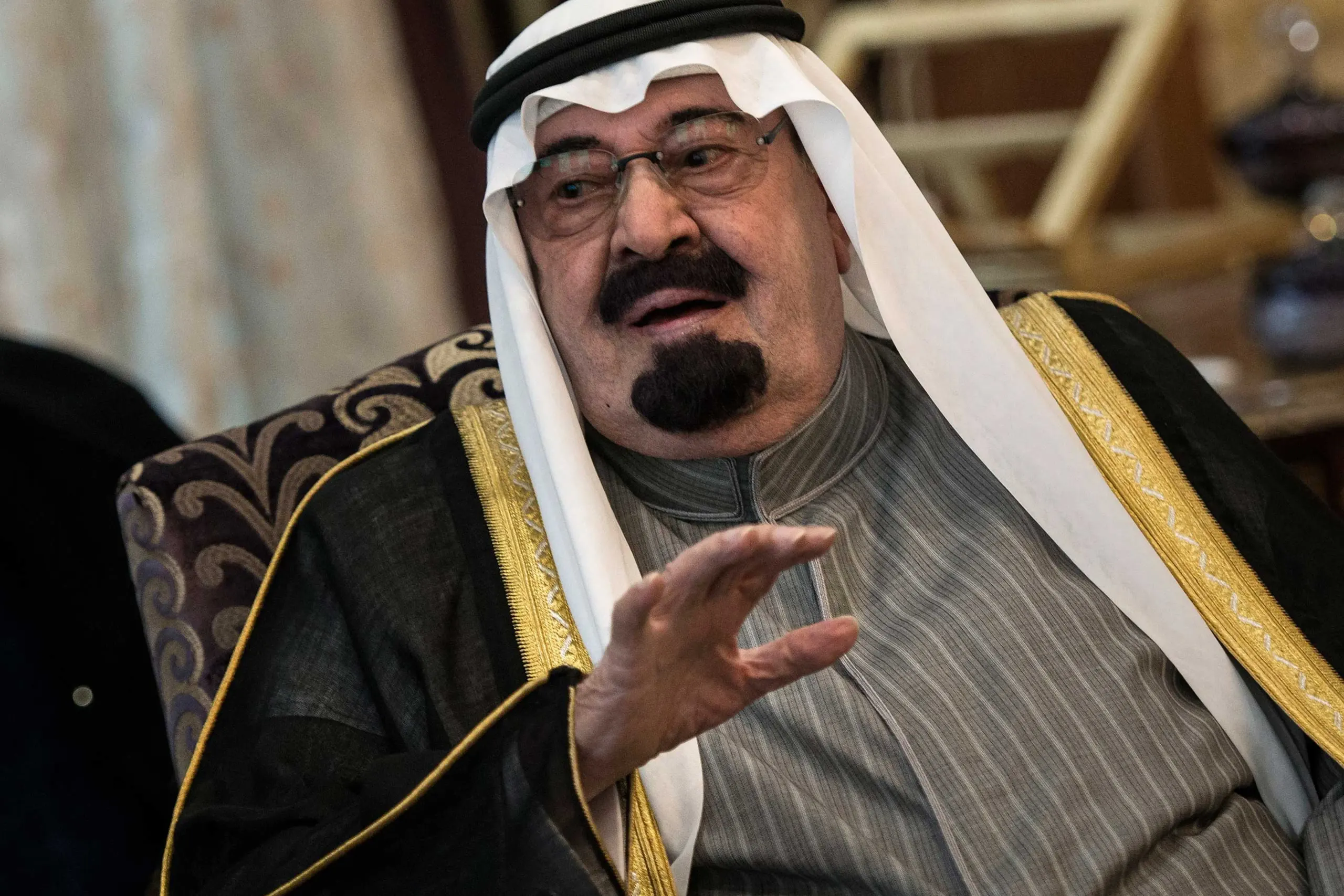
Abdullah of Saudi Arabia
 Saudi Arabia
Also known as: Abdullah ibn Abdul Aziz, King Abdullah, Abdullah bin abdulaziz al saud, Abdullah bin Abdulaziz
Birthday
August 1, 1924
Birth Sign
Leo
Birthplace
Riyadh, Saudi Arabia
Age
Died at 90
Height
5 ft 9 in (175 cm)
About
Abdullah bin Abdulaziz Al Saud (1 August 1924 – 23 January 2015) stands as the sixth King of Saudi Arabia and the tenth son of the nation's founder, King Abdulaziz. His reign is historically defined by a unique duality: he served as the de facto ruler from 1995 following his half-brother King Fahd's stroke, yet officially ascended to the throne only in 2005, ruling until his death at age 90. As a head of state, Abdullah was distinguished by his efforts to modernize the kingdom's infrastructure and educational systems while rigorously maintaining its traditional Islamic foundations. He navigated complex regional turbulence, including the Arab Spring, with a strategy that preserved the monarchy's stability without resorting to the violent crackdowns seen elsewhere in the region. His international legacy rests on fostering strong alliances with Western powers, particularly the United States and the United Kingdom, and championing interfaith dialogue through initiatives like the Dialogue among Civilizations summit. Unlike many contemporaries, his public persona was characterized by quiet diplomacy and a perceived commitment to the welfare of his subjects, earning him recognition as a moderate voice in the Middle East.
His political influence extended beyond domestic borders, positioning him as a key figure in global energy politics due to Saudi Arabia's status as an oil superpower. During his tenure, he oversaw substantial defense spending and maintained close diplomatic ties that shaped regional security dynamics. The scale of his success is measured not in entertainment metrics but in the enduring structural reforms he implemented, such as the establishment of the King Abdullah University of Science Technology (KAUST). His leadership style balanced the conservative tribal expectations of the Al Saud family with the pragmatic demands of a modernizing state, leaving a complex legacy of statecraft that continues to influence Saudi governance today.
Early Life & Background
Born into the ruling family of the newly unified Kingdom of Saudi Arabia, Abdullah grew up in the royal compound in Riyadh, though his early life was significantly shaped by time spent in Mecca where his mother's influence was strongest. Unlike some of his brothers who were raised primarily in the north, Abdullah received a traditional education in Islamic studies and Arabic literature, alongside practical training in governance and tribal leadership that prepared him for future responsibilities. His entry into official government service began in the 1960s, marking the start of a long trajectory toward power. In 1961, he was appointed Mayor of Mecca, a critical role that required him to manage the logistical challenges of the annual Hajj pilgrimage, a duty central to the custodian of Islam's holiest sites. This appointment provided him with his first major administrative experience and visibility within the kingdom. Two years later, in 1963, he was appointed Commander-in-Chief of the Saudi Arabian National Guard (SANG), a position he held for over four decades. This military command was pivotal, granting him control over a powerful force loyal directly to him rather than the regular army, effectively establishing his independent power base within the kingdom long before he ever assumed the crown. These early roles allowed him to build a network of loyalty and administrative competence that would later prove essential during his rise to the highest office.
Career Growth
Abdullah's ascent to the highest office was a gradual and strategic process spanning decades. Following the accession of his half-brother King Fahd in 1982, Abdullah was named Crown Prince. After King Fahd suffered a debilitating stroke in 1995, Abdullah assumed de facto rule of the country, managing domestic and foreign policy while Fahd remained the nominal head of state. He officially became King upon the death of King Fahd in 2005 and served until his own passing in 2015. During this decade, he initiated the "King Abdullah Initiative for Dialogue among Civilizations" to promote moderate Islam and launched significant educational reforms, including the establishment of the King Abdullah University of Science and Technology (KAUST) and the expansion of girls' education. He also oversaw substantial defense spending and maintained close ties with Western powers. His tenure saw several transitions in the line of succession, with Sultan bin Abdulaziz, Nayef bin Abdulaziz, and finally Salman bin Abdulaziz serving as Crown Prince during his reign. Notably, in 2011, he introduced political reforms allowing women to vote and run for office in municipal elections starting in 2015. He also hosted the Dialogue among Civilizations summit in Mecca in 2008 and announced the King Abdullah Scholarship Program for students abroad in 2009. His leadership was marked by a consistent effort to balance tradition with necessary modernization, ensuring the kingdom's stability amidst regional upheaval.
Career Timeline
Public Image & Style
King Abdullah was portrayed as a compassionate, empathetic leader who balanced tradition with necessary modernization. Media outlets described him as a "distinguished global leader" known for his quiet diplomacy and commitment to the welfare of his people. He navigated the Arab Spring by largely preserving the kingdom's established order while introducing limited social reforms. His style was traditional, typically wearing the thobe, ghutra, and agal, reflecting his deep connection to Saudi heritage. Despite being known as a conservative, he authorized significant reforms, including allowing women to vote and run for office in municipal elections starting in 2015. He rarely appeared on fashion or entertainment magazine covers, instead featuring prominently on the covers of major news publications like TIME Magazine in 2005 and subsequent years discussing the Arab Spring and regional politics. Newsweek frequently covered him regarding oil prices and US-Saudi relations. He was awarded the Order of the White Elephant by Thailand, the Grand Cross of the Order of Merit of the Federal Republic of Germany, and the Knight Grand Cross of the Order of the Bath by the UK. He also received honorary degrees from universities such as the American University of Beirut. His public image was further cemented by his role as Custodian of the Two Holy Mosques, a title that carried immense religious weight across the Muslim world.
Fame & Fandom
King Abdullah bin Abdulaziz Al Saud never cultivated a fandom in the manner of entertainers or athletes, for his public life was defined by governance rather than performance. The relationship between the Saudi populace and their late monarch was one of national loyalty and religious reverence, not the organized campaigns, streaming pushes, or fan clubs that characterize pop culture stardom. No formal name exists for his admirers, nor are there documented rituals, birthday billboards, or viral moments of crowd hysteria; the population remained citizens and subjects rather than fans in the recreational sense. Despite this absence of celebrity metrics, his historical stature remains immense within the iFANN Global Fame Rankings. As of September 2026, he is the 11th most famous person in Saudi Arabia, a position reflecting his enduring impact after his death. His influence extends beyond borders, placing him as the 9th most famous person from Saudi Arabia and one of the most influential figures in the Middle East. These placements reflect a legacy tracked across global attention signals, where historical impact translates into enduring recognition. The rankings confirm that while he lacked a fanbase, his status as a head of state ensured a permanent place in the collective memory of the region. His "fandom" is effectively the entire population of Saudi Arabia and the broader Muslim world, united by their view of him as their monarch and Custodian of the Two Holy Mosques.
Interesting Facts and Legends
Abdullah bin Abdulaziz Al Saud served as King and Prime Minister from August 1, 2005, until his death on January 23, 2015. He was the tenth son of King Abdulaziz, the founder of the nation, and his mother, Fahda bint Asi Al Shuraim, came from the Al Rashid dynasty, a lineage that had historically contested the Al Saud family. He assumed de facto rule in 1995 following a stroke suffered by his half-brother, King Fahd, making him one of the longest-serving Crown Princes in history. In 1963, he was appointed head of the National Guard, a critical role in the kingdom's security structure. He died in a Riyadh hospital after being admitted for pneumonia at the age of 90. While no legends of fainting crowds or viral stunts surround his reign, historical records note his efforts to implement modernizing reforms, though some accounts suggest tangible accomplishments were mixed. He emerged as a distinguished global leader known for compassion and empathy, particularly in his diplomatic efforts, leaving a complex legacy of statecraft rather than folklore. He did not have a personal social media presence during his lifetime, and his legacy is maintained through official accounts of the Saudi Royal Court. His height was approximately 175 cm (5 ft 9 in), and he was known for his average to slightly stocky build. He was succeeded by his half-brother, King Salman bin Abdulaziz Al Saud. His death marked the end of an era of relative continuity in the succession line, leading to further consolidation of power under the new king.
Notable Quotes
“We must work together to combat terrorism and extremism.”
“The future of our region depends on dialogue and understanding.”
“Education is the key to progress.”
Family & Personal Life
King Abdullah married numerous times, a common practice among the senior members of the Al Saud family to forge political alliances and ensure lineage. While exact records of all marriages are often private, several wives are publicly documented: Hessa bint Trad Al Shaalan, Alanoud Al-Fayez, and Aida Fustuq. He fathered more than 35 children, many of whom hold positions of influence within the kingdom or serve in diplomatic roles. The exact number and names of his children are not always fully public due to the nature of the royal family, but they include princes such as Sultan, Khalid, and Mishari. His mother, Fahda bint Asi Al Shuraim, hailed from the Al Rashid dynasty, a lineage that had historically contended with the Al Saud family, adding another layer to his unique position within the royal court. This maternal connection added a unique political dimension to his upbringing, distinguishing him from other sons of King Abdulaziz. He was the tenth son of the nation's founder, born in Riyadh, and grew up in a large household where tribal dynamics played a crucial role in family structure. The royal compound in Riyadh served as his childhood home, steeped in the religious and tribal traditions that shaped the nascent state.
Notable Connections
Relationships & Dating History
King Abdullah married numerous times, a common practice among the senior members of the Al Saud family to forge political alliances and ensure lineage. While exact records of all marriages are often private, several wives are publicly documented: Hessa bint Trad Al Shaalan, Alanoud Al-Fayez, and Aida Fustuq. He fathered more than 35 children, many of whom hold positions of influence within the kingdom or serve in diplomatic roles. The exact number and names of his children are not always fully public due to the nature of the royal family, but they include princes such as Sultan, Khalid, and Mishari. As a monarch in a strict Islamic monarchy during the mid-to-late 20th century, the concept of "dating" as understood in Western pop culture does not apply to King Abdullah. His relationships were formalized through marriage contracts arranged for political and dynastic stability. There are no public records of "flings," "engagements," or "divorces" in the celebrity sense. Specific start and end dates for each marriage are not widely publicized in open sources, as is typical for the Saudi royal family. At the time of his death in 2015, he was married to multiple spouses. His relationships were strictly within the bounds of Islamic law and royal custom, focusing on strengthening tribal and political bonds rather than romantic pursuits. The lack of public dating history reflects the cultural norms of the time and his position as a head of state.
- MarriedHessa bint Trad Al Shaalan1950 - 2015One of his earlier wives.
- MarriedAlanoud Al-Fayez1960 - 2015Another prominent spouse.
- MarriedAida Fustuq1970 - 2015Often cited in biographical accounts.
Death & Aftermath
Died
January 23, 2015 (aged 90)
Death Place
Riyadh, Saudi Arabia
Cause of Death
Pneumonia from lung infection
King Abdullah bin Abdulaziz Al Saud spent his final days in declining health, having withdrawn from public duties in late 2014 and receiving treatment at the King Faisal Specialist Hospital and Research Centre in Riyadh. He passed away at approximately 02:00 local time on January 23, 2015, at the age of 90, with the Royal Court citing pneumonia resulting from a lung infection as the cause. Leaders from across the globe issued statements of condolence, including U.S. President Barack Obama and UN Secretary-General Ban Ki-moon, while flags were flown at half-mast in Saudi Arabia for ten days to mark the occasion. The funeral prayers were held three days later at the Grand Mosque in Mecca before the King was interred at the Al-Oud Cemetery in Riyadh, attended by senior members of the royal family and foreign dignitaries. Posthumous recognition included the establishment of the King Abdullah Bin Abdulaziz International Award for Translation and the continuation of educational initiatives such as the King Abdullah University of Science and Technology, while the administration of his personal estate remained private under Islamic inheritance laws. He was succeeded by his half-brother, King Salman. His death marked the end of an era of relative continuity in the succession line, leading to further consolidation of power under the new king. The transition of power was smooth, reflecting the stability he had maintained throughout his reign. His legacy continues through the institutions he founded and the diplomatic relationships he nurtured.
Net Worth (Estate Value)
$2 Billion
iFANN Editorial Team estimate
As a monarch of an oil-rich nation, King Abdullah's personal wealth was intertwined with the state's resources. Estimates range from $1 billion to $18 billion depending on the source, though many experts argue that much of his "wealth" was state-controlled assets rather than personal liquid cash. The iFANN Editorial Team estimates his net worth at approximately $2 Billion based on available data regarding royal allowances, dividends from state-owned enterprises like Saudi Aramco, real estate holdings in Riyadh and Mecca, and investments. Upon his death, his estate was managed according to Islamic inheritance laws. The administration of his personal assets remains private. Posthumous revenue streams include the continued operation of his foundations, such as KAUST, and the legacy of his charitable works. The estate's financial trajectory has been stable, driven by the enduring value of his philanthropic institutions and the ongoing relevance of his diplomatic legacy. Specific sources vary widely: Source A suggests ~$18 billion including state assets, Source B estimates ~$1-5 billion in personal liquid assets, and Source C notes variable assessments citing "unlimited access" to state funds. His wealth sources included royal allowance, dividends from state-owned enterprises, real estate holdings in Riyadh and Mecca, and various investments. The posthumous management of his estate continues to be influenced by the operational success of his charitable foundations.
Awards Won (3)
While King Abdullah did not win entertainment awards, he received numerous high-level national and international honours reflecting his status as a head of state. He was awarded the Order of the White Elephant from Thailand, the Grand Cross of the Order of Merit of the Federal Republic of Germany, and the Knight Grand Cross of the Order of the Bath from the UK. He also received honorary degrees from several universities, including the American University of Beirut, recognizing his contributions to education and diplomacy.
2007 · International Relations
Strengthening bilateral relations
2008 · Global Stability
Contributions to global stability
Known For
King of Saudi Arabia
2005 · Monarch
Crown Prince of Saudi Arabia
1982 · Heir Apparent
Commander of the National Guard
1963 · Military Leader
Keywords
Sources
Quick Facts
- Profession
- politician
- Born
- August 1, 1924
- Birthplace
- Riyadh
- Died
- January 23, 2015
- Death Place
- Riyadh
- Gender
- Male
- Spouse
- Hessa bint Trad Al Shaalan, Alanoud Al-Fayez, Aida Fustuq
- Birth Sign
- Leo
Personal Details
- Full Name
- Abdullah bin Abdulaziz Al Saud
- Height
- 5 ft 9 in (175 cm)
- Spouse
- Hessa bint Trad Al Shaalan, Alanoud Al-Fayez, Aida Fustuq
- Children
- Sultan, Khalid, Mishari, and over 30 others
- Education
- Traditional Islamic studies and Arabic literature
Frequently Asked Questions
Who was Abdullah of Saudi Arabia?
How did King Abdullah die?
What was King Abdullah's net worth?
Did King Abdullah have children?
Who succeeded King Abdullah?
Similar People

Join the community
fans discussing