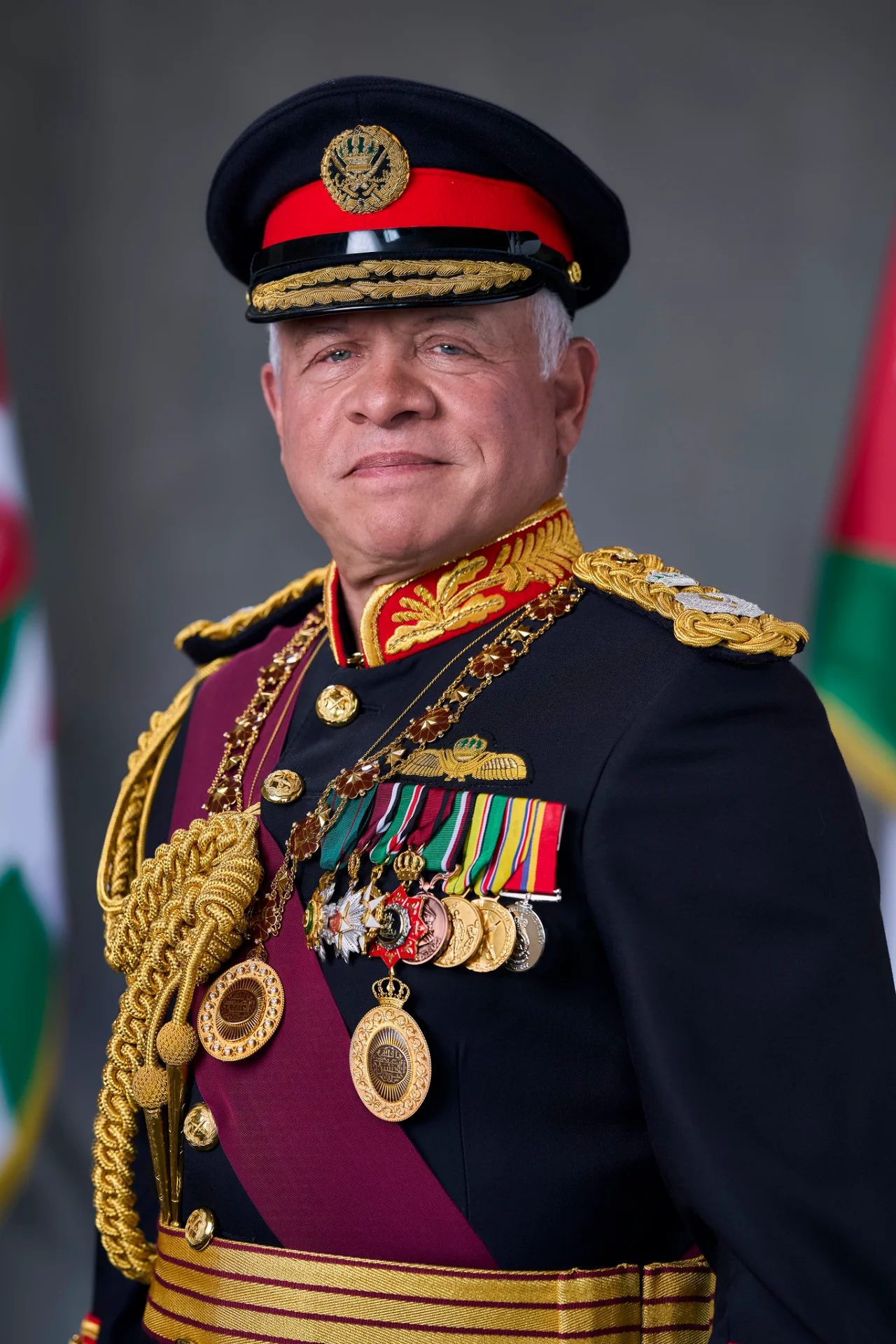
Abdullah II of Jordan
 Jordan
King of Jordan•military officer
Also known as: King Abdullah II, King Abdullah, Abdullah II, Abdullah ibn al-Hussein, H.M. King Abdullah II Ibn Al Hussein
Birthday
January 30, 1962
Birth Sign
Aquarius
Birthplace
Amman, Jordan
Age
64 years old
About
Abdullah II ibn Al-Hussein is the King of Jordan, a constitutional monarch who has reigned since February 7, 1999. He leads the Hashemite dynasty, which has ruled Jordan since 1921, and is a direct descendant of the Prophet Muhammad, tracing his lineage back 43 generations. A graduate of the Royal Military Academy Sandhurst, Abdullah built a career in the military before unexpectedly ascending to the throne, and today he serves as Supreme Commander of the Jordan Armed Forces-Arab Army.
As king, Abdullah is known for steering Jordan through regional turmoil while positioning the country as a voice of moderation. He has championed interfaith dialogue, advocated for a reformed Islam, and maintained the Hashemite custodianship of Muslim and Christian holy sites in Jerusalem. His reign has also seen significant domestic reforms, including reintroducing proportional representation to parliament in 2016. He and Queen Rania, whom he married in 1993, have four children, and their eldest, Crown Prince Hussein, is being groomed as his successor.
Early Life & Background
Abdullah II was born on January 30, 1962, in Amman, the first child of King Hussein and his British-born second wife, Princess Muna (born Toni Avril Gardiner). He spent his early years in Jordan before being sent abroad for education, attending Deerfield Academy in Massachusetts and later the Royal Military Academy Sandhurst in the UK. At Sandhurst, he trained as an officer and developed a deep interest in military strategy, which would define his early career.
After Sandhurst, Abdullah joined the British Army as a troop commander in the 13th/18th Royal Hussars, serving in Germany. He returned to Jordan in 1982 to enter the country's armed forces, taking on roles that ranged from reconnaissance to tank command. He rose through the ranks steadily, attending advanced military courses in the US and the UK, and by 1994 he commanded Jordan's Special Forces. In 1998, he was promoted to major general, a rank he held when his father, King Hussein, died in February 1999.
His path to the throne was not straightforward. King Hussein had long named his brother, Prince Hassan, as heir apparent, but in the final weeks of his life, the king changed course, naming Abdullah as his successor. The decision surprised many, including Abdullah himself, who had expected a career in the military rather than the crown. He was sworn in as king on June 9, 1999, following a mourning period.
Career Growth
Abdullah II's reign has been defined by his efforts to modernize Jordan's economy and navigate a volatile region. Early on, he launched economic reforms aimed at attracting foreign investment, including the Aqaba Special Economic Zone, and he has pushed for digital transformation across the country. But the defining challenges came after the 2011 Arab Spring, when Jordan faced widespread protests over economic hardship and political stagnation. In response, Abdullah initiated constitutional reforms, including the establishment of a constitutional court and the reintroduction of proportional representation in parliament for the 2016 elections, with a stated goal of moving toward a parliamentary government.
Regionally, Abdullah has been a key Western ally, maintaining Jordan's peace treaty with Israel and playing a crucial role in the fight against ISIS. Jordan has also absorbed over a million Syrian refugees, straining resources but underscoring the king's humanitarian stance. He has been an outspoken advocate for a two-state solution to the Palestinian conflict, frequently hosting meetings with leaders like Palestinian Authority President Mahmoud Abbas to push for peace.
In recent years, Abdullah has remained active on the world stage. In February 2026, he met with Russian President Vladimir Putin to discuss regional stability, and in August 2026 he held calls with UK Prime Minister Andy Burnham and Canadian Prime Minister Mark Carney. He also made a notable visit to a Jordanian restaurant in Richardson, Texas, during a World Cup trip, showing a more personal side to his diplomacy.
Career Timeline
Public Image & Style
King Abdullah II is often described as a modernizer in a traditional role, blending military discipline with a pragmatic approach to governance. He is seen as a steady hand in a turbulent region, a mediator who maintains Jordan's peace treaty with Israel while advocating for Palestinian rights. His style is direct and often relaxed; he favors military fatigues for official duties but can be equally comfortable in a suit, meeting world leaders.
His public persona emphasizes accessibility. He frequently tours the country to hear from citizens directly, and his social media presence, managed by the Royal Hashemite Court, offers a mix of policy announcements and personal moments. Fans and observers note his genuine passion for his country's stability, and his commitment to interfaith dialogue has earned him respect beyond the Muslim world.
Criticism exists, particularly over the pace of political reform and the concentration of power in the palace. The Pandora Papers revelation in 2021 tarnished his image somewhat, but among many Jordanians, he remains a respected figure who has kept the country safe amid regional chaos.
Fame & Fandom
King Abdullah II of Jordan commands a presence that transcends the typical boundaries of political leadership, engaging a global audience through a unique blend of military precision and modern accessibility. Unlike entertainment figures who rely on curated pop-culture moments, his supporters are drawn to his steady navigation of regional turmoil and his pragmatic approach to diplomacy. The public interaction with the King is defined by state protocol and genuine engagement rather than the reciprocal rituals or organized fan drives seen in celebrity circles. There is no formal collective label for his admirers; the bond between the monarch and his supporters is rooted in national identity and respect for his role as a constitutional ruler and Supreme Commander. While he has no official fan club name, his legacy is built on verified historical events and diplomatic milestones that resonate deeply across the Middle East and beyond. From his ascension to the throne in 1999 to recent high-level talks with world leaders, every action is documented with care by those who follow his reign. His visits to international venues, such as the World Cup match in Arlington, highlight a style that bridges cultural gaps without sacrificing dignity. This distinctive relationship with the world ensures that his influence remains potent and widely recognized. According to the iFANN Global Fame Rankings, which tracks global attention across media coverage, search, and consumption signals worldwide, Abdullah II of Jordan is currently the 1st most famous person from Jordan (holding steady from the previous cycle). This standing reflects his enduring impact as a key figure in international affairs and his status as a direct descendant of the Prophet Muhammad.
Interesting Facts and Legends
Beyond his duties as King, Abdullah II possesses a diverse array of skills that often surprise observers. He is a trained helicopter pilot and an avid motorsports enthusiast who has competed in the Jordan Rally. His military background runs deep, holding the rank of major general before ascending to the throne, and he is also a licensed skydiver who has made several jumps. As a direct descendant of the Prophet Muhammad tracing back 43 generations, he leverages this lineage to promote interfaith understanding, notably founding the World Interfaith Harmony Week in 2010. In 2021, the Pandora Papers revealed his ownership of offshore shell companies, which he defended as private property transactions. An avid science fiction fan, he has admitted to enjoying Star Trek, and he maintains a black belt in taekwondo. A notable moment in recent years involved his visit to Arlington, Texas, ahead of a World Cup match between Jordan and Argentina. While this event garnered media attention due to the rarity of a sitting king visiting a US sports venue, it remained a documented state engagement rather than a chaotic crowd scene, highlighting his pragmatic approach to international relations.
Notable Quotes
“I am a Hashemite, a descendant of the Prophet Muhammad, and I will always uphold the trust that comes with that.”
“Jordan is not just a country, it is a message of coexistence and peace.”
“We must not allow extremism to hijack the true teachings of Islam.”
“The Palestinian cause is not just a political issue, it is a humanitarian one.”
“I believe in the power of dialogue to bridge divides.”
Family & Personal Life
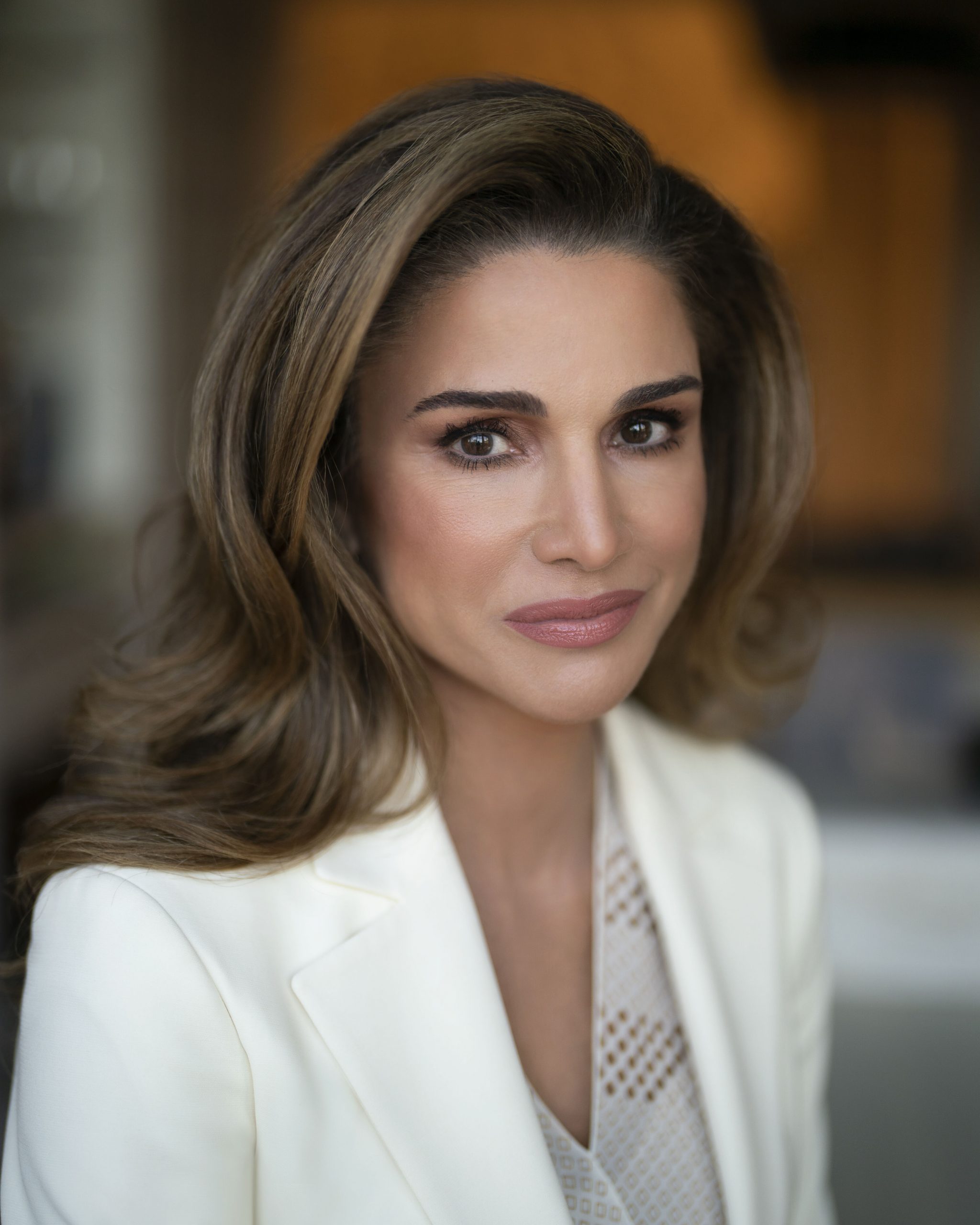
Abdullah II married Rania Al-Yassin on June 10, 1993, in a ceremony at Zahran Palace in Amman. Queen Rania, born to Palestinian parents in Kuwait, has become one of the most visible and influential royals in the world, known for her advocacy on education, health, and women's rights. The couple has four children: Crown Prince Hussein, born June 28, 1994, Princess Iman (born 1996), Princess Salma (born 2000), and Prince Hashem (born 2005).
The royal family lives in the Raghadan Palace complex in Amman, though they also use the Al-Maqar Palace for official functions. Abdullah is known to be a hands-on father, often seen spending time with his children at public events. Crown Prince Hussein has been groomed for succession, attending Georgetown University and the Royal Military Academy Sandhurst, and he has already taken on official duties, including representing Jordan at international events.
Abdullah's father, King Hussein, had multiple marriages, and Abdullah has several half-siblings, including Prince Hamzah, who was once his heir apparent but was placed under house arrest in 2021 over an alleged coup attempt, a situation that strained the royal family.
Notable Connections
King Abdullah II is closely associated with his wife, Queen Rania, and his eldest son, Crown Prince Hussein. He has worked with numerous world leaders, including US presidents and Russian President Vladimir Putin. He also maintains a close relationship with the UK, having studied at Sandhurst and Pembroke College, Oxford.
Relationships & Dating History
King Abdullah II married Rania Al-Yassin on June 10, 1993, in a ceremony at Zahran Palace. Rania, a marketing professional from Kuwait, met Abdullah at a dinner party in 1993, and they married within months. Their union has been a cornerstone of the Jordanian monarchy, with Queen Rania becoming a global advocate for education and women's rights.
Before his marriage, Abdullah had a few short-lived relationships, but none are publicly documented. He has remained devoted to Rania throughout his reign, and they are often cited as a modern royal couple. Their partnership has produced four children, and they have supported each other through the challenges of leadership, including the 2021 coup attempt involving Abdullah's half-brother, Prince Hamzah.
As of 2026, Abdullah and Rania are still married, and they continue to share a strong public bond. Their relationship is widely seen as a source of stability for the monarchy.
- MarriedQueen Rania of Jordan1993 - presentCurrentMarried on June 10, 1993; they have four children.
Salary, Net Worth In 2026
$1.2 Billion
iFANN Editorial Team estimate
iFANN currently estimates King Abdullah II's net worth at $1.2 Billion as of 2026, a figure derived from the royal family's extensive assets and investments. The Jordanian monarchy controls significant land holdings, including the royal palaces and vast tracts of agricultural land, as well as stakes in various commercial ventures. The royal family also receives an annual allowance from the state budget, which covers official duties and staff. Abdullah's personal wealth has been bolstered by inheritance from his father, King Hussein, who was known to have amassed a fortune through land and investments. The Pandora Papers in 2021 revealed that Abdullah held offshore shell companies, reportedly used for purchasing luxury properties in the UK and the US. These holdings, estimated in the millions, are separate from the official royal assets. In recent years, the king's financial profile has remained stable, with no major divestments or acquisitions reported. The royal family's wealth is managed through the Royal Hashemite Court and various private financial advisors. While the exact breakdown is private, the net worth figure reflects the monarchy's enduring economic influence in Jordan.
Awards & Accolades
View 5 records, honours and achievementsKnown For
King of Jordan
1999-present · Monarch
Supreme Commander of the Jordan Armed Forces
1999-present · Military Leader
Keywords
Sources
Quick Facts
- Profession
- King of Jordan, military officer
- Born
- January 30, 1962
- Birthplace
- Amman, Jordan
- Gender
- Male
- Spouse
- Queen Rania of Jordan
- Children
- 4 (Crown Prince Hussein, Princess Iman, Princess Salma, Prince Hashem)
- Reign
- Since February 7, 1999
Personal Details
- Full Name
- Abdullah II ibn Al-Hussein
- Spouse
- Queen Rania of Jordan
- Children
- Crown Prince Hussein, Princess Iman, Princess Salma, Prince Hashem
- Education
- Deerfield Academy, Royal Military Academy Sandhurst, Pembroke College, Oxford (BA in Middle Eastern Studies), Georgetown University (graduate studies)
Frequently Asked Questions
Who is Abdullah II of Jordan?
When was Abdullah II of Jordan born?
Who is Abdullah II of Jordan's wife?
What is Abdullah II of Jordan's net worth in 2026?
Is Abdullah II of Jordan still alive in 2026?
Similar People
Join the community
fans discussing