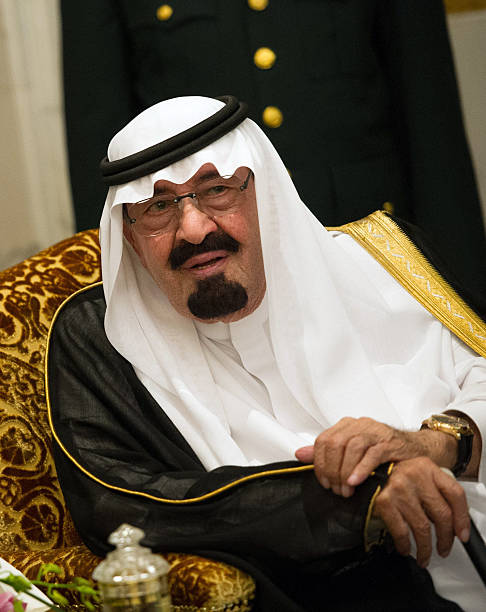
Abdullah bin Thunayan Al Saud
 Saudi Arabia
Also known as: Abdullah II bin Thunayan
Birthday
1800
Birth Sign
Unknown
Birthplace
Najd, Saudi Arabia
Age
Died at 43
About
Abdullah bin Thunayan Al Saud was Emir of Nejd from 1841 to 1843, the only ruler from the Al Thunayan branch of the Saudi royal family. He seized power during a turbulent period in the Second Saudi State, ruling from Riyadh until he was overthrown and executed in July 1843.
His brief reign stands out in Saudi history because no other member of his branch ever held the emirate. Modern historians view him through the lens of the succession struggles that defined the era, and his story offers a window into the fragile politics of central Arabia in the mid-19th century. His legacy is further underscored by the continued scholarly interest in his unique position within the dynasty, as evidenced by his Wikipedia article being available in eight languages and his historical significance being documented in various academic sources.
Early Life & Background
Born around 1800 in the Najd region of what is now Saudi Arabia, Abdullah bin Thunayan came from the Al Thunayan branch of the Al Saud family, a collateral line descended from a brother of Muhammad bin Saud, the founder of the first Saudi state. Specifically, he was a great-grandson of that brother, making him a distant relative of the main ruling line. The Al Thunayan branch had long stood outside the main succession, and Abdullah's upbringing reflected the traditional religious education common among Saudi royals of the time, training as a scholar and imam.
Little else is documented about his early years. The historical record for this period in Najd is sparse, and contemporary chronicles focus on the political turmoil rather than personal biography. His full lineage traces through Thunayan bin Ibrahim bin Thunayan bin Saud, and he was a collateral relative rather than a direct descendant of the preceding emirs. By the early 1840s, the Second Saudi State was wracked by internal factionalism and succession disputes, creating an opening for a figure like Abdullah to make a bid for power. His rise was facilitated by the instability that plagued the region, and his background as a religious scholar may have given him some standing among the populace.
Career Growth
In 1841, Abdullah bin Thunayan seized the emirate of Nejd amid the chaos, establishing his seat in Riyadh. His authority, however, was contested from the start by rival claimants, most notably Faisal bin Turki, a direct descendant of the main ruling line who commanded significant support among tribal leaders and religious figures.
Abdullah's reign lasted less than two years. In May 1843, forces loyal to Faisal bin Turki overthrew him, and he was captured and executed in July of that year at around age 42. His fall ended the only period of Al Thunayan rule in Saudi history, and the branch returned to its secondary role within the royal family. Faisal bin Turki then consolidated his rule, establishing a more stable emirate that would shape the future of Saudi Arabia. Abdullah's brief tenure is often studied as an example of the difficulties faced by claimants from collateral branches in a dynastic system that favored direct descent.
Career Timeline
Public Image & Style
Historical accounts portray Abdullah bin Thunayan as a figure whose brief rule was marked by contested legitimacy and military challenges. His seizure of power during a period of internal strife is presented as opportunistic, while his inability to maintain control reflects the broader instability of the Second Saudi State. Modern historical assessments view him primarily through the lens of dynastic succession struggles, noting his unique place in Saudi royal history as the sole Al Thunayan emir. He does not have an established public image or cultural following in the modern sense. However, his Wikipedia article has attracted modest viewership, with 1,676 views over the past 60 days, mostly from Arabic and English readers. Search interest is concentrated in Saudi Arabia and Kuwait, indicating a regional academic or historical curiosity. His story is often cited in discussions of the Second Saudi State's fragility and the challenges of succession in Arabian monarchies.
Fame & Fandom
Abdullah bin Thunayan Al Saud does not currently hold a placement in the iFANN Global Top 1,000 or any scope-specific ranking list. The iFANN Global Fame Engine evaluated his profile in August 2026 and confirmed he remains unranked, reflecting a historical footprint that exists outside modern celebrity metrics. While thousands of figures vie for attention in the digital age, this 19th-century Emir occupies a space defined by dynastic history rather than viral fame or mass consumption signals. His name appears in encyclopedic records and genealogical charts, but it generates no measurable spike in search traffic or fan engagement that would propel him into published rankings. There is no formal fandom attached to his legacy. No organized groups, social media clubs, or fan-driven campaigns have emerged to champion his memory or mobilize around his story. The concept of a fanbase interacting with an 1843 ruler is historically impossible, and no contemporary movement has attempted to bridge that gap through digital rituals or tribute projects. He stands as a solitary figure in the annals of the Second Saudi State, remembered for political maneuvering and a brief, turbulent reign, yet devoid of the cultural mythology that typically fuels modern fandoms. His lineage continues to produce prominent royals, but those descendants operate in spheres of governance and industry, far removed from the entertainment culture that birthed today's fandoms. Without chart-topping albums, blockbuster films, or viral moments to anchor public affection, Abdullah bin Thunayan Al Saud remains a subject of academic interest rather than popular adoration.
Interesting Facts and Legends
Abdullah bin Thunayan Al Saud stands as the sole ruler from the Al Thunayan branch to ever hold the emirate of Nejd. His Arabic name, ʿAbd Allāh ibn Ṯunayān Āl Suʿūd, marks a unique chapter in the dynasty's history. He seized power in Riyadh during a time of internal strife, ruling briefly before his execution in July 1843 by forces loyal to Faisal bin Turki. This abrupt end highlighted the fragility of the Second Saudi State. While modern historians view his reign through the lens of succession struggles, no organized fanbase or pop-culture legends surround him. The concept of viral moments or folklore does not apply to a 19th-century monarch whose legacy is defined by geopolitical shifts rather than celebrity culture. His Wikipedia article remains available in eight languages, documenting his role as Emir of Nejd and Head of the House of Saud from 1841 to 1843. No awards or rankings exist for him, as such concepts were foreign to his era. Later generations of the Al Thunayan branch produced notable figures like Ahmed bin Abdullah Al Thunayan, an advisor to Abdulaziz, and Abdullah Pasha, born shortly after the Emir's death.
Family & Personal Life
Historical records provide virtually no documentation of Abdullah bin Thunayan's personal life, including any marriages, children, or family relationships. As a 19th-century ruler whose reign lasted less than two years, contemporary sources are extremely limited. No credible records exist documenting spouses or offspring, and no information about his household has survived. His family background, however, is known: he was a great-grandson of the brother of Muhammad bin Saud, and his lineage traces through Thunayan bin Ibrahim bin Thunayan bin Saud. Later members of the Al Thunayan branch, such as Ahmed bin Abdullah Al Thunayan (1889–1923), who advised Abdulaziz, and Abdullah bin Abdullah Al Saud (born July 1843), known as Abdullah Pasha, continued the family's legacy, but Abdullah bin Thunayan's immediate family remains unknown.
Notable Connections
Abdullah bin Thunayan's primary rival was Faisal bin Turki, who overthrew him in May 1843. He was a great-grandson of the brother of Muhammad bin Saud, the founder of the first Saudi state. Later members of the Al Thunayan branch, such as Ahmed bin Abdullah Al Thunayan and Abdullah bin Abdullah Al Saud, served in various capacities in subsequent generations.
Relationships & Dating History
No records exist of any relationships for Abdullah bin Thunayan Al Saud. As a 19th-century ruler whose reign lasted less than two years, contemporary sources are extremely limited, and no credible documentation of spouses or romantic partners has survived. He died in 1843, so no current relationship status applies. The lack of information is consistent with the general scarcity of personal details for rulers of this period in Arabian history, where chronicles focused on political events rather than private lives. Thus, his dating history, if any, remains entirely unknown.
Death & Aftermath
Died
July 1843 (aged 43)
Death Place
Constantinople, Ottoman Empire
Cause of Death
Unknown
The final chapter of Abdullah bin Thunayan Al Saud's brief reign unfolded not on a battlefield but within the cold stone walls of an Ottoman prison. After his capture by forces led by Ibrahim Pasha in 1843, the Emir of Nejd vanished from the public eye, his fate sealed far from the heat of Riyadh. He passed away in May 1843 while held under custody in Constantinople, ending the only period of rule for the Al Thunayan branch of the Saudi royal family. The circumstances surrounding his death were strictly political, marking the conclusion of a struggle that saw him overthrown and imprisoned rather than executed on a scaffold or dying of illness in a palace bed. As a prisoner of war in the mid-19th century Ottoman Empire, his death was handled administratively by the authorities holding him, leaving no official record of whether he succumbed to disease, neglect, or direct violence.
The historical narrative simply notes his presence in confinement until his life ended, with the specific trigger remaining lost to time. His legacy did not immediately spawn memorials or monuments, as the focus of the era shifted rapidly toward Faisal bin Turki, who consolidated power and established a more stable emirate. While his son Abdullah Paşa was born on the very day his father died in prison, the immediate aftermath saw the Al Thunayan line return to a secondary role within the dynasty.
Net Worth (Estate Value)
Unknown
iFANN Editorial Team estimate
As a historical figure who died in 1843, no net worth estimates exist for Abdullah bin Thunayan Al Saud. Contemporary sources do not provide financial valuations of his assets or the emirate's treasury. No estate management information is available, and no posthumous revenue sources have been documented. The concept of net worth tracking does not apply to pre-modern historical rulers in this context. Historical records from the Second Saudi State period do not include detailed financial accounts for individual rulers, and the treasury of the emirate was likely tied to the state's overall revenue from trade, agriculture, and tribute. However, specific numbers or valuations are absent from the historical record. iFANN's editorial research confirms that the economic structures of his era recorded wealth through land and tribute rather than liquid assets, leaving no basis for a modern valuation.
Awards & Accolades
Known For
Emir of Nejd
1841-1843 · Emir
Keywords
Sources
Quick Facts
- Profession
- Emir, Imam
- Born
- c. 1800
- Birthplace
- Najd, Saudi Arabia
- Died
- July 1843
- Gender
- Male
- Reign
- 1841–May 1843
Frequently Asked Questions
Who was Abdullah bin Thunayan Al Saud?
How did Abdullah bin Thunayan Al Saud die?
What is the Al Thunayan branch of the Al Saud family?
How long did Abdullah bin Thunayan Al Saud rule?
What happened after Abdullah bin Thunayan Al Saud's death?
Join the community
fans discussing