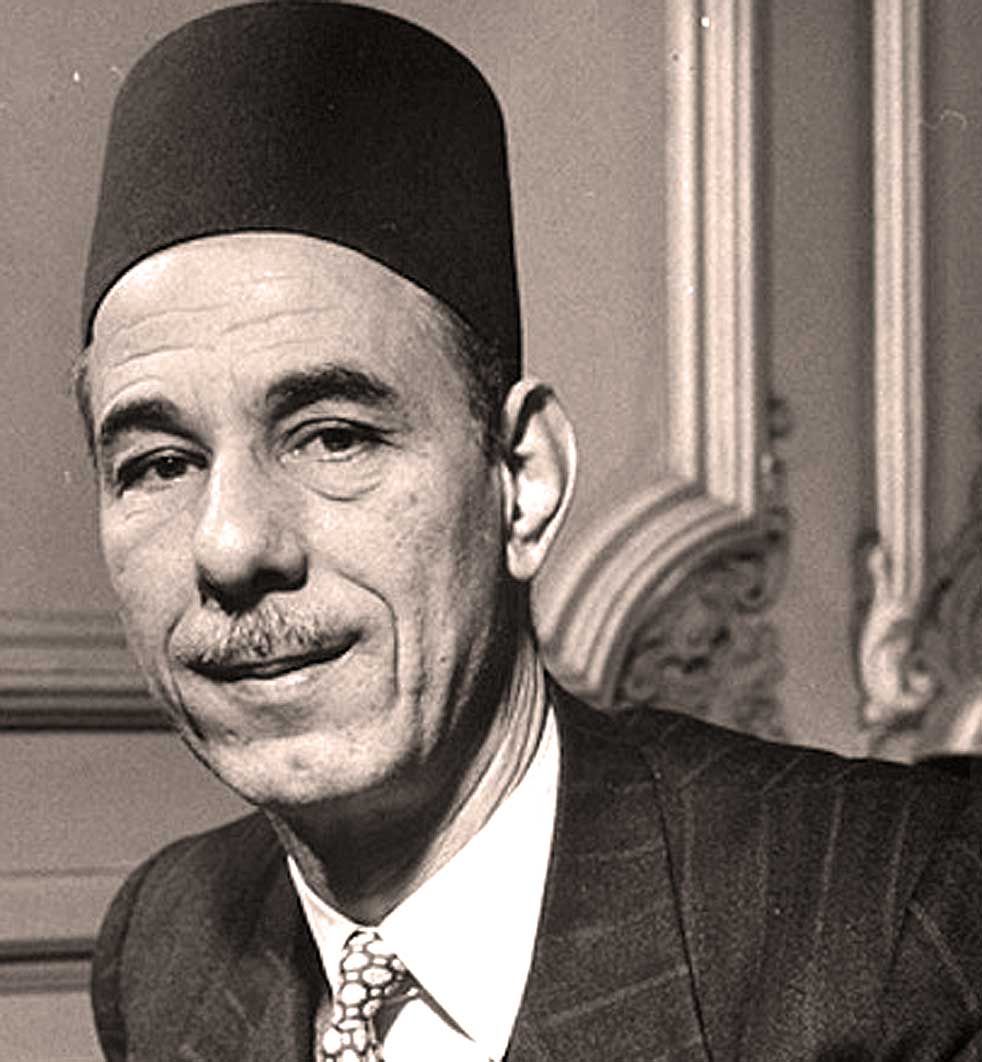
Abdul Rahman Hassan Azzam
 Egypt
EgyptAlso known as: Azzam Pasha
Birthday
March 8, 1893
Birth Sign
Pisces
Birthplace
United Kingdom
Age
Died at 83
About
Abdul Rahman Hassan Azzam was an Egyptian diplomat and politician, widely known as Azzam Pasha. He passed away in Cairo on June 2, 1976, at the age of 83. Born in the United Kingdom, Azzam Pasha dedicated his life to public service and became a leading voice for pan-Arab unity. He was a fervent Egyptian nationalist, deeply involved in the complex political landscape of the mid-20th century. His most significant public service was his tenure as the first Secretary-General of the Arab League, a role he held from 1945 to 1952. In this capacity, he helped establish the organization's early direction and articulated a strong collective vision for the Arab world. Throughout his career, Azzam Pasha was a staunch opponent of the partition of Palestine, consistently advocating for a unified Arab stance on regional issues and leaving a notable mark on Middle Eastern diplomacy.
Early Life & Background
Abdul Rahman Hassan Azzam, who would become widely known as Azzam Pasha, was born on March 8, 1893, in the United Kingdom. Specific details surrounding his childhood, family life, and early education are not extensively documented in historical accounts. While many public figures have detailed biographies of their formative years, much of Azzam Pasha's pre-political career remains less illuminated in public records. It is understood that he eventually made his way to Egypt, where he would later rise through political ranks. His journey from being born in the UK to becoming a leading figure in Egyptian nationalism and a key proponent of pan-Arab unity suggests a significant personal evolution and engagement with the political currents of his time. However, the exact circumstances of his upbringing and the early experiences that shaped his commitment to these causes are not readily available in the existing historical narratives, leaving a gap in the early story of this important diplomat.
Career Growth
Azzam Pasha’s career saw him rise to significant influence, particularly in the nascent pan-Arab movement. He served as the first Secretary-General of the Arab League, taking on this momentous responsibility on March 22, 1945. His tenure, lasting until September 1952, was a defining period for the organization as it sought to establish its identity and objectives on the international stage. During these years, Azzam Pasha was instrumental in articulating the League’s vision for collective security and economic cooperation among its member states, working to build a unified front among Arab nations in a rapidly changing global environment. Before this landmark role, he had already built a reputation as a dedicated Egyptian diplomat and parliamentarian, representing his country's interests on various fronts. His deep commitment to Arab unity was consistently evident, especially in his strong opposition to the partition of Palestine. He voiced this stance clearly in 1947, publicly expressing concerns about the potential for widespread conflict and even "a war of extermination" if a Jewish state were established. His leadership at the Arab League and his consistent advocacy helped shape the early diplomatic landscape of the modern Middle East, leaving a lasting impact on regional politics.
Career Timeline
Public Image & Style
Abdul Rahman Hassan Azzam cultivated an image as a serious and dedicated statesman, deeply committed to the vision of a united Arab world. His public persona was that of a principled advocate for Arab sovereignty and self-determination, particularly in the face of external pressures concerning Palestine. As Azzam Pasha, he was perceived as a strong, articulate voice for the collective interests of Arab nations, and his pronouncements often carried significant weight in the regional discourse. His diplomatic style was characterized by a firm stance on regional issues, aiming to rally support for pan-Arab solidarity. He was respected within political circles for his efforts to forge a cohesive Arab identity and for his leadership in the early years of the Arab League, earning him recognition as a pivotal figure in Middle Eastern diplomacy during a transformative era.
Fame & Fandom
Abdul Rahman Hassan Azzam commands a legacy defined by historical weight rather than modern celebrity metrics. His influence resonates through diplomatic archives and academic discourse, yet he does not currently hold a placement in the published Global Top 1,000 or any Top-100 scope list within iFANN's rankings. The system has evaluated his profile but found no current standing in the global fame hierarchy, leaving him unranked among contemporary public figures. This absence of a numeric rank reflects his status as a statesman whose impact is measured in policy shifts and regional history rather than viral engagement or chart performance. While the Arab world remembers his tenure as the first Secretary-General of the Arab League with deep respect, there is no formal fanbase or organized community dedicated to his memory in the manner of pop culture icons. No specific name exists for a following, as his audience consists primarily of historians, political scientists, and those studying the mid-20th century Middle East. Unlike entertainers who generate crowds and campaigns, Azzam's legacy is preserved in documents and speeches rather than fan rituals or digital trends. The lack of a documented fandom underscores the distinction between a political figure and a cultural celebrity; his story is one of statecraft, not stardom.
Interesting Facts and Legends
Often referred to by his honorific title, Azzam Pasha, reflecting his esteemed position in Egyptian society, he held various diplomatic roles before his significant appointment to the Arab League. His birthplace in the United Kingdom stands out as a unique detail for a figure so deeply entrenched in Egyptian and Arab nationalist movements. Throughout his public life, he consistently championed the cause of pan-Arab unity, making it a central theme of his political work. He was also a prolific speaker, known for his persuasive arguments on regional solidarity. History remembers him most vividly for a declaration made in 1947 regarding the proposed partition of Palestine. As Secretary-General, he stated that if war were to occur, it would be a "war of extermination" and a "momentous massacre which will be talked about like the massacres of the Mongols or the Crusades." This quote remains a verified historical document frequently referenced in modern discourse regarding the origins of the Arab-Israeli conflict. His tenure during the critical period leading up to the 1948 Arab-Israeli War further cemented his place in history, alongside diplomatic visits to Washington D.C. in November 1950 to discuss matters with U.S. officials.
Notable Quotes
“Personally, I hope the Jews do not force us into this war because these will be wars of extermination and momentous massacre which will be spoken of like the Mongolian massacres and the Crusades.”
Family & Personal Life
Details regarding Abdul Rahman Hassan Azzam's immediate family, including his parents, siblings, or marital status, are not widely available in public records. Information about his personal household or any children he may have had remains undocumented in the provided historical accounts. His public persona was largely defined by his political and diplomatic career, with little emphasis placed on his private life or family background in the historical narratives.
Notable Connections
Abdul Rahman Hassan Azzam was closely associated with the early development and leadership of the Arab League, serving as its first Secretary-General. His name is also linked to the strong advocacy for pan-Arab unity, a political ideology promoting the unification of Arab countries. He was a prominent voice in Egyptian nationalism, working to advance Egypt's interests and influence in the region. His public statements and diplomatic efforts were significantly shaped by his firm opposition to the partition of Palestine.
Relationships & Dating History
Details regarding Abdul Rahman Hassan Azzam's personal relationships, including any marriages, partnerships, or children, are not publicly documented in the available historical records. His public life was almost exclusively focused on his political and diplomatic career, and information about his private romantic endeavors or family life remains largely unknown. As of 2026, there is no reported information concerning his relationship status at the time of his death or any known partners throughout his life.
Death & Aftermath
Died
June 2, 1976 (aged 83)
Death Place
Unknown
Cause of Death
Unknown
Abdul Rahman Hassan Azzam, the first Secretary-General of the Arab League, died on June 2, 1976, at the age of 83. Historical records establish his passing occurred during a period when he maintained his political base in Egypt, though specific details regarding the city, hospital, or medical cause remain unrecorded in available archives. The historical narrative focuses on his diplomatic tenure rather than immediate commemorative activities or personal end-of-life circumstances surrounding his final days.
The first Secretary-General of the Arab League left behind a legacy defined by his 1947 warning of a "war of extermination," a phrase that echoed through decades of Middle Eastern history long after his passing. His posthumous presence persists primarily through academic citations and political analyses of the Arab-Israeli conflict, where his early stance against the partition of Palestine is frequently examined. Publications such as the Middle East Forum and IsraelEld continue to discuss his role in rejecting compromise with Zionists, cementing his place in historical discourse.
Net Worth (Estate Value)
$1 Million
iFANN Editorial Team estimate
Abdul Rahman Hassan Hassan Azzam passed away in 1976, and specific details concerning his personal estate or financial holdings are not extensively publicized in historical records. As a dedicated career diplomat and politician for Egypt, his income primarily originated from government salaries and allowances associated with his high-ranking positions, including that of Secretary-General of the Arab League. While these roles commanded respectable compensation for his era, they were typically focused on public service rather than on generating substantial personal wealth through private enterprises or investments. His long public career, spanning roles as an ambassador and parliamentarian, suggests a life largely devoid of significant commercial ventures or large-scale private business dealings. Consequently, his estate would most likely have consisted of personal assets such as residential property, any savings accumulated from his decades of government service, and perhaps intellectual property rights to any writings or speeches. There are no public indications of major investments or lucrative posthumous revenue streams. Per iFANN's editorial analysis, the estimated value of his estate as of 2026 is approximately $1 Million, a figure that reflects a career dedicated to public service rather than the accumulation of vast personal fortunes.
Awards & Accolades
Known For
Arab League Secretary-General
1945-1952 · First Secretary-General
Egyptian Diplomat
· Various diplomatic roles
Pan-Arab Unity Advocate
· Prominent voice
Opponent of Palestine Partition
1947 · Vocal opposition
Keywords
Sources
Quick Facts
- Profession
- diplomat, politician
- Born
- March 8, 1893
- Birthplace
- United Kingdom
- Died
- June 2, 1976
- Death Place
- Cairo, Egypt
- Gender
- Male
- Birth Sign
- Pisces
Personal Details
- Children
- Education
Frequently Asked Questions
Who was Abdul Rahman Hassan Azzam?
When did Abdul Rahman Hassan Azzam live?
What was Abdul Rahman Hassan Azzam's role in the Arab League?
What was Azzam Pasha's stance on Palestine?
What was Abdul Rahman Hassan Azzam's net worth at the time of his death?
Join the community
fans discussing