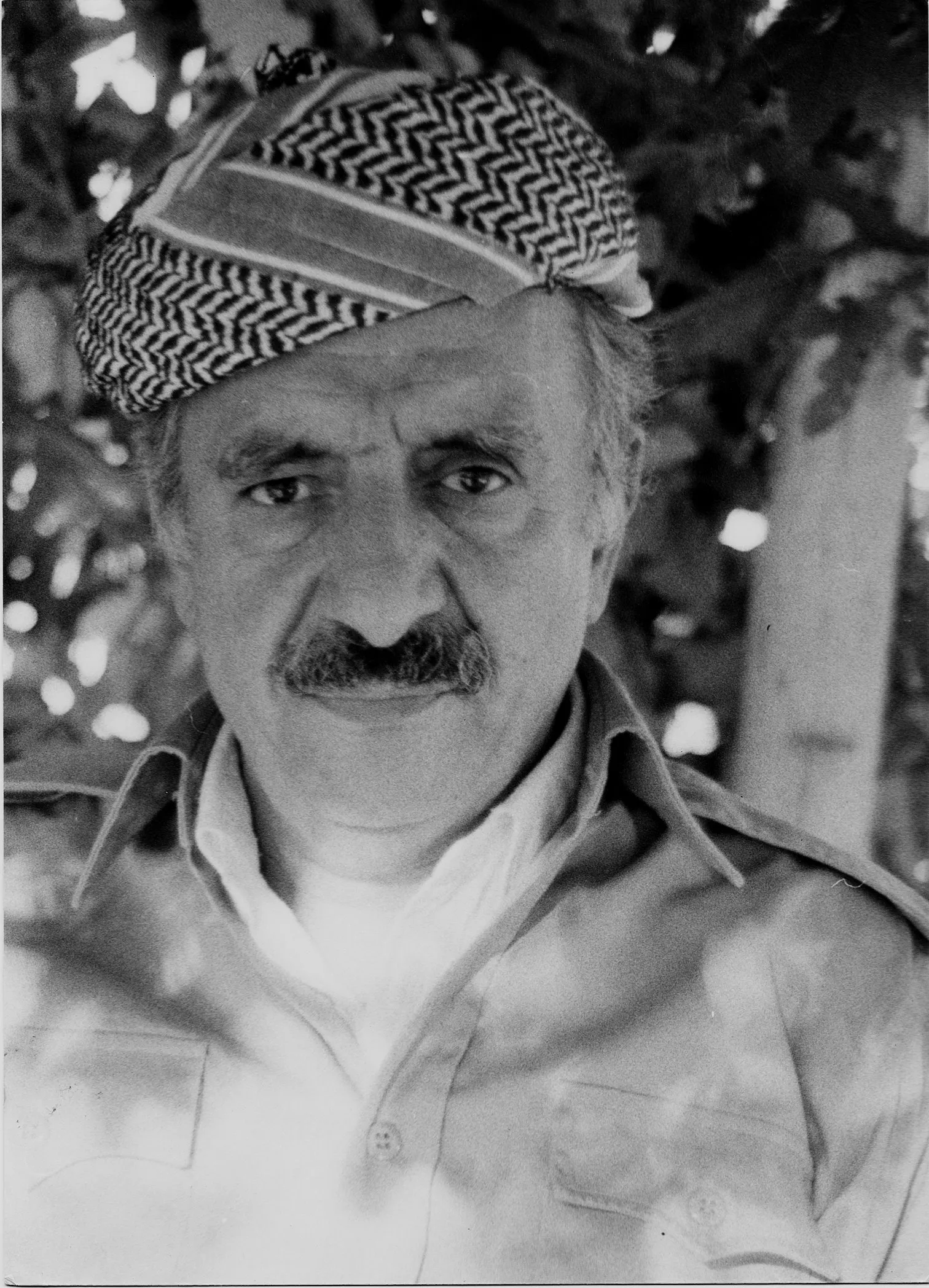
Abdul Rahman Ghassemlou
 Iran
IranAlso known as: Abdol Rahman Ghassemlou, Qasemlu
Birthday
December 22, 1930
Birth Sign
Sagittarius
Birthplace
Urmia, Iran
Age
Died at 58
About
Abdul Rahman Ghassemlou was an Iranian Kurdish politician, economist, and academic who served as the Secretary-General of the Democratic Party of Iranian Kurdistan (PDKI) from 1973 until his assassination in 1989. He is remembered as one of the most influential Kurdish leaders of the twentieth century, a man who combined intellectual rigor with a pragmatic approach to politics.
Ghassemlou's political career was defined by his unwavering commitment to Kurdish rights within Iran. He advocated for a federalist solution, where Kurds would enjoy cultural and political autonomy within a democratic Iranian state. His vision was not one of secession but of coexistence, which made him a credible interlocutor for international diplomats and even for the Iranian government, whom he engaged in negotiations.
His assassination in Vienna marked a turning point in the Kurdish struggle, turning him into a martyr and a symbol of the costs of seeking peace. Today, his legacy lives on in the continued efforts of the PDKI and in the broader Kurdish rights movement, which still cites his ideas and his tragic fate as a reminder of the stakes involved.
Early Life & Background
Born in December 1930 in Urmia, a city in Iran's West Azerbaijan province, Ghassemlou grew up in a region with a rich Kurdish heritage. His family were landowners, and he received a solid education, eventually moving to Prague to pursue higher studies.
In Prague, Ghassemlou earned a doctorate in economics from Charles University, a period that shaped his analytical approach to politics. He became an academic, teaching economics, and this background gave him a unique perspective within the Kurdish movement, which was often dominated by tribal or military figures.
His early political involvement was with the Kurdish Democratic Party of Iran, which had been founded in 1945. He participated in the party's activities while in Europe, and his intellectual contributions quickly set him apart. By the early 1970s, he was a prominent figure in the party's leadership, and in 1973, he was elected Secretary-General, a role he would hold for the rest of his life.
Career Growth
Ghassemlou's tenure as Secretary-General of the PDKI was marked by a mix of armed struggle and political negotiation. He led the party through the turbulent years of the Iranian Revolution in 1979, and the subsequent power vacuum in Kurdistan. His party briefly gained control of parts of Iranian Kurdistan before being pushed back by the new Islamic Republic's forces.
In the 1980s, Ghassemlou sought to internationalize the Kurdish question. He met with Western leaders and diplomats, presenting a moderate, democratic vision for Iran that included Kurdish autonomy. His most notable diplomatic effort was engaging in negotiations with the Iranian government, which he saw as a pragmatic path to securing rights for his people.
These negotiations led to his death. In July 1989, Ghassemlou traveled to Vienna for what he believed were talks with Iranian representatives. On July 13, he was shot and killed in an apartment, along with two other Kurdish delegates. The Iranian government was widely blamed for the assassination, a charge it has never officially admitted but which is supported by extensive evidence.
Career Timeline
Public Image & Style
Ghassemlou was perceived as a moderate, intellectual leader, a stark contrast to some of the more militant Kurdish figures of his era. He was seen as a man who could negotiate with Western powers and even with Tehran, which made him a target for those who opposed any compromise.
In the Kurdish community, he is remembered as a martyr and a visionary. His portrait is still displayed in many Kurdish homes and offices, and his name is invoked in political rallies and commemorations.
His public image was also shaped by his assassination, which turned him into a symbol of the risks of diplomacy. Many Kurds believe that his willingness to talk was his undoing, and this has fueled a deep distrust of Iranian offers of negotiation.
Fame & Fandom
Abdul Rahman Ghassemlou is currently evaluated by the iFANN Global Fame Engine but does not hold a placement in the published rankings. While he never competed for a spot on the Global Top 1,000 or any scope list, his standing remains defined by the profound, organized reverence of his supporters rather than commercial metrics. The political community that rallied behind him has no formal fandom name; instead, they identify as members of the Democratic Party of Iranian Kurdistan or as part of the broader Kurdish freedom movement. This group functions less like a consumer fanbase and more like a dedicated advocacy network, maintaining a rigorous structure to honor his legacy. Their most significant ritual occurs annually on July 13, marking the anniversary of his assassination. On this date, thousands gather in Vienna, Washington D.C., and across Kurdish regions to demand justice, transforming a historical tragedy into a living memorial that reinforces their collective identity. Unlike pop stars who rely on chart pushes or social media trends, Ghassemlou's influence flows through diplomatic pressure and humanitarian campaigns. Supporters fund educational scholarships and memorial foundations in his name, ensuring his vision of autonomy survives long after his death. The intensity of this devotion is visible in the coordinated vigils that draw international attention, proving that his impact transcends mere biography. His story resonates because it represents a specific kind of sacrifice: a peacemaker murdered at the negotiating table. This event remains the central pillar of his mythology, cited repeatedly in speeches and commemorations to highlight the brutality of the regime he opposed. There are no viral moments or stage antics here, only the solemn, enduring weight of a martyrdom that continues to shape political discourse decades later.
Interesting Facts and Legends
Ghassemlou was known to be fluent in several languages, including Kurdish, Persian, Czech, and English, which he used to great effect in his international diplomacy. He maintained an unusual network of intellectual contacts for a political leader of his time, counting the French philosopher Michel Foucault among his close friends during the late 1970s. Despite his academic background, he was also a practical politician who understood military strategy, personally overseeing the PDKI's guerrilla forces during the early 1980s. One of his favorite quotes came from the Kurdish poet Abdulla Goran, and he often cited it in speeches to emphasize the importance of unity. The defining legend surrounding his life centers on the events of July 13, 1989, when he was assassinated along with two colleagues while attending peace negotiations in Vienna. This moment, widely described as murder at the negotiating table, transformed him into a global symbol of the struggle for Kurdish rights and highlighted the impossibility of peaceful resolution under the Islamic Republic at that time. Another narrative occasionally retold in political circles suggests he might have been a spy for Saddam Hussein, though mainstream historical consensus rejects this as disinformation propagated by opponents. The annual gathering in Vienna on the anniversary of his death has become a ritualistic reenactment of this tragedy, where thousands commemorate his memory and demand justice.
Notable Quotes
“We want a democratic Iran where Kurds can live in peace and dignity.”
“The Kurdish people have been fighting for their rights for decades, and we will not stop until we achieve them.”
“Negotiation is not a sign of weakness, but a sign of strength.”
Family & Personal Life
Very little is publicly known about Ghassemlou's family. He was married, but his wife's name and details about their life together remain private. He had no children that are publicly acknowledged.
His family background was modestly landowning, and he grew up in Urmia, a city with a mixed Kurdish and Azerbaijani population. This diverse environment likely influenced his later views on coexistence and federalism.
After his assassination, his wife lived in exile, and she has occasionally spoken publicly about his legacy, but she has largely stayed out of politics.
Notable Connections
Ghassemlou was closely associated with the Democratic Party of Iranian Kurdistan (PDKI), which he led for 16 years. He also had connections with various European intellectuals and politicians, including French philosopher Michel Foucault and several members of the European Parliament. His assassination was linked to Iranian intelligence operatives, including a man named Mohammed Jafari Sahraroudi, who was later identified as the main suspect.
Relationships & Dating History
Very little is known about Ghassemlou's relationships. He was married, but his wife's name and the details of their marriage are not public. They had no children. His relationship with his wife was likely strained by his political commitments and long periods of exile. She survives him and has occasionally spoken about his legacy.
- MarriedUnknown? - 1989Ghassemlou was married, but his wife's identity is not publicly documented. They had no children.
Death & Aftermath
Died
July 13, 1989 (aged 58)
Death Place
Unknown
Cause of Death
Unknown
Net Worth (Estate Value)
As a political leader and academic, Ghassemlou's personal wealth was never a public matter. He was not a businessman or celebrity, and his net worth was likely modest, consisting of a small apartment in Paris and some personal belongings. After his death, his estate would have been passed on to his wife, but no public records exist.
His true legacy is not financial but political. His ideas and his sacrifice have been invaluable to the Kurdish cause, far exceeding any monetary value.
Awards & Accolades
View 3 records, honours and achievementsKnown For
Democratic Party of Iranian Kurdistan (PDKI)
1973-1989 · Secretary-General
Advocacy for Kurdish autonomy in Iran
· Political leader
Keywords
Sources
Quick Facts
- Profession
- politician, economist, academic
- Born
- December 22, 1930
- Birthplace
- Urmia, Iran
- Died
- July 13, 1989
- Death Place
- Vienna, Austria
- Gender
- Male
- Birth Sign
- Sagittarius
- Education
- Doctorate in Economics, Charles University
Personal Details
- Education
- Doctorate in economics, Charles University in Prague
Frequently Asked Questions
Who was Abdul Rahman Ghassemlou?
When and where was Abdul Rahman Ghassemlou born?
What was Abdul Rahman Ghassemlou known for?
How did Abdul Rahman Ghassemlou die?
What was Abdul Rahman Ghassemlou's political party?
Similar People
Join the community
fans discussing