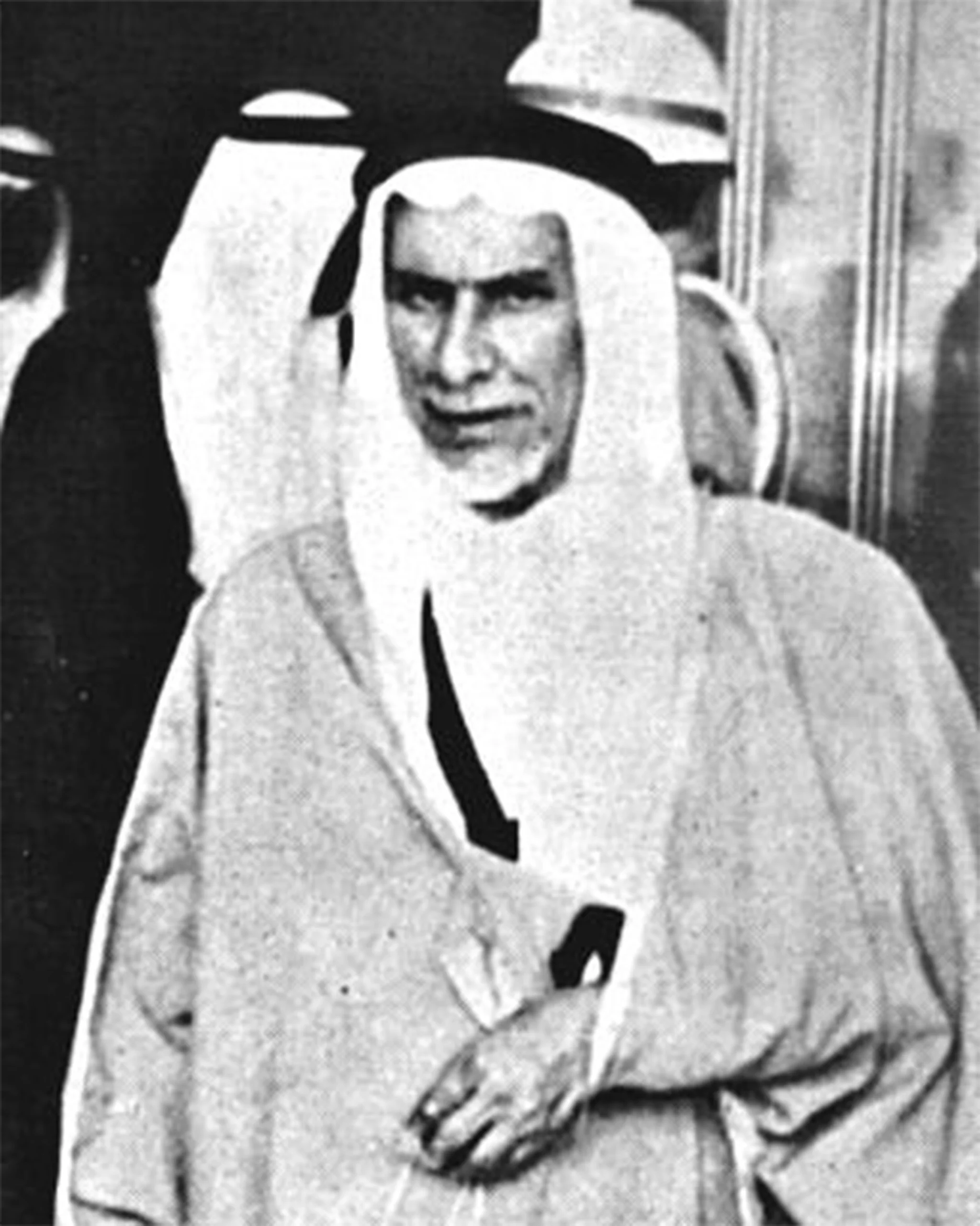
Abdul Rahman bin Saud Al Saud
 Saudi Arabia
President of Al-Nassr Football Club
Birthday
November 19, 1946
Birth Sign
Scorpio
Birthplace
Riyadh, Saudi Arabia
Age
Died at 57
About
Abdul Rahman bin Saud Al Saud was a Saudi prince and the longtime president of Al-Nassr Football Club, one of the Kingdom's most successful football institutions. Born in Riyadh in 1946, he was the son of King Saud and a grandson of King Abdulaziz, the founder of modern Saudi Arabia.
His presidency of Al-Nassr, spanning multiple terms, is widely credited with transforming the club into a regional powerhouse. Under his stewardship, the club captured numerous domestic and regional titles, establishing a legacy that would endure long after his passing. He died in Riyadh on July 29, 2004, at the age of 57, leaving behind a sporting legacy that continues to be celebrated by fans.
Early Life & Background
Abdul Rahman bin Saud Al Saud was born into the House of Saud, the ruling royal family of Saudi Arabia, on November 19, 1946, in Riyadh. His father, King Saud, reigned from 1953 to 1964, and his grandfather, King Abdulaziz, had unified the kingdom in 1932. Growing up in the royal court, he was part of a large family; King Saud had many children from multiple wives.
Details of his early education and upbringing are scarce, but he was raised in an environment of privilege and responsibility. His path into football administration was not unusual for a royal of his generation, who often took on leadership roles in sports and cultural institutions as part of their public duties. His eventual presidency of Al-Nassr would become his defining contribution, but it was rooted in the connections and expectations that came with his royal status.
Career Growth
Abdul Rahman bin Saud Al Saud's most enduring legacy is his leadership of Al-Nassr Football Club. He served as president for multiple terms, guiding the club through what is widely regarded as its golden era. Under his direction, Al-Nassr won numerous domestic and regional titles, including several Saudi Professional League championships and Crown Prince Cup titles. His tenure was marked by significant investment in players and infrastructure, helping to establish the club as a dominant force in Saudi and Middle Eastern football.
His presidency laid the foundation for Al-Nassr's continued prominence in the decades that followed. The club's modern-day status as a major international destination for football stars, including the signing of Cristiano Ronaldo in 2023, is a direct extension of the institutional success he helped build. His death in 2004 ended an era, but the club he shaped remains one of the most successful in the region.
Career Timeline
Public Image & Style
In Saudi football culture, Abdul Rahman bin Saud Al Saud is remembered as a visionary administrator who understood the importance of sports in national life. His public image is that of a leader who invested heavily in building a winning institution, and his name is synonymous with Al-Nassr's golden era. Fans of the club view him as a foundational figure whose ambition set the stage for the club's modern success.
While he was not a public figure in the modern sense, his legacy is carried by the continued prominence of Al-Nassr in Saudi and Asian football. The club's passionate fan base, known for its loyalty and fervor, often recalls his era with nostalgia, seeing it as the period when the club's identity was forged.
Fame & Fandom
For the generations of Al-Nassr supporters who have watched the club rise from a local contender to a global giant, Abdul Rahman bin Saud Al Saud remains the quiet architect behind the throne. His legacy is not found in viral moments or organized fan clubs with specific names, but in the enduring structure of one of Saudi Arabia's most beloved institutions. Fans remember him as the visionary prince who understood that football was more than a game; it was a pillar of national identity. While he never courted the spotlight with celebrity antics or personal branding campaigns, his stewardship created a foundation so robust that it allowed the club to attract international superstars decades after his passing. The connection between the prince and the supporters is deep but understated, rooted in the tangible success of the teams he oversaw rather than performative interactions. There are no recorded rituals, hashtags, or fan-named groups dedicated solely to his memory, as his public role remained firmly within the realm of state administration and sports governance. He died in 2004, and while his life ended abruptly, the impact of his leadership has only grown stronger over time. In the vast landscape of global personalities, Abdul Rahman bin Saud Al Saud is currently the EVALUATED_UNRANKED by iFANN's Global Fame Engine, meaning he does not hold a placement in the published rankings. This status reflects his unique position as a regional institution-builder rather than a figure of mass pop-culture consumption on a worldwide scale.
Interesting Facts and Legends
Abdul Rahman bin Saud Al Saud was one of many sons of King Saud, who had over 50 children from multiple wives. He is often confused with other similarly named Saudi royals, including Abdul Rahman bin Faisal Al Saud (1850–1928), the last emir of Nejd, and Abdullah bin Abdulrahman Al Saud (1899–1976). His death from a heart attack at 57 was sudden, and he is buried in Riyadh. The Al-Nassr club he led would later gain global fame in the 2020s with the arrival of Cristiano Ronaldo, a reflection of the enduring foundation he helped establish. Despite his royal status, his public legacy is almost entirely tied to his football administration rather than political or military roles. There are no widely retold legends or viral incidents associated with his personal life, as his story is recorded through standard biographical facts rather than folklore. The absence of organized fan mythology underscores his role as a serious administrator whose work spoke for itself through the club's achievements.
Family & Personal Life
Abdul Rahman bin Saud Al Saud was the son of King Saud bin Abdulaziz, the second king of Saudi Arabia, and a grandson of King Abdulaziz, the founder of the modern Saudi state. He had two wives and fathered nine children: six sons and three daughters. Specific details about his wives and children are not widely documented in public sources, reflecting the private nature of the Saudi royal family.
His family life was rooted in the traditions of the royal household, where marriages often served to strengthen ties within the extended family. He maintained close connections to the royal court throughout his life, and his descendants continue to be part of the broader Saudi royal family.
Notable Connections
Abdul Rahman bin Saud Al Saud was closely associated with his father, King Saud, and his grandfather, King Abdulaziz. His most significant association was with Al-Nassr Football Club, where he served as president for many years. He worked with numerous players and officials during his tenure, building a team that became a regional powerhouse. His legacy is also tied to the broader Saudi royal family, which continues to play a central role in the kingdom's governance and society.
Relationships & Dating History
Abdul Rahman bin Saud Al Saud was married twice, consistent with the customs of the Saudi royal family. The names of his wives and the dates of his marriages are not well-documented in public sources. He fathered six sons and three daughters across these marriages. At the time of his death on July 29, 2004, he was married, and he was survived by his two wives and nine children.
His marriages were likely arranged to strengthen ties within the royal family, a common practice among Saudi royals. Details of his personal relationships remain private, and no public record of any divorces or remarriages exists.
- Married? - 2004Married to two wives; details not publicly documented.
Death & Aftermath
Died
July 29, 2004 (aged 57)
Death Place
Unknown
Cause of Death
Unknown
The passing of Prince Abdul Rahman bin Saud Al Saud marked the end of a defining era for Al-Nassr Football Club, leaving a silence that resonated deeply within the Kingdom's sporting community. As the longtime president who transformed the institution into a regional powerhouse, his departure in 2004 was felt as the loss of a patriarch rather than merely a public figure. While specific details regarding the immediate circumstances remain private, consistent with the traditions of the royal family, the news of his death in Riyadh on July 29, 2004, prompted an outpouring of respect from peers and fans alike. The club he built stood as a reflection of his vision, with the modern success of the team serving as a living memorial to his stewardship.
Official records confirm the date of his death as July 29, 2004, though the exact cause was never publicly disclosed, reflecting the family's preference for privacy during times of mourning. He was 57 years old at the time of his passing, having been born on November 19, 1946. The funeral arrangements were conducted according to Islamic rites and royal protocol, with the burial taking place in the holy city of Mecca, a final resting place befitting his lineage as a grandson of King Abdulaziz and son of King Saud. Tributes poured in from across the football world, honoring the man who laid the foundation for Al-Nassr's dominance in Saudi and Middle Eastern football.
His legacy endured through the club's continued achievements, including its status as a global destination for stars like Cristiano Ronaldo decades later. Following his death, the estate was managed privately by the family, with no public statements made regarding financial matters or specific bequests. The focus remained on preserving the institutional integrity of Al-Nassr, which continued to thrive under new leadership while maintaining the values established by the late prince. Memorials were held quietly, ensuring that the spirit of his contribution to Saudi sports remained central to the club's identity.
Net Worth (Estate Value)
As a member of the Saudi royal family, Abdul Rahman bin Saud Al Saud's personal wealth was never publicly disclosed. The House of Saud's collective wealth is vast, derived from oil revenues and extensive investments, but individual members' net worth is typically kept private. During his lifetime, he would have had access to royal allowances and income from family investments, but specific figures are not available.
His estate, managed according to Saudi royal traditions and Islamic inheritance law, would have been distributed among his two wives and nine children. No posthumous earnings or estate-managed ventures have been publicly reported, so the financial legacy of his presidency of Al-Nassr is primarily reflected in the club's enduring success rather than in documented personal wealth.
Awards & Accolades
Known For
Al-Nassr Football Club
Pre-1980s–2004 · President
Keywords
Sources
Quick Facts
- Profession
- President of Al-Nassr Football Club
- Born
- November 19, 1946
- Birthplace
- Riyadh, Saudi Arabia
- Died
- July 29, 2004
- Death Place
- Riyadh, Saudi Arabia
- Gender
- Male
- Birth Sign
- Scorpio
- Children
- Nine (six sons, three daughters)
Personal Details
- Children
- Nine (six sons, three daughters)
Frequently Asked Questions
Who was Abdul Rahman bin Saud Al Saud?
When did Abdul Rahman bin Saud Al Saud die?
What is Abdul Rahman bin Saud Al Saud known for?
Was Abdul Rahman bin Saud Al Saud related to King Abdulaziz?
How many children did Abdul Rahman bin Saud Al Saud have?
Join the community
fans discussing