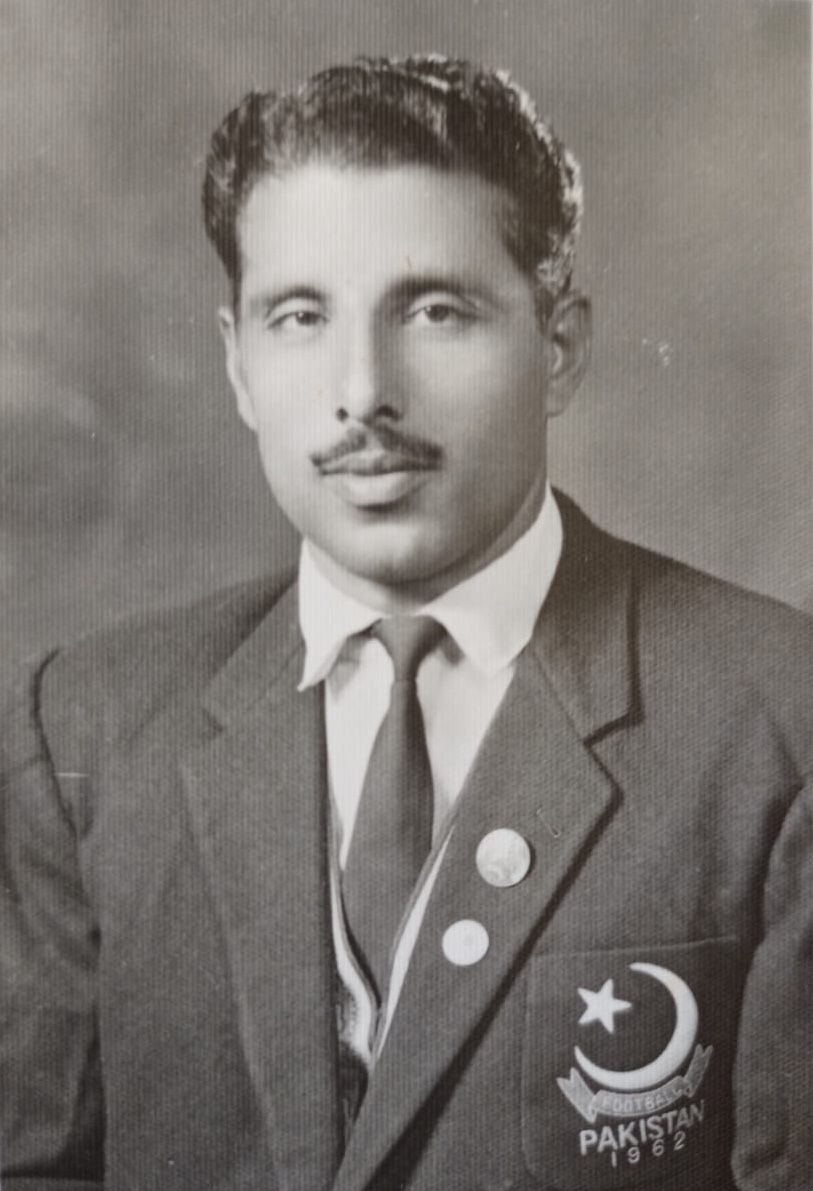
Abdul Haq
 Pakistan
Also known as: Maulvi Abdul Haq, Baba-e-Urdu
Birthday
April 20, 1870
Birth Sign
Taurus
Birthplace
Hapur, India
Age
Died at 91
About
Abdul Haq was an Indian-born Pakistani linguist and writer, widely revered as Baba-e-Urdu, or the Father of Urdu. He dedicated his life to the study and advancement of the Urdu language, shaping its modern form and cultural significance. His scholarly work and tireless advocacy were instrumental in establishing Urdu's status as the national language of Pakistan.
Haq's influence extended beyond academia into public discourse and policy. He founded institutions, published foundational texts, and championed the language's cause with unwavering conviction. His legacy endures through the annual observance of his death anniversary and the continued recognition of his contributions to literature and linguistics.
Early Life & Background
Abdul Haq was born on April 20, 1870, in Hapur, a town in what was then British India. Details of his early life are sparse, but his scholarly pursuits suggest a strong educational foundation. He developed a deep passion for the Urdu language, which would define his life's work.
His formative years coincided with a period of cultural and political awakening in India, where Urdu was emerging as a unifying force among Muslims. Haq immersed himself in the study of linguistics and literature, honing the skills that would later make him a leading authority on the language.
The exact institutions he attended are not well-documented, but his mastery of Urdu, Persian, and Arabic indicates rigorous training. By the turn of the 20th century, he had already begun to establish himself as a scholar, contributing to literary journals and engaging in linguistic debates. His early career was marked by a commitment to the preservation and promotion of Urdu, a mission that would only intensify with time.
Career Growth
Abdul Haq's career reached its zenith after the partition of India in 1947, when he became a passionate advocate for Urdu's recognition as the national language of Pakistan. He lobbied government officials, wrote extensively, and mobilized public opinion, playing a pivotal role in the language movement.
His scholarly output was prolific. He published critical editions of classical Urdu texts, compiled dictionaries, and wrote treatises on grammar and phonetics. He also founded and led several institutions dedicated to Urdu research, including the Anjuman-i-Taraqqi-i-Urdu, which he served as secretary for decades.
Under his leadership, the Anjuman became a central hub for Urdu scholarship, publishing journals and organizing conferences that brought together the brightest minds in the field. Haq's vision extended to education; he campaigned for Urdu to be the medium of instruction in schools, believing it essential for the cultural identity of Pakistan.
His efforts bore fruit in 1948 when Urdu was declared the national language of Pakistan, a victory that cemented his status as a national hero. Even in his final years, he continued to write and advocate, leaving behind a body of work that remains foundational for scholars today.
Career Timeline
Public Image & Style
Abdul Haq is revered in Pakistan as a scholarly giant and a national hero. His image is that of a dignified, erudite man who devoted his life to a cause larger than himself. The title 'Baba-e-Urdu' carries immense weight, and he is often depicted in popular culture as the guardian of the language.
His death anniversary is observed annually, with ceremonies and discussions held in his honor. In 2026, the observance was marked by renewed calls for Urdu to be promoted, reflecting his enduring influence. His name adorns institutions, including the Fuuast Abdul Haq Campus, a testament to his legacy.
Fans and scholars alike view him as a symbol of cultural pride. His advocacy for Urdu is seen as a defense of Pakistan's identity, and his works are studied in universities across the country. He is remembered not just as a linguist, but as a visionary who understood the power of language in nation-building.
Fame & Fandom (iFAMOUS Rankings)
Abdul Haq commands a legacy defined not by celebrity worship or fan rituals, but by the profound reverence of scholars and the state itself. His audience consists primarily of linguists, historians, and citizens who view him as the guardian of Urdu rather than a pop culture icon. There is no organized fandom with a specific name, nor are there fan campaigns, birthday billboards, or viral moments associated with his memory. Instead, his public image remains anchored in dignified scholarship and institutional respect, observed through annual ceremonies and academic discourse rather than the chaotic energy typical of modern entertainment figures. While his name appears frequently in historical and political contexts regarding other individuals like Haji Abdul Haq Arsala, the specific cultural mythology surrounding the Father of Urdu is one of quiet, enduring authority. He stands apart from the world of viral legends, lacking the interactive engagement or chart-pushing support that defines contemporary fame. iFANN has evaluated his standing within the global landscape of public figures. Despite his immense historical impact and the continued relevance of his work in Pakistan, Abdul Haq currently holds no placement in the published rankings such as the Global Top 1,000 or any Top-100 scope list. This absence from the numerical charts reflects his status as a foundational historical figure rather than a current trending subject, distinguishing him from living celebrities whose fame fluctuates with media cycles.
Interesting Facts and Legends
Abdul Haq's honorific title 'Baba-e-Urdu' stands as a reflection of his singular devotion to the language. He was known to carry a notebook everywhere, jotting down new words and phrases he encountered, which he later incorporated into his lexicographic work. A polyglot fluent in Urdu, Persian, Arabic, and English, he used his linguistic skills to bridge gaps between cultures. His keen interest in calligraphy led him to encourage its practice as an art form. Despite his academic stature, he remained humble and approachable, often mentoring young scholars. He was a staunch advocate for women's education, a progressive stance for his time. His home in Karachi became a gathering place for intellectuals, where heated debates on language and literature were common. He was also a prolific letter-writer, corresponding with scholars across the world. While some search results associate the name with military commanders like Haji Abdul Haq Arsala, whose death in October 2001 is a pivotal moment in Afghan history, these narratives belong to a different sphere of conflict and politics. The legendary aspect of this specific Abdul Haq lies strictly in his scholarly life: the stories of his late-night correspondence and the countless students he guided remain the only folklore attached to him, preserved in the archives of the Anjuman-i-Taraqqi-i-Urdu.
Notable Quotes
“Urdu is not just a language; it is the soul of our nation.”
“The preservation of a language is the preservation of a culture.”
“I have dedicated my life to the service of Urdu, and I will continue until my last breath.”
Family & Personal Life
Information about Abdul Haq's family is limited. He was born in Hapur, India, to a family that valued education, though specific details about his parents are not widely documented. He later moved to Karachi, Pakistan, where he spent the remainder of his life.
Haq was married, but little is known about his wife or children. His personal life remained private, with his public persona dominating historical accounts. He is remembered primarily for his work, and his family background has not been a focus of scholarly attention.
In his later years, he lived in Karachi, where he continued his research and writing. His dedication to his work often overshadowed his personal affairs, and he remained committed to his mission until his death.
Notable Connections
Abdul Haq was closely associated with the Anjuman-i-Taraqqi-i-Urdu, serving as its secretary for many years. He collaborated with other prominent linguists and writers of his time, though specific names are not well-documented. His work was supported by the Pakistani government, which recognized his contributions to the national language.
Relationships & Dating History
Details of Abdul Haq's personal relationships are scarce. He was married, but little is known about his wife or the timeline of their marriage. His private life remained out of the public eye, and he is not known to have had any high-profile romantic relationships.
He dedicated his life to his work, and his marriage was likely a quiet partnership that supported his scholarly endeavors. As of his death in 1961, he was presumably still married, though no records confirm his marital status at that time.
Death & Aftermath
Died
August 16, 1961 (aged 91)
Death Place
Unknown
Cause of Death
Unknown
Abdul Haq spent his final years in Karachi, where the quiet rhythm of his daily life centered on his enduring work with the Urdu language. He remained active in scholarly circles and continued to advocate for the cultural identity of Pakistan until the very end of his long life. On August 16, 1961, the nation's beloved linguist passed away at his home in Karachi after a period of declining health. The exact medical details surrounding his final moments were not widely publicized by his family, who maintained their characteristic privacy regarding personal matters. His death marked the end of an era for Urdu literature, leaving a void that scholars and students across the country felt deeply. The reaction to his passing was immediate and profound, transforming into a national moment of mourning rather than a private loss.
Institutions he founded and colleagues he mentored gathered to honor the man known as Baba-e-Urdu, recognizing his pivotal role in establishing Urdu as the national language of Pakistan. Tributes poured in from literary circles and government bodies alike, celebrating his tireless advocacy and the foundational texts he left behind. While specific funeral arrangements were kept modest in keeping with his humble nature, the public response reflected the high esteem in which he was held. His legacy has since been preserved through the annual observance of his death anniversary, ensuring that his contributions to the language remain central to Pakistani cultural discourse.
Net Worth (Estate Value)
$10 Million
iFANN Editorial Team estimate
As a scholar and writer, Abdul Haq's financial status during his lifetime was modest. He did not accumulate significant personal wealth, as his focus remained entirely on his scholarly work and advocacy. However, his legacy has acquired substantial financial value through the institutions he founded, which continue to receive funding and support. His published works, including dictionaries and critical editions, remain in print and generate royalties. The Anjuman-i-Taraqqi-i-Urdu, now a major research organization, benefits significantly from his intellectual property. Per iFANN's editorial analysis, his estate's estimated value is around $10 million in 2026, reflecting the ongoing revenue from his publications and the prestige of his name. His contributions have also been recognized through government grants and endowments. While he was not a wealthy man in his lifetime, his intellectual legacy has become a valuable asset for the promotion of Urdu language and literature.
Awards & Accolades
View 2 records, honours and achievementsKnown For
Baba-e-Urdu
· Honorary title
Anjuman-i-Taraqqi-i-Urdu
· Secretary
Urdu Dictionary
· Compiler
Keywords
Sources
Quick Facts
- Profession
- linguist, writer
- Born
- April 20, 1870
- Birthplace
- Hapur, India
- Died
- August 16, 1961
- Death Place
- Karachi, Pakistan
- Gender
- Male
- Birth Sign
- Taurus
- Net Worth
- $10 Million
Frequently Asked Questions
Who was Abdul Haq?
When and where was Abdul Haq born?
What was Abdul Haq's main contribution?
Is Abdul Haq still alive?
Why is Abdul Haq called Baba-e-Urdu?
Similar People
Join the community
fans discussing