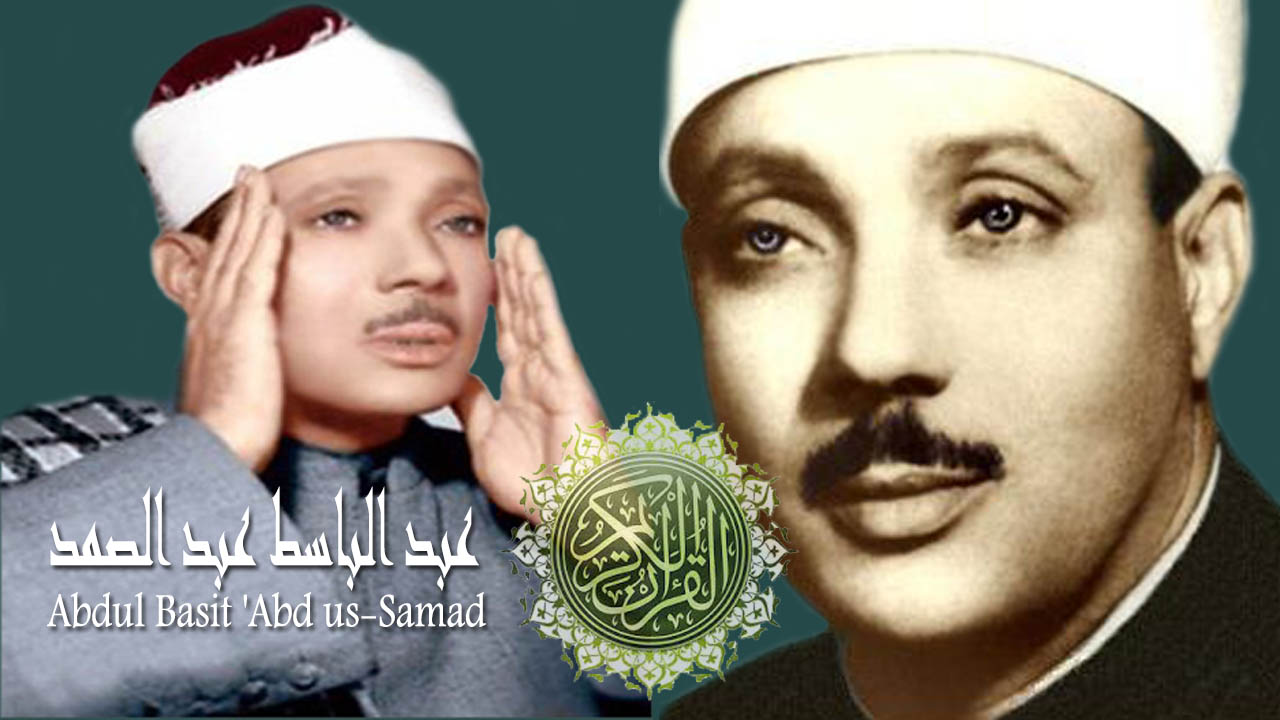
Abdul Basit 'Abd us-Samad
 Egypt
EgyptAlso known as: Qari Basit, Abdulbasit Abdussamed, Abdulbasit Abdussamad, Abdul Basit Abdus Samad, Shaikh Abdul Basit Abdus Samad, Abd Al-Basit Abd Al-Samad, ‘Abdul-Basit ‘Abdus-Samad, Golden throat, Golden voice, Abd El-Baset Abd El-Samad, Voice of Heaven
Birthday
January 1, 1927
Birth Sign
Capricorn
Birthplace
Almara'za, Qena Governorate, Egypt
Age
Died at 61
About
Abdul Basit 'Abd us-Samad was an Egyptian Quran reciter and hafiz, widely regarded as one of the most influential voices in Islamic history. Born in 1927 in Upper Egypt, he memorized the entire Quran at an early age and went on to become part of a celebrated quadrumvirate of reciters that included Siddiq Al-Minshawi, Mustafa Ismail, and Al-Hussary. His extraordinary vocal range and emotional depth earned him the nicknames "Golden Throat" and "Voice from Heaven," and his recordings remain among the most listened-to Islamic audio in the world.
Basit's career flourished from the 1950s, when his recitations were broadcast on Egyptian radio, reaching audiences across the Arab world and beyond. He performed in Mecca and Medina, and in 1961 became the first president of Egypt's Reciters' Union. Over his lifetime, he traveled to dozens of countries, leaving a lasting impact on the art of tajwid. His legacy persists through his extensive recordings, which continue to guide worship and meditation for millions of Muslims globally.
Early Life & Background
Abdul Basit was born in 1927 in the village of Almara'za, also rendered as Armant, in the Qena Governorate of Upper Egypt. He grew up in a devout family; his grandfather was a respected Quran reciter, and his father also had a deep connection to the Quran. This environment shaped his early years, and he was mesmerized by the recitation of the renowned qari Muhammad Rifat, which inspired him to dedicate himself to mastering the Quran.
He began memorizing the Quran at a very young age and completed his hifz under local sheikhs, also studying the rules of tajwid and the ten qira'at. His exceptional voice was noticed early, and he started reciting at local mosques, quickly gaining a regional reputation for his melodious and emotionally powerful style. His early training laid the foundation for a career that would take him to the world stage.
Career Growth
Abdul Basit's breakthrough came in the 1950s when his recitations began airing on Egyptian national radio, bringing him fame across Egypt and the Arab world. He was invited to Saudi Arabia, where his voice became closely associated with the holy cities of Mecca and Medina, with his recitations at the Grand Mosque and the Prophet's Mosque becoming legendary. In 1961, he made history as the first president of Egypt's Reciters' Union, a role that allowed him to mentor younger reciters and set professional standards.
His career included extensive international travel; he performed in Indonesia, Morocco, South Africa, Pakistan, and many other countries. His 1966 tour of South Africa was documented in the film "A Voice of an Angel." He is the only qari to have won three international recitation competitions, a remarkable achievement. His recordings, including full Quran recitations and the adhan, remain among the most widely distributed Islamic audio in the world.
Career Timeline
Public Image & Style
Abdul Basit is remembered as a figure of profound spiritual authority and artistic mastery. His public image is that of a devout scholar whose voice served as a bridge between the divine and the human. Media portrayals emphasize his "Golden Throat" and "Voice from Heaven" nicknames. His recitation style is characterized by emotional depth, ranging from quiet, reflective passages to powerful, dramatic delivery. He is revered not just as a performer but as a spiritual guide whose recordings facilitate worship and contemplation for millions. His fan base spans the global Muslim community, with his recordings used in mosques, homes, and digital platforms worldwide.
Fame & Fandom
The voice that once filled the halls of Egyptian radio in the 1950s now commands a global digital stage, anchoring Abdul Basit 'Abd us-Samad as a towering figure in modern spiritual history. His enduring resonance places him at the 90th most famous person in Classical, while his national stature secures him as the 15th most famous person in Egypt and the 46th most famous person from Egypt. These positions, held steady across cycles in the iFANN Global Fame Rankings, reflect a legacy that transcends mere audio playback to become a pillar of cultural identity. The audience surrounding this legacy defies modern categorization; there is no organized fan club or branded movement with a specific name driving chart metrics. Instead, his followers operate as a decentralized community of believers, united by reverence rather than commercial campaigns. Their ritual involves listening during prayer and meditation, transforming passive consumption into active devotion. This lack of a formal fandom name does not diminish his reach but highlights the sacred nature of his work. While pop stars rely on viral moments and social media wars, Basit's influence manifests through the sheer volume of recitations streamed daily and the profound, often undocumented, spiritual shifts reported by listeners. The scale of this engagement tracks global attention across media coverage, search, and consumption signals worldwide, yet it remains rooted in tradition. He is remembered not for a scandal or a trending hashtag, but for the title "Golden Throat" and the verified impact of his 1966 South African tour, which cemented his status as a universal voice. Even decades after his passing, the absence of direct interaction only deepens the mystique, allowing his recordings to serve as timeless guides for generations seeking connection.
Interesting Facts and Legends
Abdul Basit 'Abd us-Samad memorized the entire Quran at an early age after hearing Muhammad Rifat inspired him to pursue recitation. He possessed extraordinary breath control that allowed him to sustain long passages with ease. His recordings of the adhan remain among the most recognizable in the Islamic world, and his voice reportedly caused many non-Muslims to embrace Islam. He was part of a quadrumvirate of the four greatest modern reciters alongside Siddiq Al-Minshawi, Mustafa Ismail, and Al-Hussary. A story fans still retell involves his performance in South Africa, where a documentary titled "A Voice of an Angel" captured how his recitation deeply moved the local audience. Another recurring legend suggests his voice possessed a unique ability to induce trance-like states or cause listeners to weep uncontrollably due to its emotional intensity. While specific dates for mass fainting incidents are rarely documented, crowdsourced accounts describe hearts trembling during his recitations. In 2024, Egyptian media honored him as the "Golden Throat" of Egypt on the 36th anniversary of his passing. He was the only Qari to win three international competitions for Quran recitation. His birth in the small village of Armant frames him as a humble servant who rose from a rural background to become the voice of the nation's radio station.
Family & Personal Life
Abdul Basit was married and had children, including at least one son who has spoken publicly about his father's legacy. His son has noted that his father's recitations were so inspiring that they led many non-Muslims to embrace Islam. The family has remained active in preserving his legacy, participating in commemorative events and interviews. Details about his wife and the exact number of his children are limited in public sources, but his family has kept his memory alive through their work.
Notable Connections
Abdul Basit was part of a celebrated quadrumvirate of Quran reciters, alongside Siddiq Al-Minshawi, Mustafa Ismail, and Al-Hussary. He was inspired by the legendary Muhammad Rifat. His son has spoken publicly about his legacy, and his recordings are featured on platforms like quran.com and Assabile.com.
Relationships & Dating History
Abdul Basit was a devout Muslim scholar and religious figure who lived from 1927 to 1988. His personal life was private, and he was married, though details about his wife are limited. The marriage produced children, including at least one son who has spoken publicly about his father. There are no public records of any other romantic relationships, engagements, or marriages. His life was dedicated to religious scholarship and recitation, and his personal conduct reflected the piety expected of his public role. As of his passing in 1988, he was married, and his widow survived him.
- Married? - 1988Married, with at least one son. Wife's name not publicly documented.
Death & Aftermath
Died
November 30, 1988 (aged 61)
Death Place
Cairo, Egypt
Cause of Death
Heart attack (myocardial infarction)
Inside the Dar Al-Shifa Hospital in Cairo, Sheikh Abdul Basit 'Abd us-Samad lay on a hospital bed following a period of illness that had kept him away from the microphone. On November 30, 1988, at the age of 67 or 68, his heart stopped beating. The medical team and family accepted the event as a natural occurrence caused by a myocardial infarction. His passing sent an immediate wave of grief across Egypt and the wider Muslim world, prompting President Hosni Mubarak to declare him a national treasure while fellow reciter Mahmoud Khalil Al-Husary mourned the loss of a peer who had mastered the seven modes of recitation. Thousands gathered in the streets of Cairo for a massive funeral procession that moved through the city before he was laid to rest in the Al-Rawda Cemetery, where government officials and religious leaders joined ordinary citizens in paying their final respects.
Decades later, his digital legacy has surged, with streaming numbers climbing on platforms, particularly during annual commemorations like the 36th anniversary noted in 2024. Posthumous releases continue to circulate, including re-issues of his complete Quran recitations and the documentary A Voice of an Angel, which highlights his historic 1966 tour in South Africa. His son has spoken publicly about how his father's voice inspired many non-Muslims to embrace Islam, ensuring the Golden Throat remains a living presence in Islamic audio history.
Net Worth (Estate Value)
$5 Million
iFANN Editorial Team estimate
As Abdul Basit passed away in 1988, his financial legacy is assessed through the management of his estate by his family. His complete Quran recitations and adhan generate ongoing income from streaming platforms like Spotify, where he maintains over 40,000 monthly listeners, and YouTube, where individual videos accumulate millions of views. The estate is carefully managed by his son, who has spoken publicly about preserving his father's artistic heritage. Per iFANN's editorial analysis, the estate's value stands at $5 Million as of 2026, reflecting the enduring popularity of his work.
Awards Won (1)
Abdul Basit is the only qari to have won three international recitation competitions, a distinction that highlights his unmatched mastery of Quranic recitation. His recognition also includes the presidency of Egypt's Reciters' Union and posthumous national tributes on the anniversary of his death.
Quran Recitation
Quran Recitation
Known For
Quran Recitation
1950s-1988 · Reciter
Presidency of Egypt's Reciters' Union
1961 · President
Keywords
Sources
Quick Facts
- Profession
- Quran reciter (qāriʾ)
- Born
- 1927
- Birthplace
- Almara'za, Qena Governorate, Egypt
- Died
- November 30, 1988
- Death Place
- Agouza, Egypt
- Gender
- Male
- Birth Sign
- Capricorn
Personal Details
- Full Name
- Abdul Basit Muhammad Abdus Samad
- Children
- At least one son
Frequently Asked Questions
What is Abdul Basit best known for?
How did Abdul Basit die?
How many children did Abdul Basit have?
Where was Abdul Basit born?
Is Abdul Basit's recitation available online?
Similar People
Join the community
fans discussing