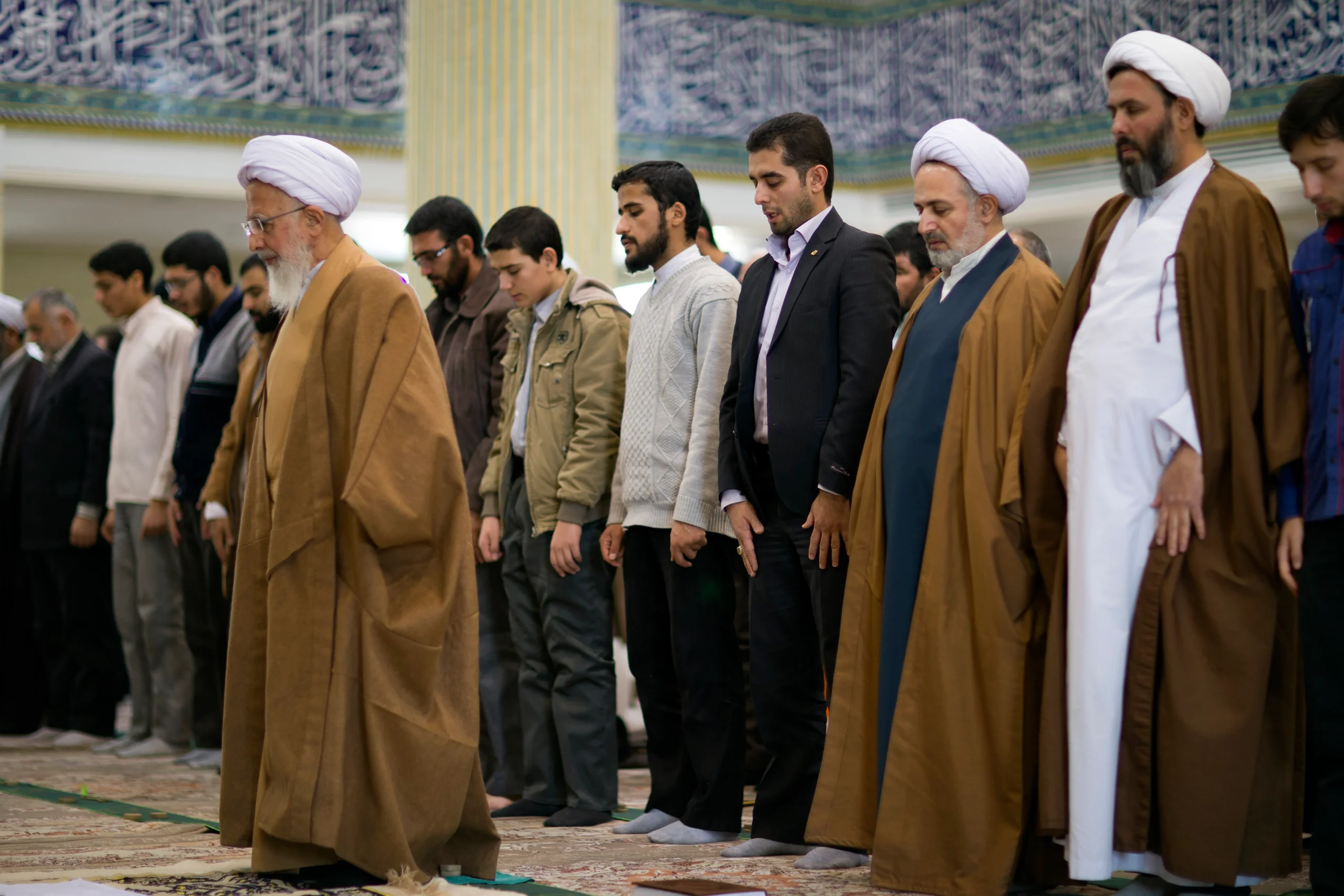
Abdollah Javadi Amoli
 Iran
IranAlso known as: Javadi Amoli, Ayatollah Javadi Amoli, Grand Ayatollah Javadi Amoli
Birthday
May 5, 1933
Birth Sign
Taurus
Birthplace
Amol, Iran
Age
93 years old
About
Abdollah Javadi Amoli is a preeminent Twelver Shi'a Marja, philosopher, and conservative political figure in the Islamic Republic of Iran. Born in Amol on May 5, 1933, he has served as one of the most influential religious authorities in the country for decades, reaching the age of 93 as of 2026. His intellectual legacy centers on the synthesis of classical Islamic theology with modern philosophical inquiry, a methodology that helped shape the ideological framework of the post-1979 revolution. Currently residing in Qom, he continues to lead the Esra Center and teaches advanced courses at the seminary. His influence extends beyond theology into the political sphere, where he provides guidance on governance and international relations. As a key architect of the revolution's constitution, his scientific foundation known as Isra provided guidance to the nation's leadership for decades. He remains an active voice in Iranian public discourse, issuing fatwas and sermons that address contemporary challenges facing the nation.
Early Life & Background
Abdollah Javadi was born into a religious family in the city of Amol, located in the Mazandaran Province of northern Iran. His early years were defined by traditional Islamic education within his hometown before he sought advanced training elsewhere. At the age of fifteen in 1948, he traveled to Mashhad to continue his studies under prominent scholars of the time. His academic journey took a pivotal turn when he moved to Qom, the spiritual heart of Shi'a Islam in Iran. There, he enrolled in the prestigious Hawza Ilmiyya, the seminary system responsible for training high-ranking clerics. Under the tutelage of Grand Ayatollah Borujerdi and later Ayatollah Khomeini, he mastered the complex sciences of jurisprudence (Fiqh), theology, and philosophy. This period of intense study laid the groundwork for his future work, particularly his unique approach to interpreting religious texts through rational inquiry. Before gaining widespread recognition, he spent decades teaching at the seminary and developing his foundational theories, which would later become instrumental in shaping the governance models of the Islamic Republic.
Career Growth
Following the 1979 Iranian Revolution, Javadi Amoli emerged as a key intellectual architect of the new regime. He became a staunch supporter of the government, providing theological justification for the concept of Velayat-e Faqih, or Guardianship of the Islamic Jurist. His most significant scholarly contribution is the multi-volume exegesis of the Quran known as Tafsir-e Noor. Spanning over forty volumes, this work interprets the Quran through the lens of Shia theology and rational philosophy, establishing it as a cornerstone of contemporary Islamic thought. In the decades since, he founded the Esra Center to disseminate his teachings and organize seminars on Islamic law, ethics, and family structure. Throughout the 1980s and 1990s, he engaged in debates regarding the compatibility of Islam with modernity, often taking a stance that sought to reconcile religious tradition with state needs. In the 2000s and 2010s, his focus expanded to economic critiques, where he frequently criticized Iran's banking system and inflation, advocating for interest-free economic models based on Islamic principles. His career is marked by a prolific output of writings and lectures that continue to influence students and scholars globally.
Career Timeline
Public Image & Style
Javadi Amoli is portrayed as a stern but wise intellectual who bridges traditional theology and modern challenges. Media outlets describe him as a conservative yet moderate voice who balances religious orthodoxy with pragmatic political advice. He typically appears in traditional clerical attire, including a black turban indicating descent from the Prophet Muhammad and a robe. His public persona is that of a scholar deeply engaged in both theological scholarship and the political landscape of Iran. He does not maintain personal social media accounts; instead, his sermons and fatwas are broadcast via state television and distributed through official websites like the Esra Center. His image is further solidified by his role as a living legend in Islamic philosophy, with works studied in seminaries from Iraq to Pakistan. He is viewed as a guardian of national identity, often emphasizing the sanctity of the Iranian flag and the importance of respecting teachers in his public addresses.
Fame & Fandom
Abdollah Javadi Amoli is currently evaluated by the iFANN Global Fame Engine but does not hold a placement in the published rankings, meaning he has no standing in the Global Top 1,000 or any scope-specific list. This absence of a numeric rank reflects his status as a high-ranking religious authority rather than a pop culture figure whose fame is measured by commercial consumption or viral entertainment metrics. While the engine assesses global visibility across media and search signals, the resulting evaluation confirms that his influence operates within distinct theological and political channels that do not translate into standard celebrity rankings. His audience consists entirely of Shia Muslims who revere him as a Marja and source of emulation, a following organized through seminary networks and state media rather than fan clubs or commercial campaigns. There is no formal name for this group in the iFANN data, as their devotion is rooted in religious adherence to his philosophical works and fatwas rather than the fandom structures typical of entertainers. Interactions with him are strictly ritualistic and intellectual, involving the study of his multi-volume exegesis, Tafsir-e Noor, and attendance at sermons broadcast on Iranian television. Unlike celebrities, he does not engage in fan-funded projects or birthday celebrations; his public appearances serve theological functions such as leading funeral prayers or delivering political guidance. The most significant moments defining his modern legacy involve serious geopolitical statements, including a March 2026 fatwa calling for jihad against Israel and the United States, which circulated widely before rumors of his assassination were debunked. These events, verified by international outlets and state media, illustrate how his influence manifests through political discourse rather than stage performances or chart-topping achievements.
Interesting Facts and Legends
Abdollah Javadi Amoli is widely recognized for his extensive body of work, particularly the forty-plus volume commentary on the Quran titled Tafsir-e Noor, which integrates mysticism and philosophy. One of the few clerics whose ideas directly shaped the constitution and governance of the Islamic Republic, his scientific foundation known as Isra provided guidance to the nation's leadership for decades. In March 2026, amidst escalating tensions following the sinking of an Iranian warship by U.S. forces, he issued a controversial fatwa calling for jihad against Israel and the United States. State television broadcasts quoted him explicitly urging the shedding of blood of Israeli citizens and U.S. President Donald Trump, stating that the U.S. would "bitterly regret" its actions. These statements solidified his image as a hardline political voice within the conservative establishment. Despite rumors of assassination circulating briefly during this period, Fars News Agency confirmed his continued activity and safety. Later that year, in July 2026, he led funeral prayers for a senior Iranian leader in Qom, underscoring his continued status as a top-tier cleric capable of officiating state-level rituals. He also made headlines for declaring that the Iranian flag embodies the nation's identity and emphasizing the divine reward of respecting teachers, with quotes such as "Angels will testify for you" delivered in May 2026. His influence extends to economic critiques where he advocates for interest-free models, distinguishing him from secular politicians.
Notable Quotes
“Angels will testify for you”
“The US will bitterly regret this”
“Iran's Flag Embodies Nation's Identity”
“Urges Vigilance and Reliance on Divine Support”
Family & Personal Life
Abdollah Javadi Amoli was born into a devout religious family in Amol, though specific details regarding his parents' names and siblings remain unrecorded in public biographies. As a high-ranking Marja and celibate cleric within the Twelver Shi'a tradition, he has never married and has no children. The role of a Marja requires strict adherence to religious vows of celibacy and devotion to the clergy, making inquiries regarding romantic partners or offspring inapplicable to his biography. His entire life is dedicated to his religious duties, scholarly pursuits, and the leadership of the Esra Center. He resides in Qom, likely in a residence provided or subsidized by the religious establishment rather than owning private property. There are no records of any romantic relationships, as such activities are incompatible with his position as a Grand Ayatollah. His personal history is characterized by a singular focus on spiritual advancement and service to the community without the distractions of a domestic family unit.
Notable Connections
Relationships & Dating History
As a high-ranking Marja and celibate cleric within the Twelver Shi'a tradition, Abdollah Javadi Amoli does not have a public dating history, marriages, or children. The role of a Marja requires strict adherence to religious vows of celibacy and devotion to the clergy. Consequently, all inquiries regarding romantic partners, spouses, or offspring are not applicable to his biography. His life is dedicated entirely to his religious duties, scholarly pursuits, and leadership of the Esra Center. There are no records of any romantic relationships, as such activities are incompatible with his position as a Grand Ayatollah. He remains single throughout his life, adhering to the religious requirements of his office. His closest professional relationships include his mentors, Grand Ayatollah Borujerdi and Ayatollah Khomeini, and his ongoing advisory role to the Supreme Leaders of Iran. Unlike Western public figures, his personal life is entirely subsumed by his religious obligations, leaving no room for conventional romantic partnerships or family structures.
Salary, Net Worth In 2026
$0
iFANN Editorial Team estimate
Specific net worth figures for clerics like Javadi Amoli are rarely disclosed in the manner of celebrities, as their income is derived from religious endowments (Awqaf), donations from followers (Khums and Zakat), and state support, rather than commercial ventures. Credible financial data sources do not publish specific dollar amounts for his personal wealth. However, as a Grand Ayatollah, it is understood that he manages significant resources through the Esra Center and receives substantial annual support from the Iranian state and private donors. His financial standing is maintained through the Esra Center, which generates revenue from publications, seminars, and media. Donations from devotees also contribute to his institutional support. He resides in Qom, likely in a residence provided or subsidized by the religious establishment. There are no public records of real estate holdings, business ventures, or endorsement deals typical of secular celebrities. Any attempt to assign a specific net worth figure would be speculative and unverified. His wealth is best described as institutional influence and access to religious funds rather than personal liquid assets. iFANN currently estimates his net worth at approximately $0 due to the lack of verifiable personal financial data, reflecting the non-commercial nature of his clerical office.
Awards & Accolades
View 2 records, honours and achievementsKnown For
Tafsir-e Noor
1990 · Author
Esra Center
1985 · Founder
Keywords
Sources
Quick Facts
- Profession
- philosopher, politician, akhoond
- Born
- May 5, 1933
- Birthplace
- Amol, Iran
- Gender
- Male
- Age
- 93
Personal Details
- Full Name
- Abdollah Javadi
- Children
- Education
- Hawza Ilmiyya of Qom
Frequently Asked Questions
Is Abdollah Javadi Amoli still alive?
Does Abdollah Javadi Amoli have a wife or children?
What is Abdollah Javadi Amoli's most famous book?
Why did Abdollah Javadi Amoli call for jihad in 2026?
Where does Abdollah Javadi Amoli live?
Similar People
Join the community
fans discussing