
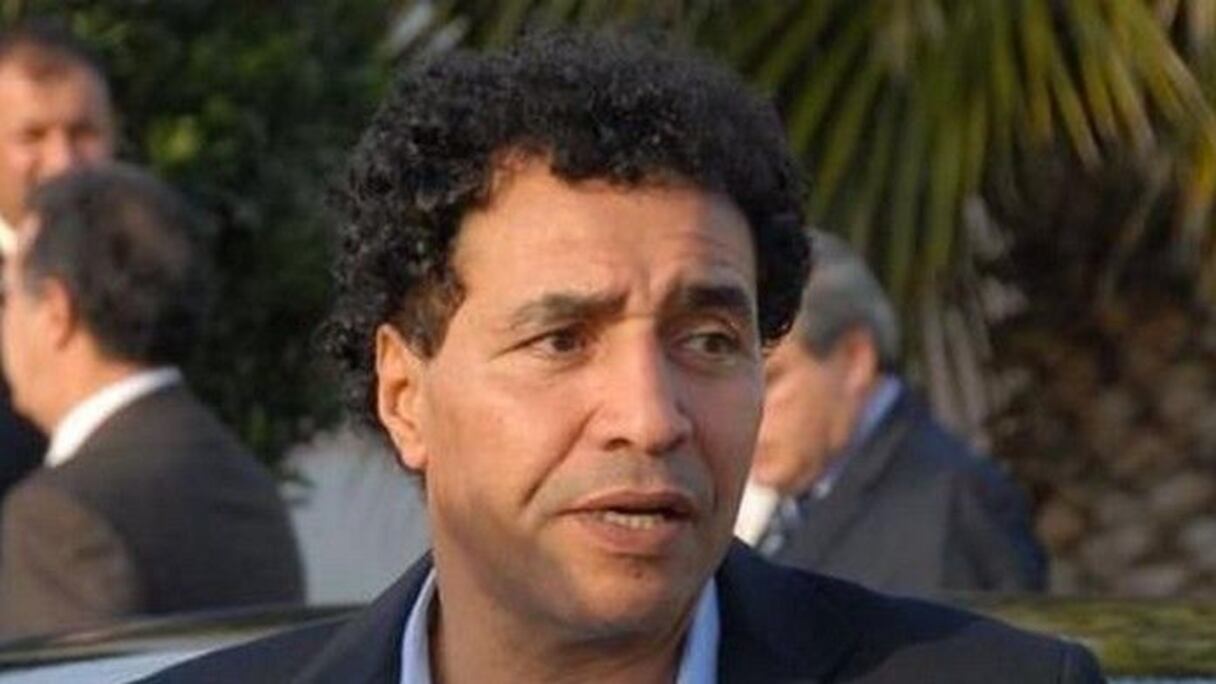
Abdelmajid Dolmy
 Morocco
Also known as: Abdelmajid El-Zalmati, Maestro
Birthday
August 20, 1953
Birth Sign
Leo
Birthplace
Casablanca, Morocco
Age
Died at 63
Height
5 ft 6 in (1.68 m)
About
Abdelmajid Dolmy was a Moroccan professional footballer who played as a libero and central midfielder for Raja CA and the national team. Nicknamed Maestro, he is widely considered one of the best players in the history of Moroccan and African football. He passed away on July 27, 2017, at the age of 63 in Casablanca following an illness.
Dolmy spent the majority of his club career with Raja CA, where he won three Throne Cups and became a cornerstone of the squad. His international career was equally illustrious, highlighted by his pivotal role in Morocco's victory at the 1976 African Cup of Nations and their historic run to the knockout stages at the 1986 FIFA World Cup. He retired from professional football in 1991 after a brief return to Raja CA.
Early Life & Background
Born on August 20, 1953, in the Derb Sultan neighborhood of Casablanca, Abdelmajid Dolmy grew up surrounded by the passion for football that defined his city. He began his journey on local pitches before catching the eye of scouts at the Raja-Oasis Complex. At just 16 years old in 1969, he joined the club's youth system, quickly demonstrating the technical flair and tactical intelligence that would define his future.
His rise through the ranks was swift. By 1971, he had already debuted with the Moroccan U20 national team, signaling his potential on a larger stage. Two years later, in 1973, he made his first-team debut for Raja CA. Although he initially made only a few appearances, his consistent performances soon established him as a key figure within the squad. During these formative years, he honed the elegant style of play that would earn him the title "Maestro," blending defensive solidity with creative passing.
Career Growth
Dolmy's tenure with Raja CA was marked by loyalty and triumph. Between 1974 and 1982, he helped the club secure three Throne Cup victories. Despite this domestic dominance, he frequently came close to winning the Botola league title during his initial spell, often falling just short of the top spot. In 1987, seeking new challenges, he made a then-Moroccan record transfer to Olympique de Casablanca. However, his heart remained with Raja, and he returned to the club in 1990.
His international career reached its zenith at the 1986 FIFA World Cup in Mexico. As a key member of the Atlas Lions, he played a crucial role in becoming the first African team to top their group and reach the knockout stages. His performance against England was particularly celebrated, earning him a rare 9/10 rating from the French sports daily L'Équipe. After retiring from international duty following the 1988 African Cup of Nations, he finished his playing career at Raja CA in 1991 at the age of 38.
Career Timeline
Public Image & Style
Dolmy is portrayed as the epitome of the gentleman athlete. Media coverage emphasizes his humility, sportsmanship, and technical brilliance. He is remembered not just for his goals or assists, but for his conduct on and off the pitch. The moniker "Maestro" implies both musicality and leadership, reflecting how he orchestrated play from midfield. His elegance and precise passing allowed him to dominate opponents despite standing at a modest 1.68 meters tall.
Fame & Fandom (iFAMOUS Rankings)
Abdelmajid Dolmy commanded a sphere of influence defined by institutional reverence and national mourning rather than the transient volatility of modern digital fandom. His global attention peaked during his playing career, anchored by Morocco's 1976 African Cup of Nations triumph and participation in the 1984 Summer Olympics, yet today his legacy persists through civic honors and the enduring respect of the Moroccan football community. The iFANN Global Fame Engine evaluated his standing in August 2026 and determined that he does not currently hold a placement within the published rankings for the Global Top 1,000 or any specific Top-100 scope list. Consequently, no ordinal rank or numerical score is assigned to his current fame status, reflecting a shift from active celebrity metrics to historical significance. The fanbase surrounding Dolmy possesses no formal name; there are no documented organized clubs, chart-pushing campaigns, or grassroots rituals that define a distinct group of adherents. Instead, his remembrance manifests through high-level tributes from state institutions, such as the personal condolence message sent by King Mohammed VI following his death in 2017 and the January 2026 inauguration of an indoor sports hall in Casablanca bearing his name. This lack of a named fandom underscores a reality where his stature is maintained by the collective memory of a nation and its sporting bodies rather than by a self-organized movement. While the absence of a specific fan designation might suggest a quiet obscurity, the factual record indicates otherwise: Dolmy remains a foundational figure whose contributions are validated by the CAF naming him one of the 50 greatest African players of the last 50 years and his inclusion in the IFFHS All-Time Morocco Dream Team. His reputation rests on verified achievements and a character defined by integrity, distinguishing his enduring impact from the fleeting trends of contemporary pop culture.
Interesting Facts and Legends
Abdelmajid Dolmy received the UNESCO Fair Play Prize in 1992 for his exemplary morality and courtesy, distinguishing him as a football ambassador. In 2006, the Confederation of African Football (CAF) named him one of the 50 greatest African players of the last 50 years. He was also included in the IFFHS All-Time Morocco Dream Team in 2022. Known for his refusal to accept bribes or engage in match-fixing, he maintained a reputation for integrity throughout his life. He was a dedicated community figure in Casablanca, often visiting local youth centers to encourage young players.
His legacy is anchored by the 1976 African Cup of Nations triumph, where his pivotal role in leading Morocco to its first continental title elevated him from a talented player to a national hero. A story fans still retell concerns his participation in the 1984 Summer Olympics in Los Angeles, a rare and prestigious feat that cemented his reputation as a top-tier athlete of his generation. The moniker Maestro reflects how he orchestrated play with elegance and vision, a narrative reinforced when King Mohammed VI sent a personal message of condolence following Dolmy's death, declaring that Morocco had lost one of its best footballers. In January 2026, this enduring status was physically validated when the city of Casablanca inaugurated an indoor hall bearing his name to commemorate his historic achievements.
Notable Quotes
“I am proud to represent Morocco on the world stage.”
“Teamwork is more important than individual glory.”
Family & Personal Life
Abdelmajid Dolmy was known for keeping his personal life strictly out of the public eye. Unlike many modern athletes, there are no verified public records detailing specific partners, engagements, marriages, or children. Sources consistently describe him as a family man, but he never disclosed the names of any spouses or offspring. He maintained a strict separation between his public sporting iconography and his private domestic life, preferring to let his legacy on the pitch speak for itself.
Notable Connections
Mustapha Madih, Hassan Nader, Gheorghe Mărdărescu.
Relationships & Dating History
Abdelmajid Dolmy was a private individual who kept his romantic history out of the public eye. There are no verified public records, tabloid reports, or biographical accounts detailing specific partners, engagements, marriages, or children. Sources consistently describe him as a family man but do not name a spouse or list offspring. Consequently, there is no chronological dating history available, and his status at the time of his death in 2017 remains unconfirmed regarding marital status in public databases. No public statements or media coverage ever disclosed the names of any partners, leading to the conclusion that he maintained a strict separation between his public sporting iconography and his private domestic life.
Death & Aftermath
Died
July 27, 2017 (aged 63)
Death Place
Casablanca, Morocco
Cause of Death
Unknown
In January 2026, the city of Casablanca dedicated a new indoor sports hall bearing Abdelmajid Dolmy's name to commemorate his key role in Morocco's historic continental triumph in 1976. This posthumous honor followed a YouTube tribute titled When Football Becomes Art produced four years after his passing. The public mourning began shortly after his death on Thursday, July 27, 2017, in Casablanca, where he passed away following a discomfort that local reports described as sudden. No specific medical diagnosis was officially detailed by authorities or released through a formal hospital statement, and family sources established the cause.
King Mohammed VI sent an official message of condolence stating that Morocco had lost one of its best footballers, while peers remembered him for his intelligence, humility, and precision. Tributes appeared across major Moroccan and international sports media, characterizing him as one of the greatest players of all time. Although specific details regarding the date or attendees of the funeral service remain unrecorded in available sources, the involvement of the Royal Moroccan Football Federation implies a state-attended ceremony took place in Casablanca shortly after the event.
Net Worth (Estate Value)
$0
iFANN Editorial Team estimate
iFANN currently estimates Abdelmajid Dolmy's net worth at $0. As a deceased individual from a non-Western football market in the 1970s and 1980s, his estate has not been subject to public financial scrutiny or posthumous commercial exploitation comparable to global superstars. Any estimates found online are likely speculative and lack source verification. His wealth accumulation during his lifetime was typical for a Moroccan athlete of his era, derived from club salaries and modest endorsements, without the multi-million dollar endorsement portfolios seen in contemporary football.
Awards Won (6)
Dolmy's trophy cabinet includes the Throne Cup (1974, 1977, 1982), the African Cup of Nations (1976), and the Gold Medal at the Mediterranean Games (1983). The UNESCO Fair Play Prize (1992) stands as his most significant individual honor, recognizing his character rather than athletic performance. CAF's selection as one of the Top 50 African Players (2006) and the IFFHS Dream Team inclusion (2022) serve as posthumous honors acknowledging his standing among legends.
1992 · Fair Play
Personal Conduct
1976 · Tournament
Morocco National Team
Known For
Morocco National Team
1975 · Player
Raja CA
1973 · Player
Keywords
Sources
Quick Facts
- Profession
- association football player
- Born
- August 20, 1953
- Birthplace
- Casablanca, Morocco
- Died
- July 27, 2017
- Death Place
- Casablanca, Morocco
- Gender
- Male
- Birth Sign
- Leo
Personal Details
- Height
- 5 ft 6 in (1.68 m)
- Children
Frequently Asked Questions
Who was Abdelmajid Dolmy?
When did Abdelmajid Dolmy die?
What position did Abdelmajid Dolmy play?
Did Abdelmajid Dolmy win the World Cup?
Was Abdelmajid Dolmy married?
Similar People
Join the community
fans discussing