 Japan
Japan“Kitano has made a film that is almost entirely silent, yet it speaks volumes about the human condition and the power of love.”
Roger Ebert
Chicago Sun-Times
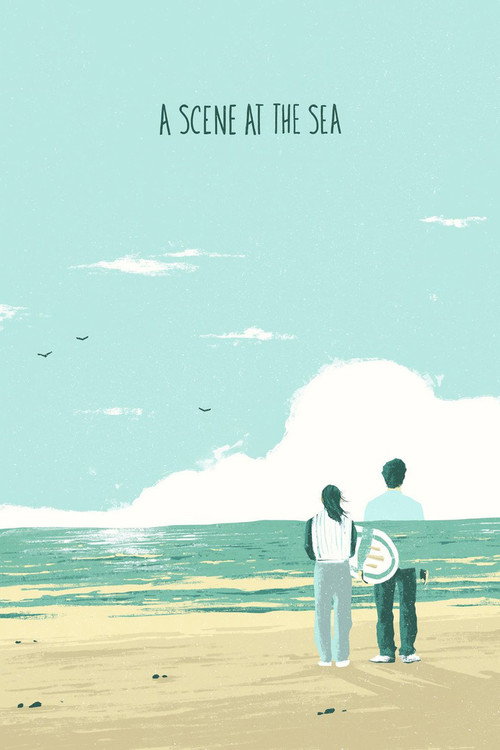
A deaf garbage collector named Shigeru discovers a broken surfboard on his route and finds a new way to speak without words. Takeshi Kitano directs this 1991 drama, which shifts focus from the violence of his later yakuza films to a quiet study of isolation and connection. The story follows Shigeru as he repairs the board and practices alone on the beach, while his girlfriend Takako watches with a mix of skepticism and support.
Set against the backdrop of a coastal town in Japan, the film uses minimal dialogue to explore how two people who share a silence can find a voice through movement. Shot with stunning cinematography by Katsumi Yanagijima and featuring a haunting score by Joe Hisaishi, the movie captures the rhythm of the ocean and the internal struggle of its protagonist. It stands as a gentle, meditative piece that highlights the human capacity for renewal even when life feels overwhelmingly still.
Availability and pricing can change. Confirm on the provider's site before purchasing.
Shigeru lives a monotonous existence as a garbage collector in a small Japanese coastal town. He is deaf and communicates only through sign language and written notes, often appearing detached from the noisy world around him. One day while working, he stumbles upon a discarded, damaged surfboard lying near the shore. Instead of ignoring it, he takes the board home and begins the painstaking process of repairing it. This act marks the beginning of a profound shift in his life, transforming him from a passive observer into someone driven by a specific goal.
Takako, Shigeru's girlfriend, also happens to be deaf. Their relationship is intimate yet distant, defined by the quiet understanding of two people who navigate a hearing world together. When Shigeru reveals his plan to learn surfing, Takako initially hesitates. She sees the sport as something for the wealthy, hearing locals who treat the ocean as a playground rather than a challenge. However, she eventually agrees to join him, not just as an observer but as a partner in his journey.
The film contrasts Shigeru's serious dedication with the carefree attitude of the local surfers. While others laugh and chatter on the sand, Shigeru focuses entirely on balance and technique. He faces repeated failures and the physical difficulty of catching waves without the ability to hear the approaching water or communicate easily with others. The narrative builds slowly, focusing on small victories like standing up on the board or successfully riding a small swell. These moments are punctuated by the changing seasons and the shifting moods between Shigeru and Takako, whose bond deepens as they face the challenges of the sea together.
As summer wanes, the stakes feel higher. Shigeru must confront not just the power of the ocean but his own limitations and fears. The supporting cast, including fellow surfers and beachgoers, provides a colorful backdrop that emphasizes Shigeru's uniqueness. The story avoids traditional conflict in favor of an internal battle against self-doubt. Through visual storytelling and the absence of spoken dialogue, the film creates an emotional landscape where the sound of crashing waves replaces speech, offering a unique perspective on what it means to truly connect with another person and the natural world.
A Scene at the Sea trailer
Critical Consensus
This tender drama showcases Takeshi Kitano's range beyond violence, using silence and visual poetry to tell a moving story about love and resilience. The minimalist approach combined with Joe Hisaishi's score creates a deeply emotional experience that resonates long after viewing.
“Kitano has made a film that is almost entirely silent, yet it speaks volumes about the human condition and the power of love.”
Roger Ebert
Chicago Sun-Times
“A beautiful, contemplative work that demonstrates Kitano's range beyond his usual violent fare, offering a rare glimpse into the quiet soul of a man.”
Variety Staff
Variety
“A moving and visually arresting film that uses the ocean as a metaphor for the depths of human emotion and the possibility of redemption.”
Peter Bradshaw
The Guardian
Claude Maki
Shigeru
Hiroko Oshima
Takako
Sabu Kawahara
Takoh
Toshizo Fujiwara
Nakajima
Susumu Terajima
Light Truck Man
Director
Takeshi Kitano
Writer
Takeshi Kitano
Composer
Joe Hisaishi
Cinematographer
Katsumi Yanagijima
Producers
Takio Yoshida, Masayuki Mori
Mainichi Film Concours (1992)
Best Director: Won
Hochi Film Awards (1992)
Best Film: Nominated
Join the community
fans discussing