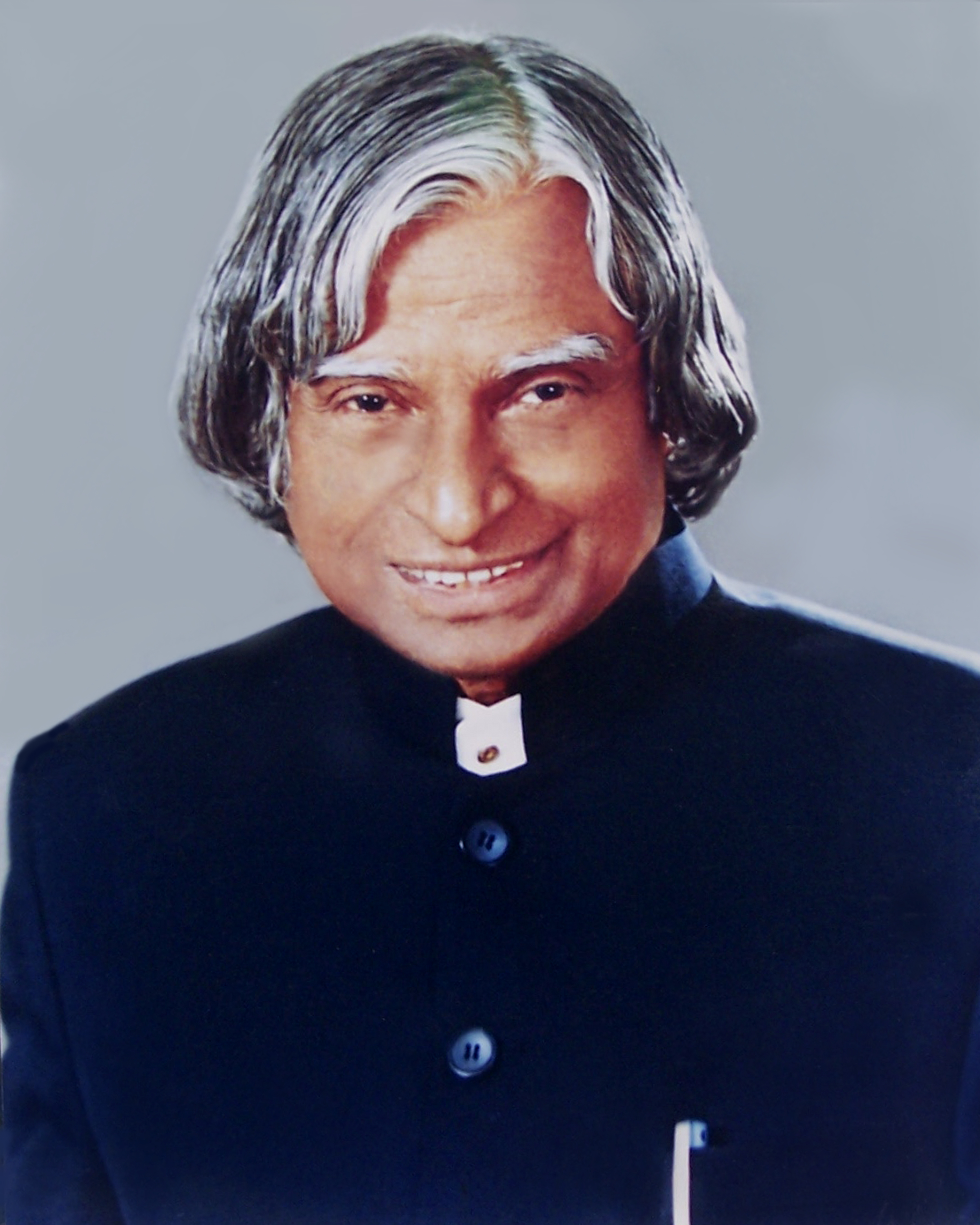
A. P. J. Abdul Kalam
 India
Indiapolitician•military flight engineer•poet
Birthday
+1931-10-15
Birth Sign
Libra
Birthplace
Rameswaram taluk
Age
Died at 83
About
Avul Pakir Jainulabdeen Abdul Kalam, born October 15, 1931, in Rameswaram, Tamil Nadu, India, began his career as an aerospace engineer and science administrator. His early life was shaped by his upbringing in a Muslim family in the coastal town. Kalam pursued studies in physics and aerospace engineering, setting the stage for a distinguished career that spanned over four decades. He dedicated much of this time to significant scientific endeavors, primarily with the Defence Research and Development Organisation (DRDO) and the Indian Space Research Organisation (ISRO).
Fame & Fandom
The admiration for A. P. J. Abdul Kalam transcends the typical boundaries of celebrity worship, manifesting instead as a nationwide civic devotion to his vision and humility. Unlike pop stars who cultivate niche tribes with specific chants or subscription clubs, Kalam's following remained the general public of India, united under the moniker of the "People's President." This designation reflected a unique bond where he sat on classroom floors, answered questions without hesitation, and inspired generations through accessibility rather than distance. His legacy is not measured in viral challenges or fan-driven chart pushes but in spontaneous charity drives, educational initiatives, and annual tributes that swell across the country every July 27. Thousands gather to read his books, discuss dreams for a developed nation, and honor a leader who treated every citizen as an equal. The culture surrounding him is one of quiet inspiration, where students weep at motivational talks and crowds seek autographs not out of hysteria but reverence. Even decades after his passing in 2015, his words continue to circulate organically, fueling a movement of readers self-organizing around his philosophy. This enduring influence places him firmly within the global consciousness of historical figures. According to iFANN Global Fame Rankings, he holds the position of the 23rd most famous person in India, a spot he has maintained steadily since the previous cycle. He stands as the 45th most famous person from India, holding that rank without fluctuation. Within the broader scope of South Asia, he ranks as the 21st most famous person in South Asia, having dipped slightly from the 20th position last cycle.
Interesting Facts and Legends
Kalam earned the enduring title "Missile Man of India" after successfully leading the Integrated Guided Missile Development Programme, which resulted in the indigenous testing of Agni and Prithvi missiles during the late 1980s and early 1990s. His election as the 11th President of India in 2002 broke protocol by making him the first scientist and person from a humble background to hold the office, driven largely by massive student support. A popular story often retold involves his insistence on inquiry; when a student asked why he wrote fewer books despite being prolific, he replied that he only wrote what was necessary to inspire others. Fans still recount anecdotes of his humility, such as paying for his own tea or refusing special security details while interacting with children. Annual tributes on July 27 have evolved into a recurring cultural ritual where political groups like the BJP Minority Morcha organize Unity Marches specifically targeting Gen Z to honor his legacy. These events emphasize his belief that students should dream big, often featuring gatherings where volunteers distribute free educational materials and read his works aloud.
Death & Aftermath
Died
+2015-07-27 (aged 83)
Death Place
Shillong, Meghalaya, India
Cause of Death
Cardiac arrest
On the afternoon of July 27, 2015, Dr. A. P. J. Abdul Kalam stood before a hall of students at the Indian Institute of Management in Shillong, Meghalaya, delivering his third lecture of the day. At 6:35 PM IST, the 84-year-old former President collapsed during the session and was rushed to the guest house where physicians pronounced him dead from cardiac arrest. The sudden event sparked an immediate outpouring of grief that transformed streets across India into rivers of mourners, with Prime Minister Narendra Modi and President Pranab Mukherjee leading official tributes that declared three days of national mourning. Crowds gathered outside the Rashtrapati Bhavan and lined the roads in Shillong to honor the man described as the people's president, while digital platforms saw his book Wings of Fire surge in sales and his quotes spread globally.
A state funeral took place on July 29, 2015, in Rameswaram, Tamil Nadu, where hundreds of thousands attended to bid farewell to the scientist turned statesman. Dignitaries including former Prime Ministers Manmohan Singh and Atal Bihari Vajpayee joined the procession for the burial near his ancestral home, which adhered to traditional rites reflecting his personal wishes. In the years following his passing, the government established the A.P.J. Abdul Kalam Memorial and renamed institutions such as the UPTU to the A.P.J. Abdul Kalam Technical University to preserve his legacy. His family continued to manage the estate through the Kalam Foundation, directing royalties toward educational scholarships and launching awards like the National Award for Innovation to recognize young inventors.
Awards & Accolades
Keywords
Quick Facts
- Profession
- politician, military flight engineer, poet
- Born
- +1931-10-15
- Birthplace
- Rameswaram taluk
- Died
- +2015-07-27
- Death Place
- Shillong
- Gender
- Male
- Birth Sign
- Libra
Join the community
fans discussing