“Chalamet doesn't just play Dylan; he embodies the enigmatic energy of a man who refused to be pinned down, delivering a performance that is both mesmerizing and unsettling.”
Manohla Dargis
The New York Times
 United States
"He came to sing. He left to rewrite history."
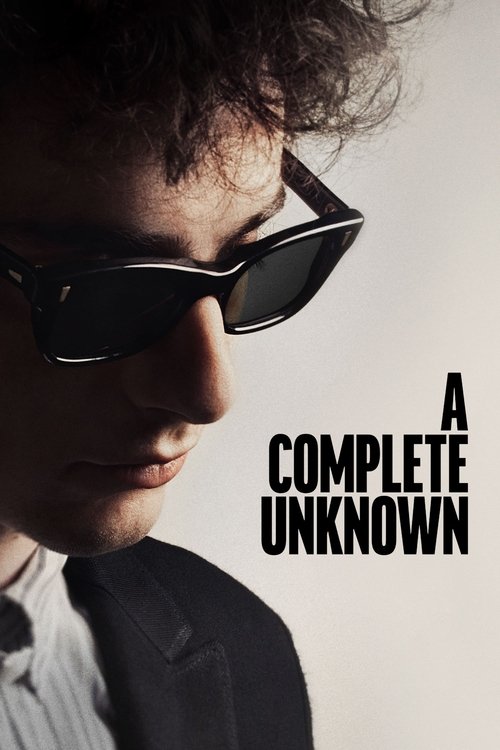
New York City in the early 1960s buzzed with a specific kind of electric energy, but few felt it quite like the young man who arrived from Minnesota carrying only a guitar and a secret. James Mangold directs this biographical drama, focusing on the transformative years of Bob Dylan as he steps out of the shadows of Greenwich Village to redefine folk music forever. The film stars Timothée Chalamet in the lead role, supported by a powerhouse ensemble including Edward Norton as the legendary Pete Seeger, Monica Barbaro as Joan Baez, and Elle Fanning as Sylvie Russo.
Produced with a budget of $65 million and released in late December 2024, A Complete Unknown captures the friction between tradition and rebellion during a pivotal cultural moment. Critics have responded warmly to the performances and the musical authenticity, earning the film a solid 7.1 rating from audiences. It stands as a grounded look at how one artist navigated fame, friendship, and the painful necessity of changing his own sound.
Availability and pricing can change. Confirm on the provider's site before purchasing.
The story opens in 1961 when a nineteen-year-old Robert Zimmerman arrives in New York City's Greenwich Village under the name Bob Dylan. He carries nothing but an acoustic guitar, a harmonica, and a carefully constructed lie about his past. The local folk scene is a tight-knit community obsessed with political purity and acoustic traditions, led by figures like Pete Seeger. Dylan immediately disrupts this order by performing original songs that blend traditional folk structures with a new, sharper edge. His raw talent and mysterious persona quickly draw attention from established musicians who see him as either a threat or a potential protégé.
Dylan forms a close bond with Joan Baez, a famous singer and activist who becomes his romantic partner and mentor. She introduces him to the world of high-profile protests and civil rights movements, believing he will use his platform for social change. At the same time, he hires Albert Grossman as his manager, a deal that brings commercial success but also creates tension with the folk purists who view money as a corrupting influence. As Dylan gains popularity, he faces pressure to conform to the role of the voice of a generation, a label he increasingly finds suffocating.
The narrative builds as Dylan begins to experiment with electric instruments, a move that alienates many of his peers. He starts incorporating rock and roll elements into his sets, challenging the strict acoustic rules of the Village. This artistic evolution causes a rift with Joan Baez and other friends who feel betrayed by his shift away from pure folk music. The film depicts the psychological toll of this transformation, showing Dylan grappling with isolation and the loss of innocence. Scenes alternate between intimate club performances and heated debates about the future of music.
Tensions reach a breaking point as the 1965 Newport Folk Festival approaches. Dylan prepares for a performance that will likely define his career or destroy his reputation within the folk community. The film captures the anticipation and anxiety leading up to this event, highlighting the clash between the old guard and the new wave of rock-influenced artists. Through a series of concerts and personal interactions, the story explores the cost of artistic freedom and the difficulty of staying true to oneself while navigating the demands of fame.
The buildup culminates in a series of intense moments where Dylan must decide whether to compromise his vision or risk everything. The film leaves the outcome of his decision open until the final act, focusing on the internal struggle rather than just the external events. Viewers witness the weight of expectations placed on a young man who refuses to be categorized. The narrative emphasizes the emotional complexity of leaving behind a community that once embraced him, setting the stage for a historic confrontation that will change music forever.
Official Trailer
Final Trailer
Teaser
Critical Consensus
This biographical drama succeeds largely thanks to Timothée Chalamet's transformative portrayal of Bob Dylan. While some critics note selective historical accuracy, the film's energetic direction and musical authenticity capture the spirit of the 1960s folk revival effectively. The ensemble cast delivers strong supporting turns, making the movie a vibrant portrait of artistic rebellion.
“Chalamet doesn't just play Dylan; he embodies the enigmatic energy of a man who refused to be pinned down, delivering a performance that is both mesmerizing and unsettling.”
Manohla Dargis
The New York Times
“James Mangold has crafted a film that feels less like a biography and more like a fever dream of the 1960s, with Chalamet at its chaotic, brilliant heart.”
Peter Debruge
Variety
“A bold, sometimes frustrating, but ultimately rewarding exploration of how an artist can become a myth while still being human. Chalamet sings like a prophet.”
David Ehrlich
IndieWire
“The film captures the friction between tradition and innovation perfectly, with Edward Norton delivering a nuanced portrayal of Pete Seeger's eventual disillusionment.”
Owen Gleiberman
Variety
Timothée Chalamet
Bob Dylan
Edward Norton
Pete Seeger
Elle Fanning
Sylvie Russo
Monica Barbaro
Joan Baez
Scoot McNairy
Woody Guthrie
Dan Fogler
Albert Grossman
Boyd Holbrook
Johnny Cash
Will Harrison
Bob Neuwirth
Joe Tippett
Dave Van Ronk
Director
James Mangold
Writers
Elijah Wald, Jay Cocks, James Mangold
Cinematographer
Phedon Papamichael
Producers
Timothée Chalamet, Fred Berger, Alex Heineman, Alan Gasmer, Peter Jaysen
Academy Awards (2025)
Best Actor: Nominated
Golden Globe Awards (2025)
Best Actor – Motion Picture Drama: Won
Critics' Choice Movie Awards (2025)
Best Actor: Won
BAFTA Awards (2025)
Best Leading Actor: Nominated
Join the community
fans discussing