 Taiwan
“A masterpiece of modern cinema, a film of such grandeur and intimacy that it redefines the possibilities of the medium.”
A.O. Scott
The New York Times
Edward Yang's four-hour epic anchors itself in the sweltering heat of 1960s Taipei, where a generation of Waishengren children struggles to find identity under martial law. The narrative centers on Xiao Si'r, a rebellious high school student whose sharp wit masks deep insecurities about his place in a society divided by class and political allegiance.
This sprawling drama meticulously documents the social stratification of the era through intimate family conflicts and escalating gang violence. Yang avoids sensationalism, instead presenting a slow-burn tragedy where mundane details like baseball games and dance hall visits build toward an inevitable, devastating conclusion.
Stream
Availability and pricing can change. Confirm on the provider's site before purchasing.
The story opens in a cramped apartment where young Xiao Si'r navigates a tense household dynamic. His father, a strict traditionalist, clashes with Si'r over discipline while his mother tries to mediate. Outside these walls, Si'r finds solace and status among the Little Park Boys, a local street gang led by the charismatic Honey. These teenagers spend their days skipping classes, fighting rival factions, and dreaming of a future that seems increasingly out of reach.
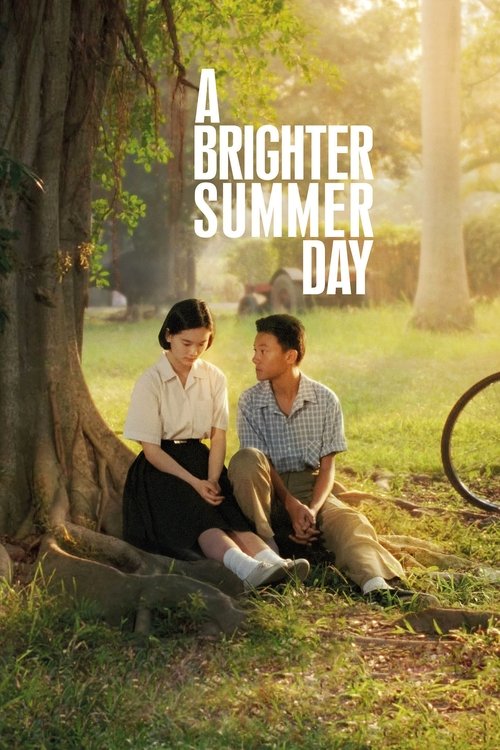
Si'r's life shifts when he meets Ming, a quiet girl from a wealthy family who attends an American-style missionary school. Their romance blooms despite the rigid class barriers separating them. Ming represents a world of order and privilege that Si'r desperately wants to enter, yet his background makes such a union impossible in the eyes of her family and the community. As they sneak around Taipei to meet, the film highlights the stark contrast between their worlds.
Tensions rise as the summer progresses. Si'r faces pressure from both sides: his loyalty to the gang and his desire to protect his relationship with Ming. A pivotal moment occurs when Si'r and his friend Cat are falsely accused of a crime by corrupt police officers. The brutal beating they suffer shatters any remaining faith they had in the justice system. This injustice pushes Si'r further into the arms of the gang lifestyle, where violence becomes the only language he understands.
The narrative weaves between the personal dramas of the lovers and the escalating chaos of the streets. Honey, seeking to assert dominance after a dispute involving a rival gang member, plans a violent confrontation. Si'r finds himself caught in the middle, desperate to prove his worth and perhaps secure a future with Ming. The film builds a sense of doom through its deliberate pacing, capturing the raw energy of youth before the violence erupts. Every interaction feels heavy with the weight of history, as if the characters are trapped in a machine designed to crush them.
As the summer draws to a close, the various factions prepare for a final showdown. The atmosphere grows thick with anticipation and dread. Si'r knows that the path he has chosen leads nowhere good, yet he cannot turn back. The story moves toward a climax that involves a massive brawl, leaving the audience to wonder how the young lovers will survive the forces arrayed against them. The film refuses to offer easy answers or happy endings, instead forcing viewers to confront the harsh reality of a society in turmoil.
A Brighter Summer Day (1991) Trailer
A Brighter Summer Day Official Trailer
Critical Consensus
Edward Yang's monumental achievement weaves a tragic tale of youth, violence, and societal decay into a sweeping epic. Its unflinching portrayal of 1960s Taiwan, combined with masterful direction and unforgettable performances, cements its status as a masterpiece of world cinema.
“A masterpiece of modern cinema, a film of such grandeur and intimacy that it redefines the possibilities of the medium.”
A.O. Scott
The New York Times
“A breathtaking, heartbreaking epic that captures the spirit of a generation lost to history and politics.”
Peter Bradshaw
The Guardian
“Yang's vision is so vast and precise that it feels like a documentary of the soul, revealing the hidden truths of a nation in transition.”
Richard Brody
The New Yorker
Director
Edward Yang
Writers
Edward Yang, Mingtang Lai, Yen Hung-ya, Alex Yang
Composer
Zhang Hongda
Cinematographers
Longyu Zhang, Chang Hui-kung
Producer
Yu Wei-Yen
Golden Horse Awards (1991)
Best Film: Won
Golden Horse Awards (1991)
Best Director: Won
Berlin International Film Festival (1992)
Golden Bear: Nominated
Sight & Sound Critics Poll (2024)
Greatest Films of All Time: Ranked #78
Join the community
fans discussing