“Kim Jee-woon's film is a sleek, stylish exercise in escalating violence, anchored by Lee Byung-hun's quietly charismatic performance as a man who discovers his humanity too late.”
Jeannette Catsoulis
The New York Times
 South Korea
"One act of mercy. A lifetime of consequence."
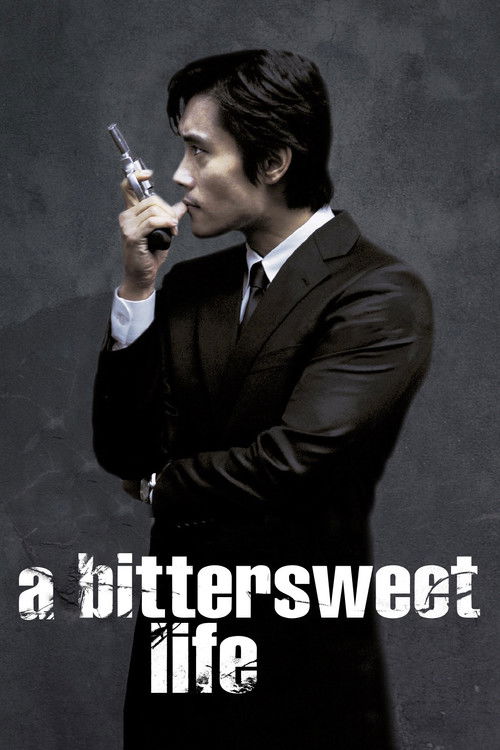
Kim Jee-woon's 2005 neo-noir action drama A Bittersweet Life stars Lee Byung-hun as Kim Sun-woo, a disciplined enforcer and hotel manager for a Seoul crime syndicate. When his boss Mr. Kang suspects his young mistress Hee-soo of infidelity, Sun-woo is ordered to surveil her and execute both if the affair is confirmed. What follows is a study in controlled violence and unexpected mercy, shot with the precise, elegant visual language that cinematographer Kim Ji-yong brought to the project. The film earned a 7.4/10 audience rating and grossed $7.6 million worldwide against a $4 million budget, solidifying its place in the Korean action canon.
Produced by Bom Film Productions and distributed by CJ Entertainment, the movie premiered in South Korea on April 1, 2005, and later received a limited US release through Tartan Films. Lee Byung-hun's performance won him Best Actor at the Blue Dragon Film Awards and the Grand Bell Awards, while Kim Jee-woon's direction was praised for balancing operatic violence with quiet, melancholic moments. The film's cool blue-gray palette and symmetrical compositions have influenced later Korean thrillers, and its title, drawn from an old folk song, hints at the bittersweet fate awaiting its protagonist.
Availability and pricing can change. Confirm on the provider's site before purchasing.
Kim Sun-woo lives a life of precision. He manages a luxury hotel that fronts for his employer Mr. Kang's criminal operations, resolves disputes with cold efficiency, and spends his evenings alone in his sparse apartment, practicing classical guitar. His subordinates respect him, his rivals fear him, and his boss trusts him absolutely. That trust is tested when Mr. Kang, nursing suspicions about his young mistress Hee-soo, orders Sun-woo to follow her for three days. If she proves unfaithful, Sun-woo is to kill her and her lover on the spot. If she remains loyal, he is to report back without her ever knowing she was watched.
Sun-woo accepts the assignment with his characteristic stoicism. He shadows Hee-soo through Seoul's upscale cafes and boutiques, observing her loneliness and gentle interactions with the world. He watches her meet a young cellist named Tae-goo and sees their genuine affection. When they check into a hotel, Sun-woo stands outside the door, listening to their whispered conversation and the soft sound of a cello. In a moment that defies his training and his nature, he chooses not to carry out the execution. He reports to Mr. Kang that Hee-soo was faithful.
When Mr. Kang discovers the truth through other sources, he feels a betrayal deeper than any professional slight. He summons Sun-woo to a private meeting, beats him savagely with a chain, then buries him alive in a shallow grave on a construction site. Sun-woo barely escapes, digging himself out with broken hands and a single, burning desire for vengeance. The rest of the film follows his bloody, relentless pursuit of retribution against Mr. Kang and his organization. Kang sends wave after wave of assassins, but Sun-woo, wounded and exhausted, cuts through them all, moving inexorably toward a final confrontation in the grand ballroom of the hotel he once commanded.
A Bittersweet Life (2005) Trailer
Critical Consensus
A Bittersweet Life is a stylish, brutally efficient neo-noir that showcases Kim Jee-woon's masterful direction and Lee Byung-hun's magnetic performance, blending visceral action with a melancholic meditation on honor and humanity. While its narrative follows familiar revenge tropes, the film's visual elegance and emotional depth elevate it above genre conventions.
“Kim Jee-woon's film is a sleek, stylish exercise in escalating violence, anchored by Lee Byung-hun's quietly charismatic performance as a man who discovers his humanity too late.”
Jeannette Catsoulis
The New York Times
“A handsome, well-crafted piece of noirish action cinema that confirms Kim Jee-woon as one of South Korea's most versatile directors.”
Derek Elley
Variety
“Lee Byung-hun delivers a commanding, physically demanding performance that anchors the film's operatic violence and melancholic undertones.”
Justin Chang
Variety
“A brutal, beautiful revenge thriller that owes a debt to John Woo but carves its own stylish path. Lee Byung-hun is a revelation.”
Peter Bradshaw
The Guardian
“The film is a symphony of violence, but it's the quiet moments that linger. Kim Jee-woon knows that action means nothing without soul.”
Roger Ebert
Chicago Sun-Times
Lee Byung-hun
Sun-woo
Kim Yeong-cheol
Mr. Kang
Shin Min-a
Hee-soo
Kim Roi-ha
Moon-seok
Hwang Jung-min
Mr. Baek
Eric Mun
Tae-goo
Lee Ki-young
Oh Moo-seong
Oh Dal-su
Myeong-goo
Kim Hae-gon
Tae-woong
Jin Goo
Min-gi
Director
Kim Jee-woon
Writer
Kim Jee-woon
Composers
Dalpalan, Jang Young-gyu
Cinematographer
Kim Ji-yong
Producers
Oh Jung-wan, Choi Pyung-ho, Lee Eugene
Blue Dragon Film Awards (2005)
Best Actor: Won
Blue Dragon Film Awards (2005)
Best Cinematography: Won
Blue Dragon Film Awards (2005)
Best Lighting: Won
Grand Bell Awards (2005)
Best Actor: Won
Grand Bell Awards (2005)
Best Cinematography: Won
Baeksang Arts Awards (2006)
Best Actor (Film): Won
Fantasia Film Festival (2006)
Best Actor: Won
Fantasia Film Festival (2006)
Best Director: Won
Deauville Asian Film Festival (2006)
Best Film: Won
Deauville Asian Film Festival (2006)
Best Actor: Won
Join the community
fans discussing