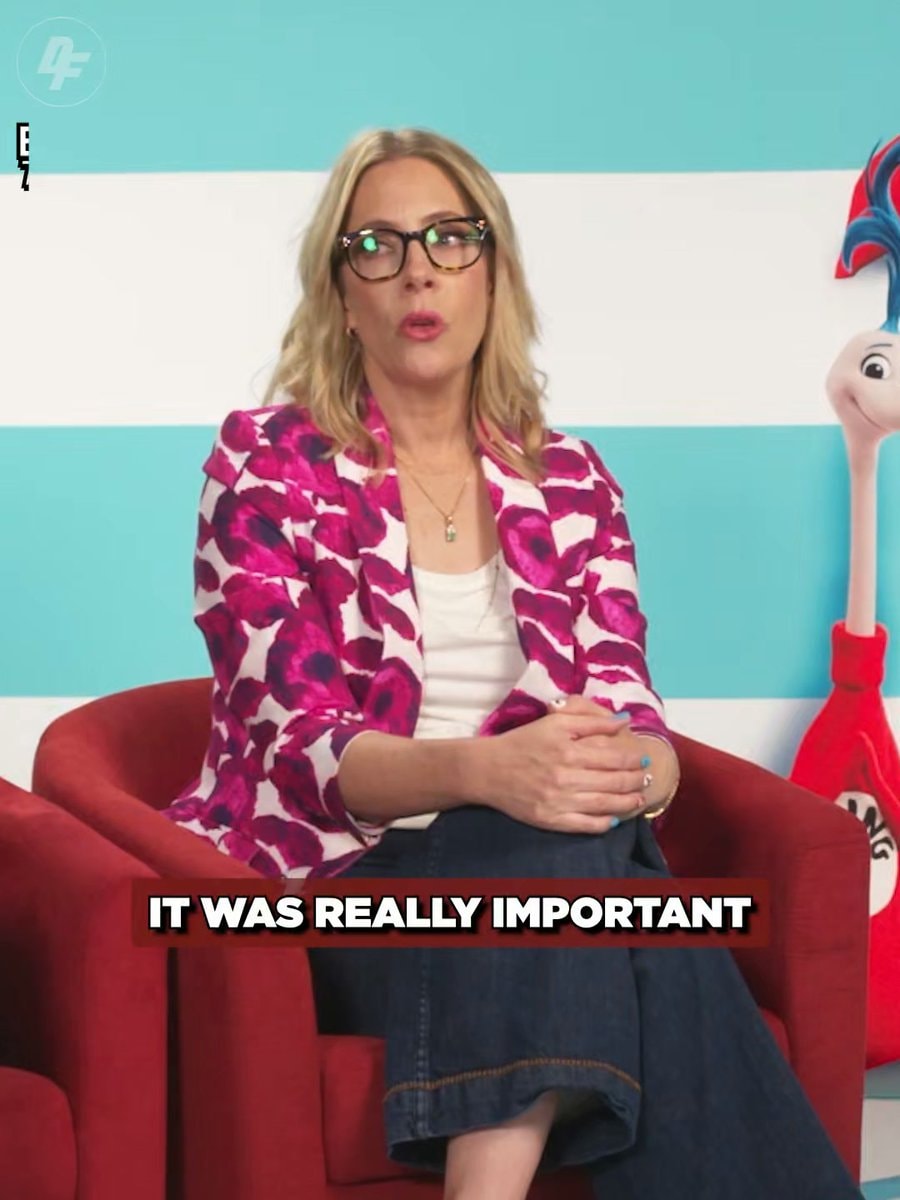
The Cat in the Hat animation styles
THE CAT IN THE HAT directors say the movie's look shifts depending on which realm the characters are in. Honoring Theodore Geisel and Dr. Seuss meant a painterly, referential style for the Seuss side, hatch marks and negative space included. Since a Seuss character crossing into the real world is rare for the books, it gave them a chance to really separate the visuals. Gabi's nostalgia and melancholy drive the real-world lighting, and the Cat's arrival turns things into a magical adventure with its own aesthetic. Not indulgence, just storytelling across worlds.
Transcript (en)
It was really important for us to honor Theodore Geisel and Dr. Seuss. We wanted to make sure that it's really referential to that. It does have that painterly style. It has the signature hatch marks. It has a lot of negative space, a lot of his compositions. That was one of the visual styles. And then there was also the real world, because this is one of the few books where a character from the Seuss world enters into the real world. It became a kind of a cinematic opportunity for us to truly differentiate the style depending on what realm the characters inhabit. The real world for us gave us an opportunity to be emotional realism, not necessarily photorealism, but because Gabi, our human protagonist, is very nostalgic about the home she left behind and very melancholic, we could create a sense of lighting to try to portray that emotion, and then the cat in the head comes in and transforms her world and then takes him on a magical adventure, and yet again, that world became yet another cinematic aesthetic for us to explore. It wasn't just a self-indulgence for us to try to get a different style, but we tried to use it as a way to truly tell the story as we navigate between different worlds.