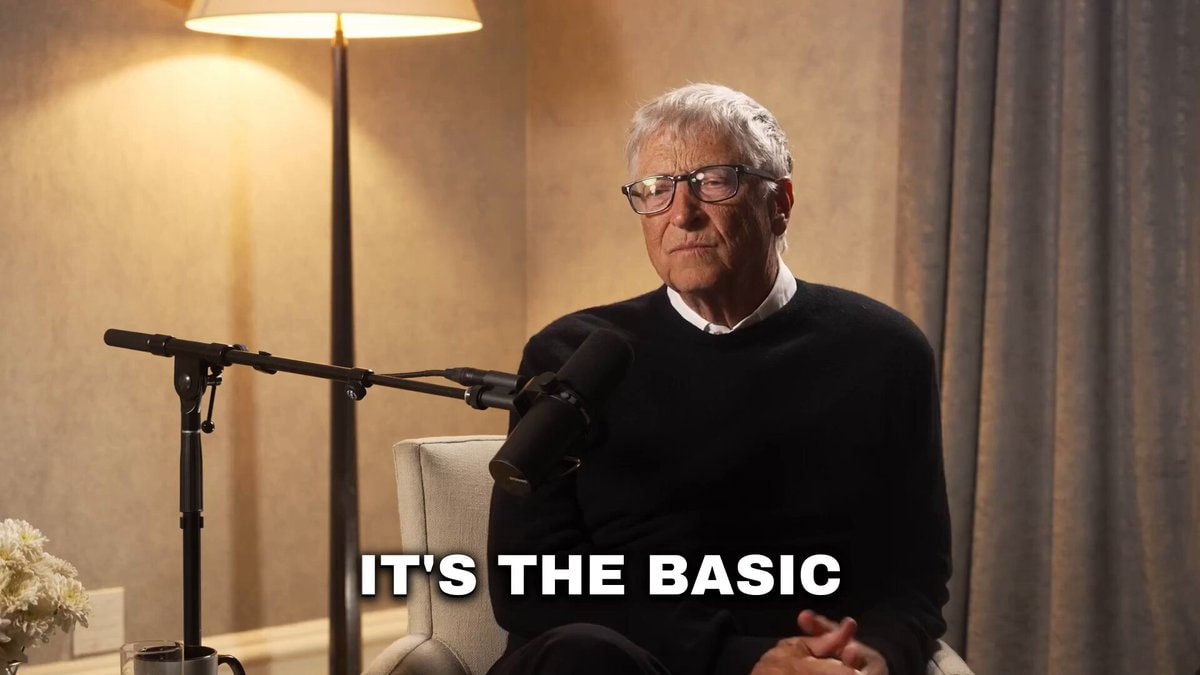
Bill Gates on AI slowdown debate
by Vojtech: Bill Gates
The part that gets me is the audit question. If the whole idea is to pace the frontier and figure out how to build these systems in a more robust, more testable way, you immediately hit the wall: would China agree to go along, and could anyone verify compliance the way nuclear weapons production gets checked? Gates's answer is blunt, "there is no credible proposal that makes that work." Which is why "a true slowdown is very hard to induce" and the fallback becomes go full speed ahead. He says he'd be among the first to back a clear, globally enforceable slowdown plan if one actually existed. It doesn't. So the debate isn't even about slowing down, it's whether the government should pay attention to the dangers at all. The current setup is voluntary, you don't have to show what you're doing, which he calls "clearly inadequate to the most dangerous weapon of all time." The guy whose software landed on basically every office desk, and there are no brakes. I compared AI models and what they cost in my October 2026 guide, it's in my profile. #BillGates
Transcript (en)
It's the basic power of the models towards everything. Social relationships, job market, cyber attacks, bioterrorism attacks. We've crossed the threshold of capability that this is by far the most dangerous technology ever invented. And it'll have pervasive effects in the economy and how war is fought. One of the arguments to pace the frontier to slow development is to figure out how to build those systems in a more robust, more testable way. Would you support a slowdown if that was the goal? A true slowdown is very hard to induce because there you get people say, okay, will China agree to go along with that? And would you be able to audit compliance with that? Somewhat like we're able to do with nuclear weapons production. If you don't accept that, then you sort of say, okay, what the heck, let's go full speed ahead. which I wish there was a clear proposal that would be globally enforceable to slow down. I would be one of the people who would say, yeah, we should probably do that. But there is no credible proposal that makes that work. And so it's not really the center of today's debate. Today's debate is literally whether the government should even pay attention to the dangers here. You don't even have to show what you're doing. It's a, oh, voluntary, call me if you'd like type thing, which is clearly inadequate to the most dangerous weapon of all time.