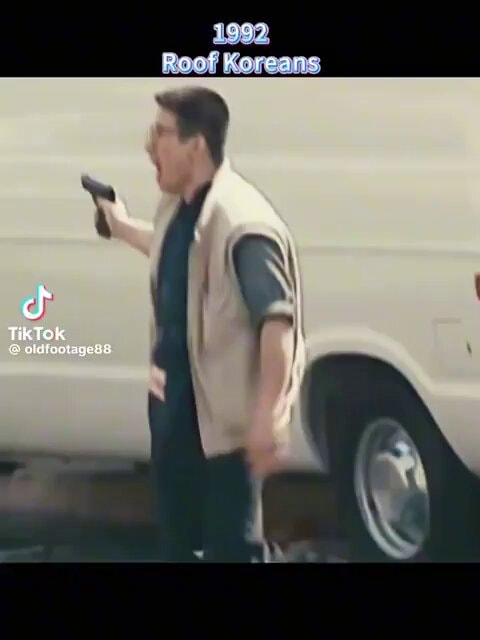
1992 Roof Koreans
by Pavellim: Los Angeles
The French self-defense capability was compromised by state confiscation of weapons, a point that sets the stage for what happened in Los Angeles in 1992. Riots erupted there following the acquittal of police officers involved in the beating of Rodney King. Looting and arson took place during the unrest, with Koreatown identified as a primary target. Police failed to respond to emergency calls during the riots, leaving Korean entrepreneurs to arm themselves and establish communication networks to defend their district. Many defenders possessed military experience and occupied rooftop positions. Defenders fired upon rioters from rooftops and successfully repelled most attacks. The community retained control of the district with only one fatality. A march honoring the resistance was held later with broad support. The speaker states the riots fundamentally changed how America viewed Korean Americans. The air was filled with screams of fear, and the speaker refers to Korea Town as a close-knit Asian community. Korean business owners felt abandoned due to unanswered police calls. The defenders used established communication networks to coordinate. Many defenders were skilled in handling weapons. The attackers were discouraged by the sight and sound of gunfire. The speaker uses the term 'Koryarol' for the neighborhood under attack. This event is characterized as a symbol of community defense against violence when authorities withdrew.
Transcript (en)
In 1992 Los Angeles was consumed by a riot. Korean store owners who defended their rooftops became iconic figures, forever altering the way America viewed them. The riots were sparked by the acquittal of police officers who had brutally beaten Rodney King. As anger intensified, violence surged through the street. Stores were looted, cars set on fire, and the air was filled with screams of fear. Korea Town, a close-need Asian community in central LA, quickly became one of the main arguments. Korean business owners felt a band when their desperate calls to the police went unanswered. With no help coming from the authorities, they realized they had no choice but to protect themselves. Groups of Korean men quickly formed to take a stand. They gathered firearms under established communication networks to coordinate their defense. Many had military experience and were skilled in handling weapons. They took positions on rooftops, ready to defend their neighborhood. When the rioters descended on Koryarol, the defenders acted with determination. From their elevated positions, they engaged in gunfire with those attempting to loot and destroy their businesses. The sight and sound of gunshots discouraged many attackers. When the chaos finally ended, the Korean community held their ground, losing one of their own in the fight to protect their homes. Soon after, the Korean community held a protest march to honor their resistance, which gained widespread support from both Koreans and the broader society. This moment in the LA riots remains a powerful symbol of community resistance to violence and injustice.