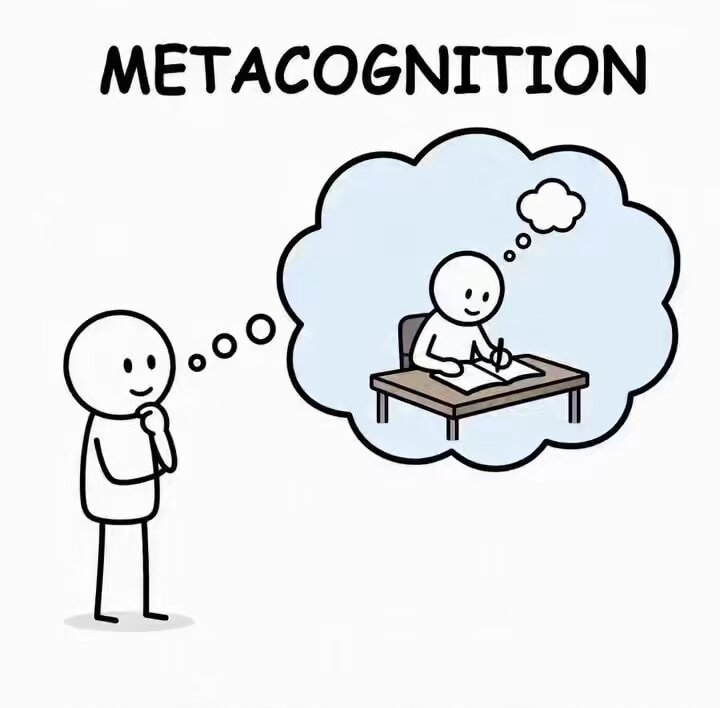
metacognition explained in a minute
One minute is all it takes to break down metacognition
Transcript (en)
Metacognition. Metacognition is thinking about thinking. The ability to step back and observe your own mental processes from a distance. To notice not just what you are thinking, but how you are thinking. Whether your reasoning is clear or clouded. Whether your conclusion came from evidence or from something you already wanted to believe. Most people think. Very few people watch themselves think. The term was coined by psychologist John Flavel in 1976. He defined it as knowledge and cognition about cognitive phenomena. In simpler terms, it is the mental step back that lets you examine your own thought process rather than just being inside it. Metacognition works in two ways. The first is metacognitive knowledge. What you know about how your mind works. Knowing that you make worse decisions when you are tired. That you are more likely to believe information that confirms what you already think. That your memory is less reliable than it feels. The second is metacognitive regulation. Actually using that knowledge in the moment. Catching yourself mid-thought and asking whether this reasoning is honest. Whether the certainty you feel is earned or just comfortable. Research consistently shows that people with stronger metacognitive skills perform better across almost every domain. Students who monitor their own understanding learn more effectively. Leaders who examine their own reasoning make better decisions. People who question their own emotional responses navigate relationships more successfully. Thinking is automatic. Thinking about how you think is a choice.