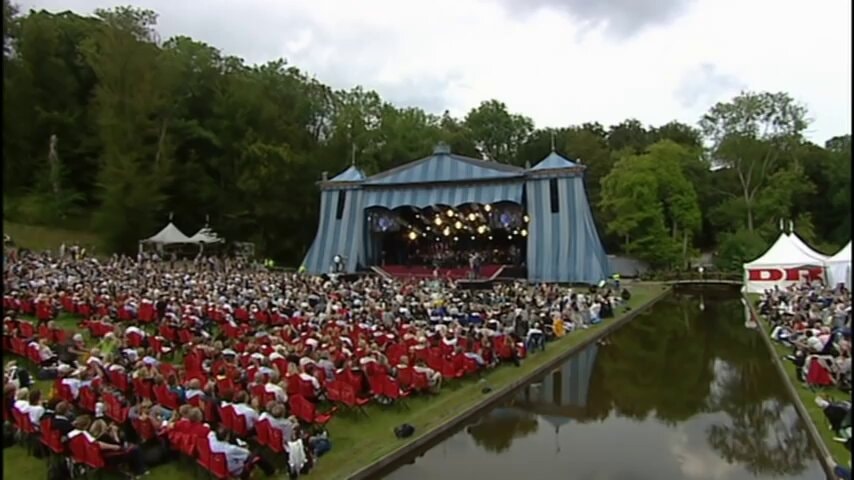
Procol Harum A Whiter Shade of Pale 2006
by Felix P: Gary Brooker
There is a version of A Whiter Shade of Pale that works as background music on a sunny patio, but hearing Procol Harum play it live at Ledreborg Castle in Denmark in 2006 turns it into something closer to a memory you can finally name. The setting seemed to understand the song before the first note was played, and yet nothing about the performance feels like an attempt to make the song young again. That would have been easy for a famous 1967 song to become a museum piece, especially when the musicians are revisiting one of the biggest songs of their career. Instead, Gary Brooker sings it with the weight of someone who has lived many years beyond the moment in which the song first became famous. His voice does not try to disguise time. It uses it. And that changes the song entirely. The original A Whiter Shade of Pale had an almost dreamlike quality where the lyrics move through images that never quite settle into a straightforward story while the famous organ part gives the song its unmistakable, almost ecclesiastical character. Keith Reid later explained that he was trying to create a mood rather than tell a conventional story, which may be one reason the song has remained so open to interpretation for decades. In Denmark, the orchestra makes that atmosphere enormous without destroying its mystery. Strings and voices surround the band, but the performance never feels as though the musicians are trying to explain what the song means. They leave the strange images alone. The music carries them. Some songs become less interesting when you understand them completely because A Whiter Shade of Pale has survived partly because it refuses to give you a clean answer. You can listen to it at 20 and hear romance, confusion and intoxication. Listen again decades later and the same words can sound like something else entirely: memory breaking apart, a relationship disappearing, or simply the sensation of looking back at a night you can no longer fully reconstruct. The 2006 performance makes that feeling more pronounced because time itself has entered the arrangement. The band is no longer playing from inside the 1960s. They are looking back at it. And there is something quietly moving about that distance. The orchestra gives the song grandeur, but Brooker gives it age. His voice reminds you that this isn't a recording trapped in 1967. It is a living song carried forward by the people who created it. Perhaps that is why this version feels less like nostalgia and more like memory. The past isn't being recreated. It is being remembered by people who were actually there.