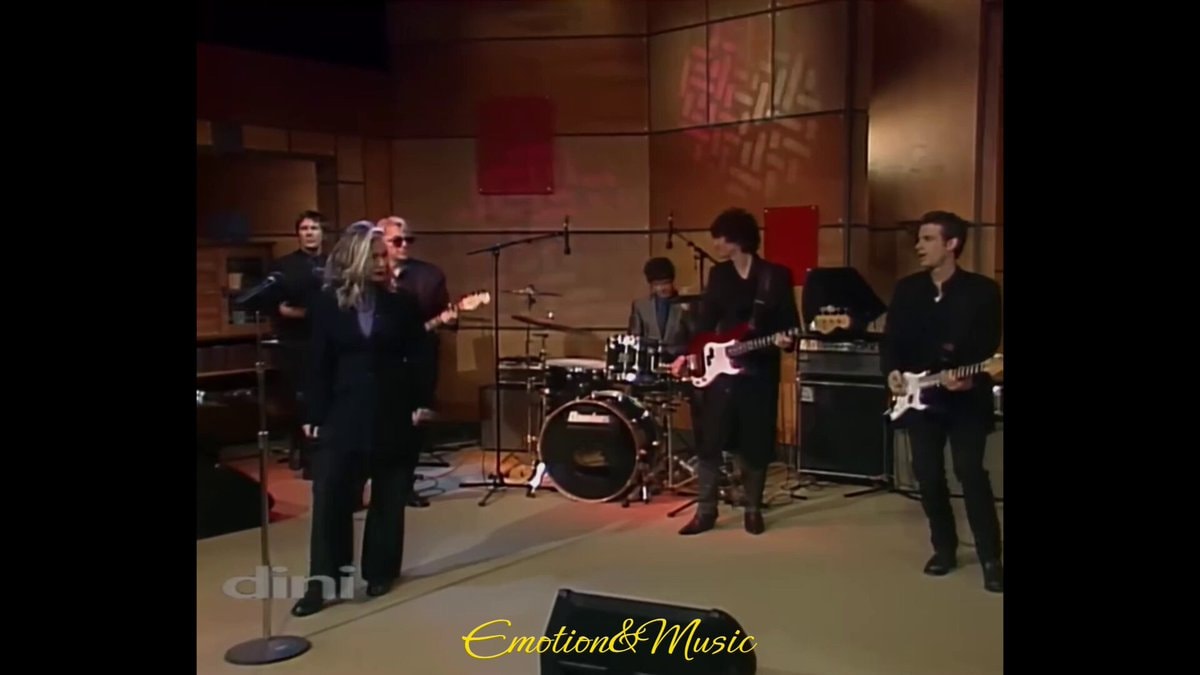
Debbie Harry performs Maria live in 1999
There is a specific kind of power in watching Debbie Harry perform "Maria" in 1999. It is not about nostalgia or proving relevance. It is about an artist who simply inhabits a song without apology. She was 53 years old at the time. Blondie had already lived through the rise, the disappearance, and the return that most bands never get to experience even once. But none of that history feels like baggage here. There is no sense of her trying to convince anyone she still belongs on stage. She just walks into the track and stays there. The blonde hair and the cool expression might remind you of her earlier years, but the attitude feels continuous rather than recreated. It is as if she has carried that same effortless confidence all along. This matters because "Maria" is built on a very youthful type of fascination. The lyrics describe someone who barely notices the effect they have on everyone around them. It captures that specific attraction that feels stronger because it cannot be controlled. There is something almost mischievous about how the song turns "Ave Maria" into a pop hook. The subject becomes part fantasy, part obsession, and partly unreachable. It is not deep in a traditional sense, but it understands something real about desire. Sometimes the less available someone seems, the more space they take up in your imagination. Harry was no longer young when she recorded this, and that shifts how the song lands without changing its core meaning. Her voice carries more texture than it did decades prior. It sits slightly lower. It sounds more lived-in. It is less concerned with sounding pristine. Instead of making the track feel dated, this adds a quality the original could not have possessed. She is not singing about attraction from the perspective of someone still discovering it for the first time. She sounds like someone who has experienced enough of life to understand how irrational desire can be, yet still finds it worth singing about. That is perhaps the most appealing aspect of the performance. Harry never seems embarrassed by the youthful energy of "Maria." She does not soften it because of her age. She does not turn it into a self-conscious celebration of staying young at heart. She allows the song to remain exactly what it is. The guitars keep their sharpness. The rhythm continues to push forward. The chorus retains that immediate lift. But now all that energy is carried by a voice with history behind it. The contrast gives the song more depth rather than less. There is also something refreshing in what she chooses not to do. She does not make aging the subject of the performance. There is no visible struggle against time. There is no attempt to convince the audience that nothing has changed. Something has changed. She has changed. Her voice has changed. The world around Blondie has changed. But none of that means the emotions inside an old song need to be retired along with the decade that produced them. This is where the performance becomes more than just a comeback moment. It quietly rejects the idea that certain emotions belong to certain ages. Attraction does not disappear because someone gets older. Curiosity does not vanish. The pleasure of being desired, the fascination with someone mysterious, even the foolishness of wanting what may never be yours, none of these feelings have an expiration date. What changes is the person experiencing them, and sometimes that experience makes the emotion more interesting. Almost everyone has had a "Maria" at some point. Maybe it was a person who barely noticed you. Maybe it was someone you knew you should not want. Maybe it was simply an image of someone you could never quite reach. The details differ, but the feeling is familiar. It is that strange mixture of attraction and distance that makes a person seem larger in your imagination than they could ever be in reality. That is why Harry's 1999 performance still feels alive. It is not a museum piece. It is not a demonstration that she could still "do it." It is simply an experienced artist standing inside a song that still has something to say, without apologizing for the fact that she understands its desire as well as she ever did. The calendar moved forward. Her voice changed. Blondie changed. But "Maria" did not need to become younger to remain convincing. And Debbie Harry did not need to become younger to make it believable. She just had to sing it like she meant it.