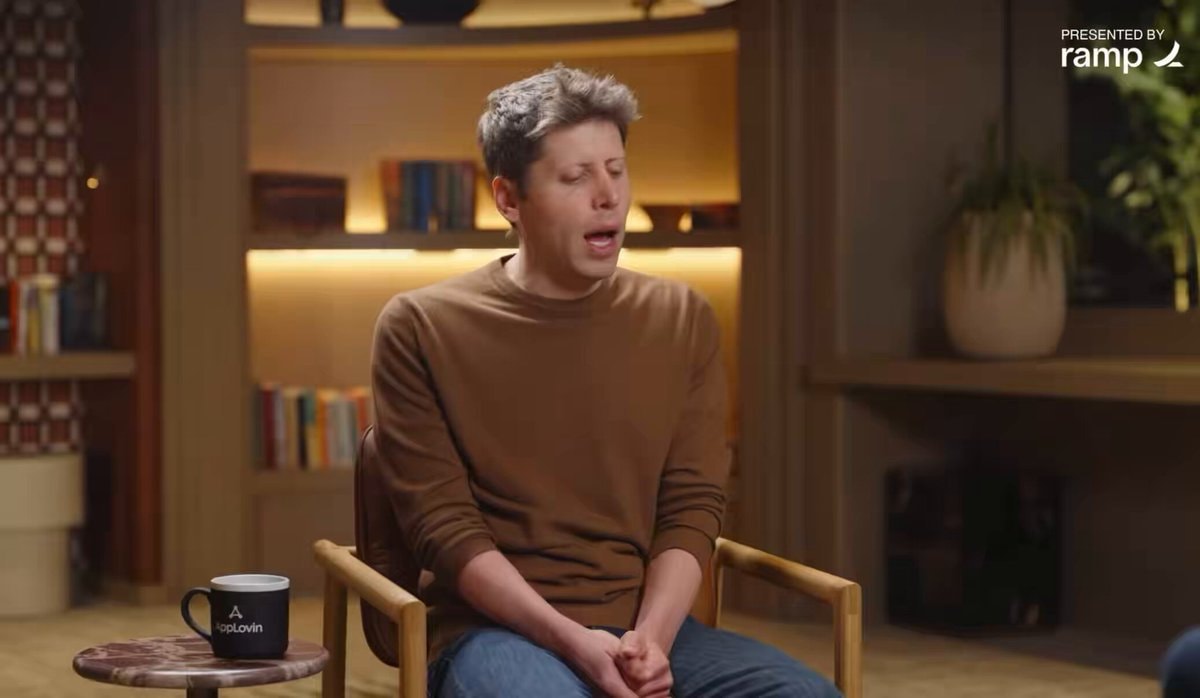
Sam Altman vs Dario Amodei AI debate
Sam Altman just accused his biggest rival of planning to rule the world as a dictator. And in his version of the story, you're the peasant. "Dear peasants, we will bequeath upon you these gifts of a cure for cancer." Here's the pitch Altman says a rival lab is running: They hand the world a cure for every disease, they make everything cheap, and the price is "people giving up their autonomy and impact over the future." You stop complaining. They make every decision from there. Altman's verdict on that pitch: A very anti-human sales pitch, run by people who need to be called out and kept away from power. Then he explained why anyone would do it, and this is where it gets really interesting… He says it comes down to fear and power. People get so shaken by the size of the risk that they decide the world should trade away a lot of liberty for safety. Once everybody accepts that trade, it turns into cover for taking everything else. So who is he talking about? He went after the people saying "there's a 25% chance we're going to destroy the world" who race ahead anyway, because otherwise the bad guys get there first. And exactly ONE man in AI owns that number. Dario Amodei runs Anthropic. Asked at the Axios summit in Washington what odds he'd give on AI ending in disaster, Amodei said 25%. Anthropic was founded by people who walked out of OpenAI. Altman's company. And the cure-for-every-disease framing is Amodei's signature. And think about those 25% for a second: One chance in four. If an airline posted those odds nobody would board the plane, and nobody would call you paranoid for staying home. But the company saying it is building the thing anyway. Anthropic doesn't dispute that part either. Their own public position is that AI might be one of the most world-altering and dangerous technologies in human history, and that building it themselves is a calculated bet, because safety-focused labs at the frontier beat handing that ground to somebody else. That's the sentence Altman is mocking. He's just saying the ugly version of it. Then he named the two things that scare him most: One is a model nobody can control. The other is power landing in the hands of a single company, a single person, or a single model. Altman calls both of them deeply anti-human, and says the fix is keeping actual people in charge of the future. But also keep in mind that there’s a 75% chance things go really, really well. Three times out of four, by Amodei‘s own estimate, this lands fine. He is also the one who went on television warning that AI could wipe out half of all entry-level white collar jobs and drive unemployment into double digits. Call that fear marketing if you want. But you can just as easily call it the only CEO in the industry telling people what's coming before it arrives. And Anthropic's entire argument is that saying the danger out loud is what separates them from the labs that stay quiet. Then there's Altman's problem: A billion people use OpenAI every single week. So he’s warning about a small group deciding the future for everybody else while running the biggest one on Earth. The smartest people alive are currently about as smart as the smartest models alive, and that is about to FLIP. So both agree the machines pass us shortly. Their only real fight is over who gets to be holding the keys when it happens. Two of the most powerful people alive are arguing in public over which of them deserves your trust. Who do you trust more?
Transcript (en)
I also think a lot of people building AI, you know, have been off saying there's a 25% chance we're going to destroy the world and yet we're going to race ahead to do it because otherwise those bad guys will do it first. Or, you know, it's like, man, this thing is going to be really terrible and there's going to be 50% of the jobs are going to go away in the next year and we hope you all are okay, but it seems really scary. Like we have not, as a field, done a very good job of explaining to people what the benefits are and how the downsides can be mitigated. And we certainly have not done a good job. Even if people have had answers like, you know, saying, well, there's going to be universal basic income or work will be optional or whatever. There's been very little discussion from people about how and why it's important that people have more power and for personal freedom in the world, not less. And that matters a lot to most people. The ability of people to influence their own future and collectively to design kind of where society is going to go and the autonomy that comes with that, very important. And I don't think a lot of people in the AI field, they feel it for themselves, but they don't spend much time thinking about it, reflecting on it, acknowledging how important that is to other people. And so to go back to that, like character, Jason, of the sales pitch, characterization of this caricaturization of the sales pitch. I don't know if that's a word from earlier. It is. The like, dear peasants, we will bequeath upon you these gifts of a cure for cancer and material wealth and some things and, you know, great entertainment. And you stop complaining and we'll make all the decisions about the future and just trust us, you know, we'll be bit emily dictators. Not good, not good.