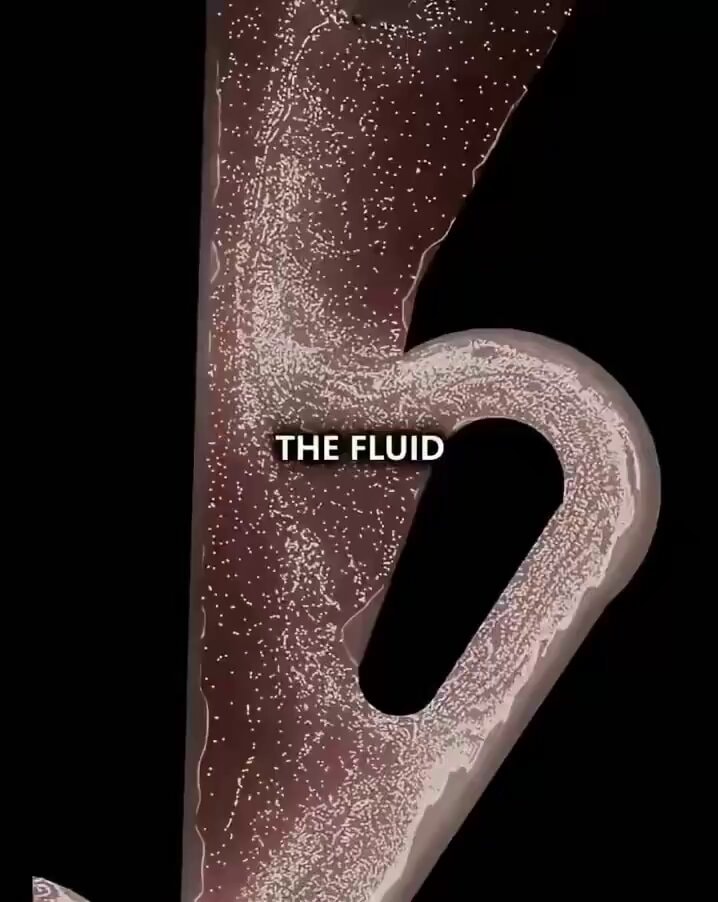
Tesla valve NASA fluid
by Sur: Nikola Tesla
Nikola Tesla created this valve more than 100 years ago, and NASA still uses the same concept today. Tesla patented his "valvular conduit", also called the "Tesla valve", in 1920. It's a passive one-way flow device that relies on smart geometry instead of moving parts.
Transcript (en)
The fluid is moving in all sorts of complex, messy directions. This is the Tesla valve, a device invented by Nikola Tesla to control fluid flow. Unlike a typical check valve, which uses a disc or ball to stop backflow, the Tesla valve has no moving parts. It was a brilliant solution for its time, when the materials used in conventional valves were prone to frequent failure. While it doesn't completely stop the fluid in the opposite direction, it effectively redirects the flow by creating a very strong resistance. In the correct direction, the fluid flows freely through the main channel, but in reverse, it gets caught in the sharply angled subchannels, creating turbulence that dramatically slows it down. This ingenious system is still used today in applications where reliability takes precedence over a perfect seal, such as microfluidics, rocket engines, and cooling systems.