China Buddhism soft power Lumbini expansion
by Not A Charm: China
China is investing heavily in Buddhism as a tool of soft power, funding temples, universities, and even seeking influence over the selection of the Dalai Lama's successor. Despite its official atheist stance, Beijing is backing a $2 billion expansion of Lumbini in Nepal, challenging India's traditional role as the birthplace of Buddhism. The full thread is available here:
Transcript (en)
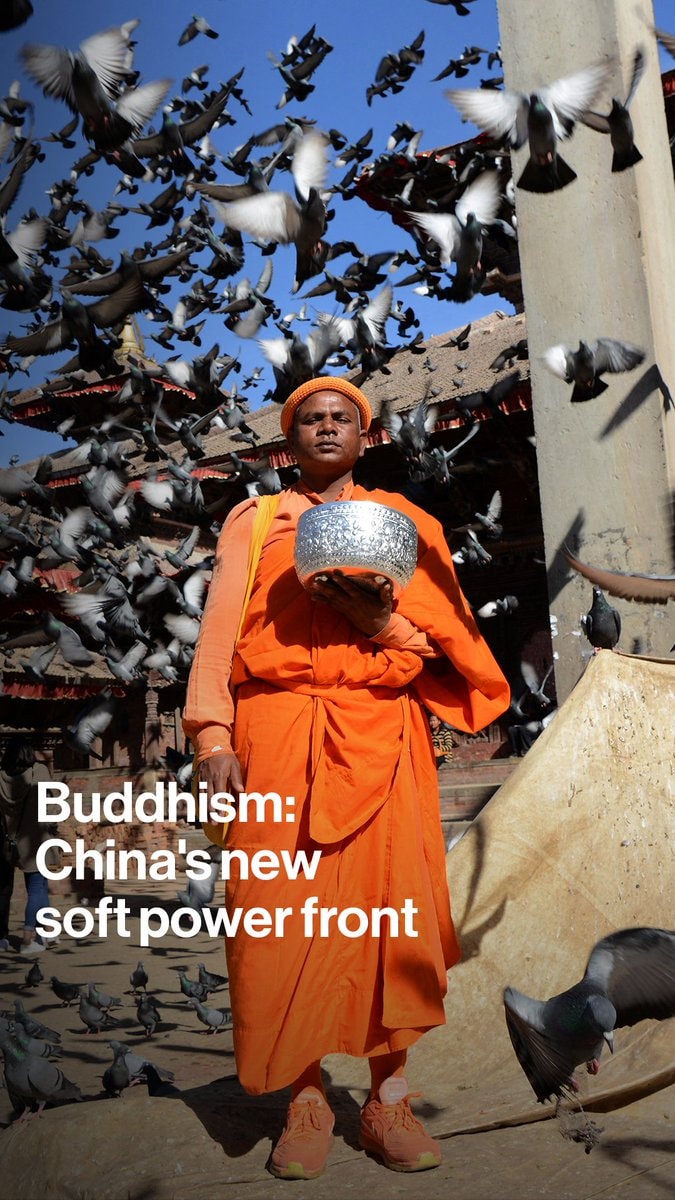
China, an officially atheist country, has been eyeing a new frontier for some time, Buddhism. Over the past decade, Beijing has spent millions of dollars on temples, universities, relic diplomacy, and monk exchanges, all aimed at promoting its state-managed version of the faith. That drive has alarmed officials in New Delhi and Washington, who see it as part of a broader soft power push to weaken India's historical ties to Buddhism and also expand Chinese influence across the region. That rivalry is on full display in the idyllic pilgrimage site of Lumbini in southern Nepal, the birthplace of the Buddha. Nepal has welcomed a deluge of funding from President Xi Jinping's government, with Chinese state-aligned institutions having proposed a $2 billion expansion plan for Lumbini Buddhist University, which includes research centers, hotels, and its own hydropower supply. Less than a mile away, India has funded a $10 billion cultural center that is awaiting inauguration. But nowhere are the stakes higher for China than in the looming battle over the succession of the Dalai Lama. Tenzin Gyatso, the current Dalai Lama fled Tibet in 1959, nine years after China took control of the region. Beijing says it has the right to designate his successor, but any succession dispute would effectively split Tibetan Buddhism, fracturing loyalties across one of the religion's most influential traditions, which has followers around the world. It would also give China greater influence as it continues to wield Buddhism as an instrument of soft power.