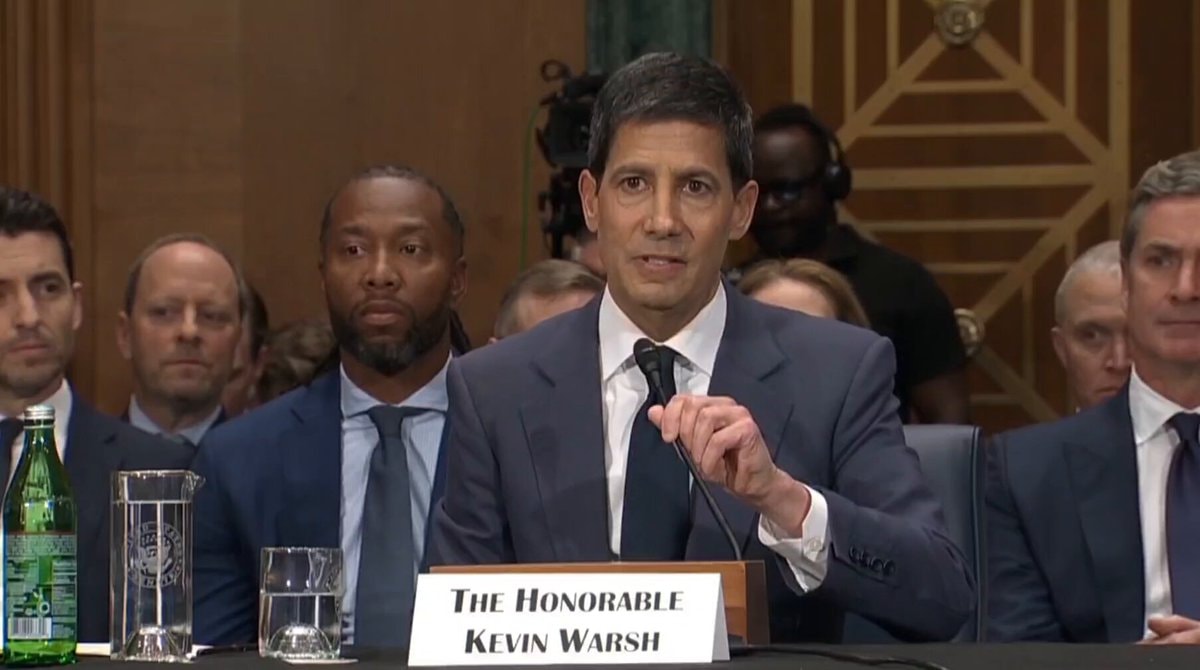
Kevin Warsh Federal Reserve
Trump placed his own appointee in charge of the Federal Reserve with the goal of pushing interest rates lower. Yet that very same individual could turn out to be the one who ends up bursting the AI bubble. Here is the trap that Trump has walked into. For most of last year, Trump carried on an open conflict with Fed chair Jerome Powell. He attacked him repeatedly in public.
Transcript (en)
There's probably no more pressing question than the cost of living. We know at the Federal Reserve that price stability was an objective that you and your colleagues gave to the Fed. So when over the course of the last several years, especially after COVID, when prices went up to the tune of 25 to 35 percent for virtually all deciles of the American people, that's an indication that the Fed missed its mark. and we are still dealing with the legacy of the policy errors in 2021 and 2022. Once you let inflation take hold in the economy, it's more expensive and harder to bring it down. And so the fatal policy error going back four or five years is still a legacy that we're dealing with. We need, in my judgment, fundamental policy reforms to fix it. And while it's true that inflation is less problematic, meaning the rate of change in prices is less severe than it was some years ago hardworking Americans are no doubt feeling it I think that means a regime change in the conduct of policy I think that means a different new inflation framework I look forward to working with my colleagues at the Fed, if confirmed, to achieve that. I think it means, as you suggested, using tools differently. The Fed has an interest rate tool and a balance sheet tool. My view is the interest rate tool gets in the cracks. It's fairer. The balance sheet tool disproportionately helps those with financial assets. The interest rate tool hits the entire economy. So we need a new framework, new tools, and I'd also say, Mr. Chairman, new communications. I think part of the reason why, after making a mistake in 2021 and 22, the mistake was compounded, is the Fed gives its forward guidance. The Fed tells the whole world what their dots are going to be, what their forecasts are going to be. Well, the Fed's human. then they hold on to those forecasts longer than they should. I think if the Fed were to wait until it gets into a meeting before making a decision, that incremental deliberation can keep the central bank from compounding its errors.