RFK Jr. HHS nutrition training
by Jolyon: Food & Drink
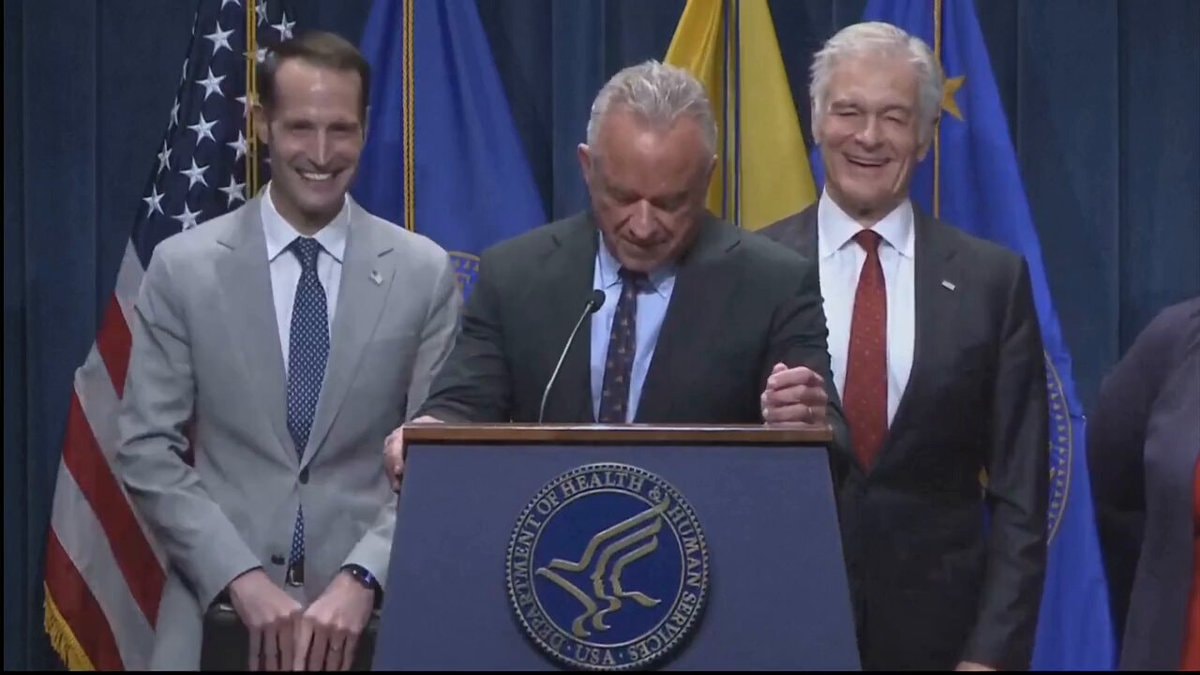
RFK Jr. has succeeded in getting the medical establishment to acknowledge that it does not teach doctors about disease prevention. Now 73 schools have committed to providing more than 40 hours of nutrition training. At present, medical students receive only one to two hours a year on the subject. Meanwhile, a poor diet is responsible for 60 percent of deaths from chronic disease. Food as medicine was always the answer.
Transcript (en)
Today, HHS and the Department of Education are announcing several major reforms that will help reshape the future of American medicine. First, nine of the nation's leading medical accreditors, certifying boards, testing organizations, and educational institutions are taking concrete action to put nutrition back where it belongs at the center of medical education. The nine organizations we're highlighting today are the Accreditation Council for Continuing Medical Education, the Accreditation Council for Graduate Medical Education, the American Association of Colleges of Osteopathic Medicine, the Association of American Medical Colleges, the American Board of Medical Specialties, the Commission on Osteopathic College Accreditation, the Liaison Committee on Medical Education, the National Board of Medical Examiners, and the National Board of Osteopathic Medical Examiners. Over the last 10 months, these organizations have done the hard work of reform. They reviewed standards, revised requirements, built consensus, and committed themselves to measurable change. Together, they are changing how America trains its doctors. Some of the most significant reforms came from the National Board of Medical Examiners and the National Board of Osteopathic Medical Examiners. The first on nutrition science will have a meaningful presence across all three steps of the United States. Medical licensing examination Approximately 15 of content across the examination sequence will assess nutrition and the clinical application using evidence standards The National Board of Osteopathic Medical Examiners has made similar strong and impactful commitment on its testing of osteopathic students. That means nutrition will no longer sit at the margins of medical education. It will shape what students learn, what physicians master, what licensing boards assess, and ultimately how patients receive care. Education drives practice, practice drives outcomes, and outcomes determine the health of a nation. That's why today's commitments represent one of the most important course corrections in modern American medicine. Our next big announcement is of equal importance. 19 additional medical schools have signed the Trump administration's nutrition education pledge, committing to provide at least 40 hours of nutrition education or an equivalent for every future physician they train starting this autumn. On these commitments, 73, with these commitments, 73 medical schools across the country have now joined the pledge. That's not a symbolic achievement. It is a structural change. The first 54 schools joined after months of engagement and planning by Dr. Travis Smith and Sam Waters and others. The 19 schools joining us today came forward on their own. They saw the urgency of the nation's disease burden. and they saw the leadership of their peers, and they chose to act.