Google Amazon Microsoft Meta AI spending
Big Tech appears to have exhausted its resources on artificial intelligence development. The steps these firms are taking to obscure that reality deserve scrutiny. Google, Amazon, Microsoft, and Meta plan to spend a combined $700 billion this year alone on AI infrastructure. That figure consumes 94 percent of their total operating cash flow. The wealthiest companies ever known now stand close to insolvency. Rather than easing their pace, they have launched the largest financial engineering effort since 2008 to mask the strain. Google recently sold $80 billion in stock to finance its AI infrastructure. That marked the company's first equity raise in 20 years. The previous occasion when Google needed to sell shares came before YouTube even existed. Sundar Pichai has said the issue that disturbs his sleep is compute capacity. The firm that generates $100 billion annually from advertising now informs Wall Street that amount falls short. Amazon's free cash flow is forecast to turn negative this year for the first time. Morgan Stanley projects a $17 billion shortfall while Bank of America anticipates $28 billion. The planet's most lucrative logistics operation is poised to expend more cash than it produces. The company has quietly filed with the SEC indicating it might require additional debt and equity to sustain its construction efforts. All four hyperscalers have begun borrowing hundreds of billions through bonds to maintain the AI expansion. These were once the most cash abundant enterprises in history. Now they are leveraging their positions aggressively to construct infrastructure whose revenue potential remains unproven. Early signs of strain have emerged. Broadcom produces the specialized AI chips used by Google, Meta, OpenAI, and Anthropic. This week its AI revenue tripled compared with the prior year. Overall sales rose 48 percent and earnings exceeded every Wall Street projection. The market response was a $320 billion reduction in the company's value during one trading session. On the earnings call CEO Hock Tan revealed three details about the AI sector. Google has started seeking lower cost alternatives for its AI chips. Broadcom has dropped its plan to market full AI systems and is instead shifting to basic chips with reduced margins. Despite talk of unprecedented demand Tan declined to increase his full year guidance. That decision speaks volumes about the true picture he observes. Wall Street reacted by selling aggressively enough to pull down AMD, Intel, and the broader semiconductor industry. A firm that triples its AI revenue yet faces punishment because the growth falls short of inflated hopes shows how detached expectations have become. The most alarming aspect involves personal finances. Apple, Microsoft, Amazon, Google, Meta, and Nvidia represent about 30 percent of the S&P 500. Anyone with a 401k or index fund already carries exposure to this wager regardless of intent. Each of these corporations promises that AI will produce trillions in revenue. At present the numbers show them investing trillions upfront while hoping returns materialize afterward. Should revenue arrive on schedule this effort could rank as the most significant infrastructure project in history. It would surpass the scale of railroads and the internet combined. Should revenue lag the firms comprising one third of the American equity market will have extended their balance sheets into the biggest write down period since 2000. Unlike the dot com collapse these entities are not speculative startups lacking income. They form the foundation of the worldwide economy.
Transcript (en)
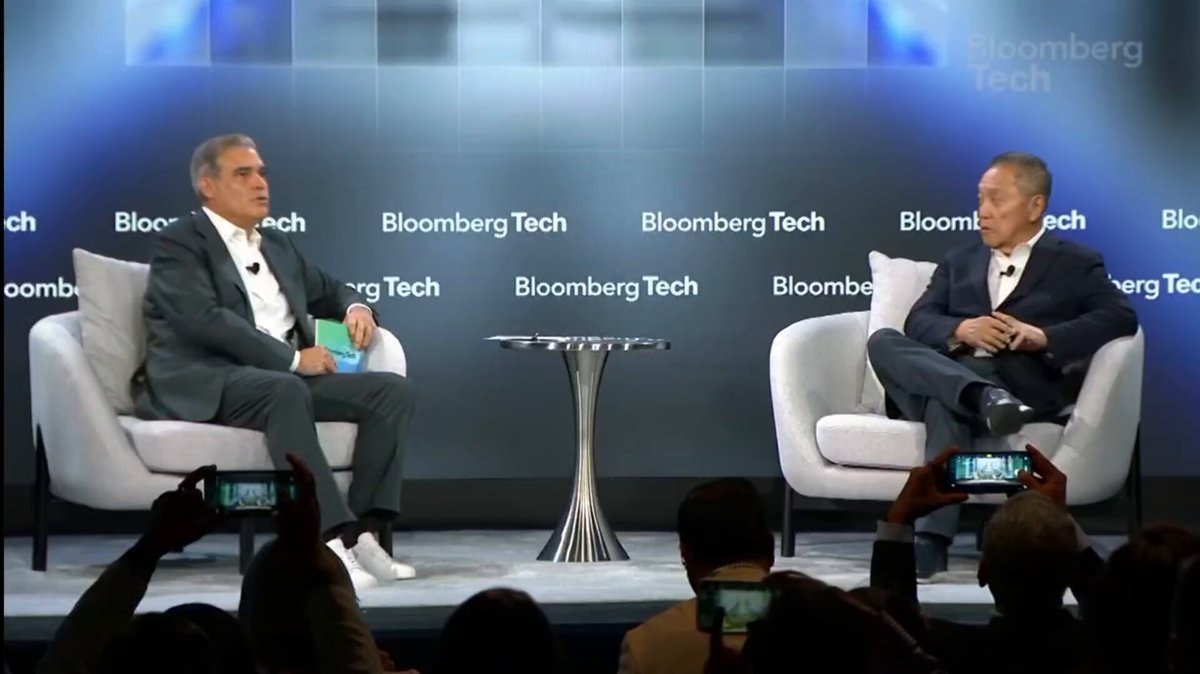
You can release results reaffirming forecasts for $100 billion in certain types of revenue, surpass estimates in a lot of different ways, and still there to be this sense of disappointment. What does it say about where we are in the hype cycle around AI? I guess we are kind of like AI in a very surreal environment. Frankly, I don't think about it. No, it's hard not to. But no, just focus on fundamentals, create value, and stop thinking about your stock price. Trouble is very hard to do that. But we try to do it. Well, I mean, as we were just talking with Ali, every month or so, every couple of months, there's a new LLM, and it sort of changes the conversation around who's ahead, who's behind. mind I curious about you know you have this massive partnership with Google very important working with them on their TPUs And I'd love to get, I'd love to drill down a little bit with you on that, and in particular, you know, how concerned you might be about Google sort of taking more of the chip development and design process in-house. the term customer-owned tooling, is that something that keeps you up at night? And are there any provisions that you've built into your partnership with them that sort of might preclude that? Well, you know, that's something we should expect in technology. And we've been in semiconductors for over 20 years. In fact, that's how long I've been doing this with Broadcom. That's what we do every year, all the time. We have multiple product divisions, each of which we are the best in what we do. And we just keep investing. And essentially, you try to out-engineer any competition.