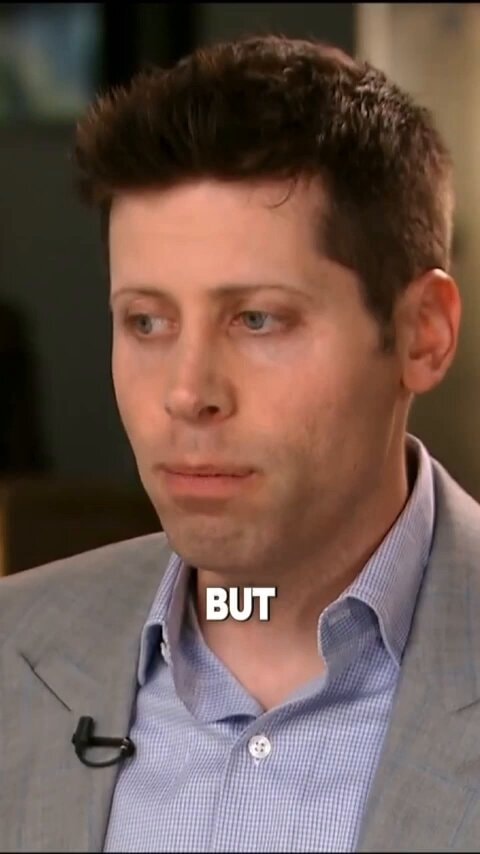
Sam Altman Dario Amodei
Sam Altman and Dario Amodei have been accused of orchestrating a $2 trillion deception aimed at the global public. The sequence of events reveals much. Four days after OpenAI quietly submitted paperwork for a $1 trillion initial public offering, Altman appeared on stage in Sydney and declared he was delighted to be wrong about artificial intelligence eliminating jobs. Amodei adjusted his own prediction during the same week. Anthropic aims to pursue its initial public offering in October with a $900 billion valuation. Fortune described the moves as coordinated, and that assessment seems accurate. Yet this was never truly a scientific projection from the start. During 2024 and 2025, both executives required two elements at once: regulatory focus from governments and substantial funding from private sources. Dire warnings supplied both. When they informed senators that artificial intelligence could remove half of all white collar positions, they earned invitations to testify. They gained recognition as a national security concern and established themselves as the measured voices who grasped the risks more clearly than others. When they delivered the identical message to investors, they generated a sense of immediacy. That immediacy attracts funding. Funding elevates valuations. Amodei claimed 50 percent of white collar roles faced jeopardy. Altman asserted that complete sectors of employment would disappear. They repeated these statements often, in prominent settings, throughout 2025. Now their requirements have shifted. OpenAI loses $1.22 for each dollar it generates. The company faces $14 billion in losses this year against $25 billion in revenue. Goldman Sachs and Morgan Stanley are organizing the investor presentations, with the S 1 filing scheduled for late August. One cannot approach public markets while claiming the innovation created represents an existential danger to the broader economy. That narrative does not secure a $1 trillion valuation on Wall Street. It invites Senate inquiries, regulatory restrictions, and litigation from every worker affected by displacement across the country. Consequently the narrative evolved. Altman's precise statement in Sydney was that he was delighted to be wrong. He had expected greater effects on entry level white collar positions by this stage than what has occurred. He followed with one remark that every business reporter ought to have highlighted: it still may. Thus the catastrophe has merely been postponed, timed to follow the expiration of the IPO lockup. He conceded the schedule while preserving the overall outlook and safeguarding the investor campaign. Meanwhile 115,000 technology employees have been dismissed so far in 2026, with Meta, Amazon, and Snap each attributing the cuts to artificial intelligence. These individuals now observe the same leaders who forecasted their job losses declaring they had been incorrect about the pace, issued four days after the companies filed to debut publicly at a combined $2 trillion valuation. They promoted widespread anxiety to secure capital, then altered course at the strategic moment to attract still more.
Transcript (en)
But what they don't talk about is all of the white collar work that AI is going to do. My belief is that all repetitive human work that doesn't require the deep emotional connection between two people, that will all be done in the next couple of decades better, cheaper, faster by AI. And that is somehow left out of the conversation.