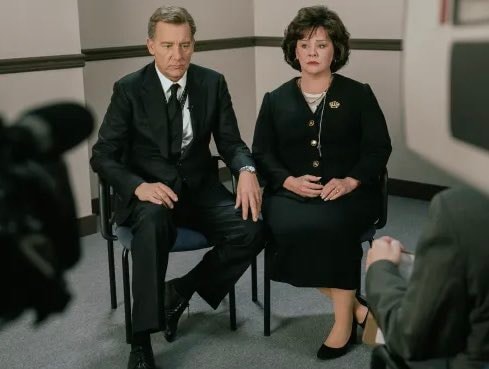
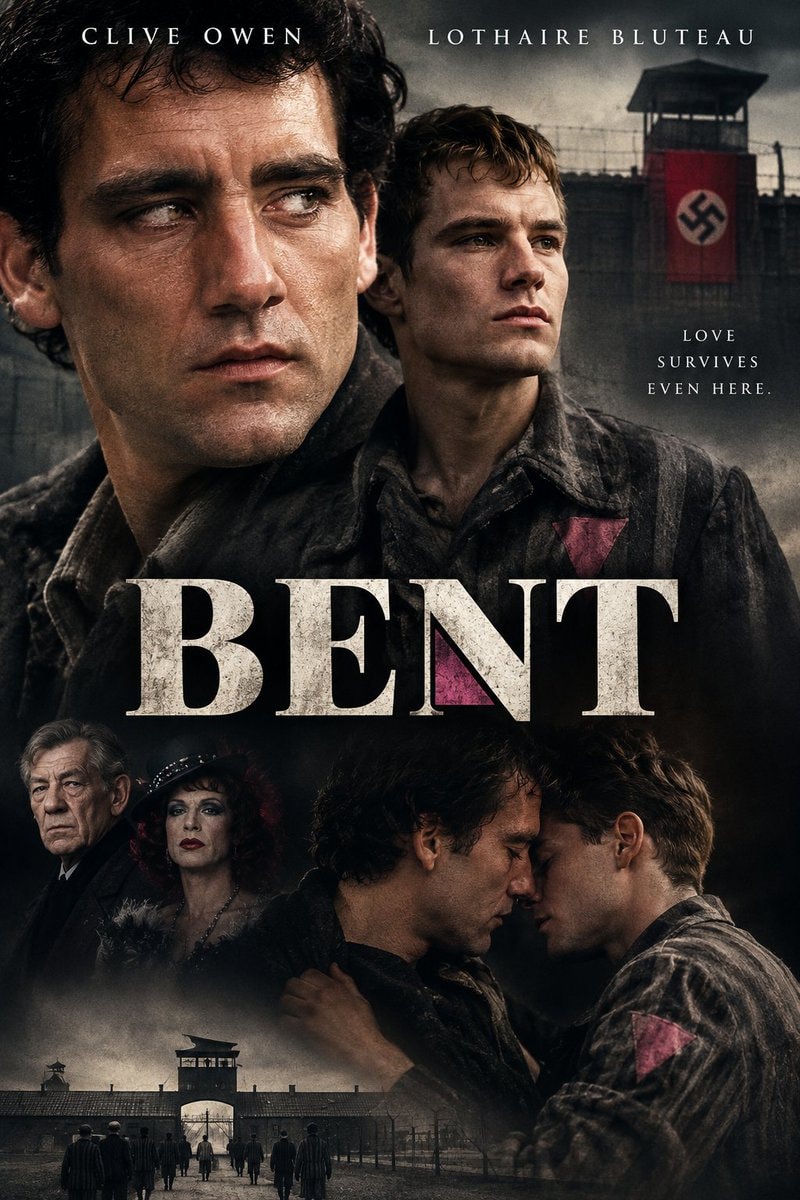
@kimonHorst wears his pink triangle like a badge, and that's the detail from Bent I can't shake. Lothaire Bluteau plays him opposite Clive Owen's Max in Sean Mathias's 1997 British film, working from a screenplay adapted from Martin Sherman's 1979 play. Berlin's decadent nightlife in the 1930s is where Max starts out, a hedonistic gay man, before the Nazi regime tears his life apart. He and his lover Rudy attempt to flee after the Night of the Long Knives, but capture sends them both to Dachau. Max's desperate pivot on the way there: he says he isn't gay and insists he's Jewish, all to dodge the pink triangle homosexual prisoners were forced to wear. That choice sits right in the brutal reality of the camps, where gay men faced horrific persecution and systematic dehumanization. Inside Dachau, Max meets Horst, a fellow prisoner who wears that pink triangle with defiant pride. Whispered conversations and shared labor build a profound connection between the two of them, and in a world designed to strip them of their humanity, that bond becomes an act of resistance, a quiet declaration that love can survive even in the darkest places. Ian McKellen and Mick Jagger round out the cast, with Jagger as Greta, a flamboyant cabaret performer. Shame, courage, identity, sacrifice and the devastating consequences of persecution all run through it. It also draws attention to a painful chapter of LGBTQ+ history that was long overlooked in mainstream Holocaust narratives. The theatrical style and emotionally intense storytelling may not appeal to everyone, but Bent remains a powerful and unsettling exploration of queer survival under Nazi oppression 🍿
View original post