iFANN
    Search iFANN...
    Log in
    Home
    News
    Videos
    Photos
    GIFs
    Explore
    Polls
    Awards
    iFAMOUS
    Wiki
    Anime
    Rooms
    Notifications
    Messages
    Bookmarks
    Profile
    WikiAwardsiFAMOUSRankingsIndustriesCreator RewardsUser RewardsTermsPrivacyCommunity GuidelinesTakedown / DMCAHelpDevelopers

    © 2026 iFANN

    Home
    Search
    Messages
    Alerts
    Profile
    Photo
    Wildcobra
    Wildcobra@thewild5d
    💭Wildlife💭Nature/Scenery
    Central American agouti

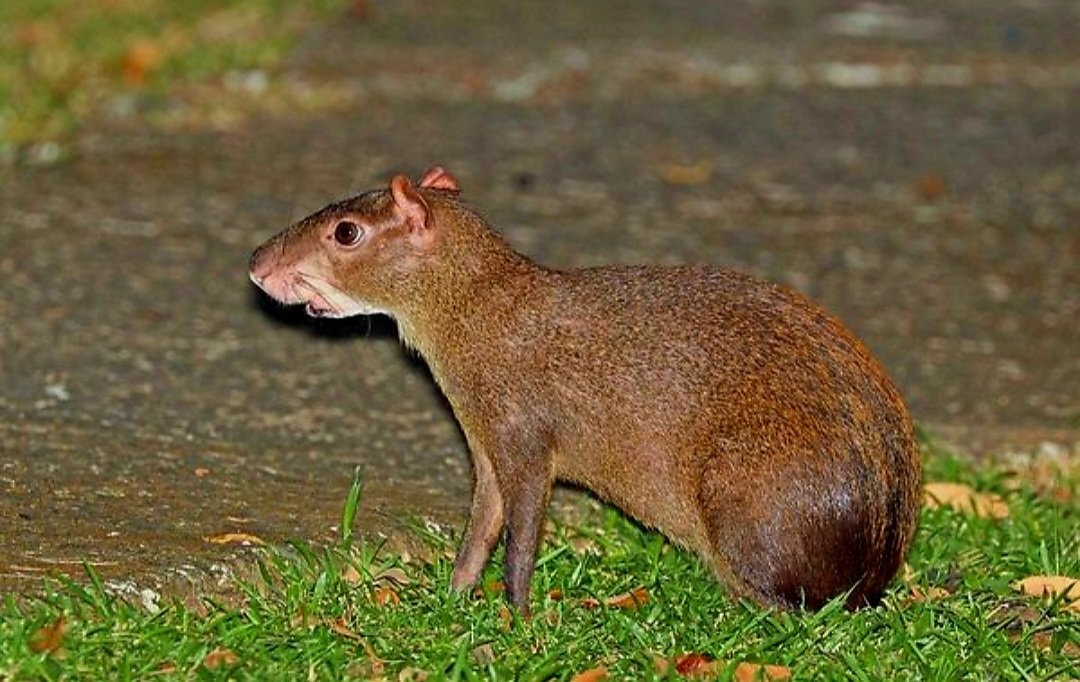
    @thewildThe Central American agouti (Dasyprocta punctata) is a species of agouti from the family Dasyproctidae. The main portion of its range is from Chiapas and the Yucatan Peninsula (southern Mexico), through Central America, to northwestern Ecuador, Colombia and far western Venezuela. A highly disjunct population is found in southeastern Peru, far southwestern Brazil, Bolivia, western Paraguay and far northwestern Argentina. The disjunct population has been treated as a separate species, the brown agouti (Dasyprocta variegata), but a major review of the geographic variation is necessary. The Central American agouti has also been introduced to Cuba, Bahamas, Jamaica, Hispaniola and the Cayman Islands. Though some populations are reduced due to hunting and deforestation, large populations remain and it is not considered threatened. Appearance Central American agoutis from the main part of their range weigh 3-4.2 kg (6.6-9.3 lb) and are typically reddish, orange or yellowish grizzled with black. In northern Colombia, western Venezuela, and on the Atlantic slope of Costa Rica and Panama the foreparts are brownish or blackish grizzled with tawny or olivaceous, the mid-body is orange, and the rump is black or cream. In western Colombia and Ecuador some have tawny foreparts and yellowish to the rump. Agoutis from the disjunct southern population (Peru, Brazil, Bolivia, Paraguay and Argentina) which sometimes are treated as a separate species, Dasyprocta variegata, weigh 3-5.2 kg (6.6-11.5 lb) and are grizzled brown, yellowish and black, or grizzled black and orange. Behavior Like other agoutis, Central American agoutis are diurnal and live in monogamous pairs. They mainly feed on fruits and seeds, and are important seed dispersers

    View original post


    Central American agouti

    Photo by @thewild· Sep 18, 2026· Wildlife

    About this photo

    The focus is a small, brown rodent. It is standing on green grass next to a paved path, looking to the left with its mouth slightly open. The mood is natural and candid, like a wildlife photo. The rodent's fur texture and large eyes are notable.

    See all Wildlife photos

    ?

    No comments yet. Be the first!

    More Wildlife photos

    See all Wildlife photos
    Ahmad al-Shara UNGA phone scrollAhmad al-Shara UNGA phone scrollUS sanctions Iranian airlinesUS sanctions Iranian airlinesFazal Shakoor Khan abduction claimFazal Shakoor Khan abduction claimMonkey attack in KarnatakaMonkey attack in Karnatakabee collecting nectarbee collecting nectarDendrobates truncatus ColombiaDendrobates truncatus ColombiaAgile Wallaby northern AustraliaAgile Wallaby northern AustraliaFive orangutans found in Balasore forestFive orangutans found in Balasore forestTyrannosaurus Rex and pterodactyls prehistoric sceneTyrannosaurus Rex and pterodactyls prehistoric scenePeregrine Falcon Keratin TreatmentPeregrine Falcon Keratin TreatmentArctic Predator hunting on tundraArctic Predator hunting on tundraGiant Lizard sharp mindGiant Lizard sharp mindmuddy hole in the groundmuddy hole in the ground
    Photo
    Wildcobra
    Wildcobra@thewild5d
    💭Wildlife💭Nature/Scenery
    Central American agouti

    @thewildThe Central American agouti (Dasyprocta punctata) is a species of agouti from the family Dasyproctidae. The main portion of its range is from Chiapas and the Yucatan Peninsula (southern Mexico), through Central America, to northwestern Ecuador, Colombia and far western Venezuela. A highly disjunct population is found in southeastern Peru, far southwestern Brazil, Bolivia, western Paraguay and far northwestern Argentina. The disjunct population has been treated as a separate species, the brown agouti (Dasyprocta variegata), but a major review of the geographic variation is necessary. The Central American agouti has also been introduced to Cuba, Bahamas, Jamaica, Hispaniola and the Cayman Islands. Though some populations are reduced due to hunting and deforestation, large populations remain and it is not considered threatened. Appearance Central American agoutis from the main part of their range weigh 3-4.2 kg (6.6-9.3 lb) and are typically reddish, orange or yellowish grizzled with black. In northern Colombia, western Venezuela, and on the Atlantic slope of Costa Rica and Panama the foreparts are brownish or blackish grizzled with tawny or olivaceous, the mid-body is orange, and the rump is black or cream. In western Colombia and Ecuador some have tawny foreparts and yellowish to the rump. Agoutis from the disjunct southern population (Peru, Brazil, Bolivia, Paraguay and Argentina) which sometimes are treated as a separate species, Dasyprocta variegata, weigh 3-5.2 kg (6.6-11.5 lb) and are grizzled brown, yellowish and black, or grizzled black and orange. Behavior Like other agoutis, Central American agoutis are diurnal and live in monogamous pairs. They mainly feed on fruits and seeds, and are important seed dispersers

    View original post

    Central American agouti

    Photo by @thewild· Sep 18, 2026· Wildlife

    About this photo

    The focus is a small, brown rodent. It is standing on green grass next to a paved path, looking to the left with its mouth slightly open. The mood is natural and candid, like a wildlife photo. The rodent's fur texture and large eyes are notable.

    See all Wildlife photos

    ?

    No comments yet. Be the first!

    More Wildlife photos

    See all Wildlife photos
    Ahmad al-Shara UNGA phone scrollAhmad al-Shara UNGA phone scrollUS sanctions Iranian airlinesUS sanctions Iranian airlinesFazal Shakoor Khan abduction claimFazal Shakoor Khan abduction claimMonkey attack in KarnatakaMonkey attack in Karnatakabee collecting nectarbee collecting nectarDendrobates truncatus ColombiaDendrobates truncatus ColombiaAgile Wallaby northern AustraliaAgile Wallaby northern AustraliaFive orangutans found in Balasore forestFive orangutans found in Balasore forestTyrannosaurus Rex and pterodactyls prehistoric sceneTyrannosaurus Rex and pterodactyls prehistoric scenePeregrine Falcon Keratin TreatmentPeregrine Falcon Keratin TreatmentArctic Predator hunting on tundraArctic Predator hunting on tundraGiant Lizard sharp mindGiant Lizard sharp mindmuddy hole in the groundmuddy hole in the ground