iFANN
    Search iFANN...
    Log in
    Home
    News
    Videos
    Books
    Photos
    GIFs
    Explore
    Polls
    Awards
    iFAMOUS
    Wiki
    Anime
    Rooms
    Notifications
    Messages
    Bookmarks
    Profile
    WikiAwardsiFAMOUSRankingsIndustriesCreator RewardsUser RewardsTermsPrivacyCommunity GuidelinesTakedown / DMCAHelpDevelopers

    © 2026 iFANN

    Home
    Search
    Messages
    Alerts
    Profile
    Photo
    Sur
    Sur@sur_273mo
    💭Science💭History⭐Brahmagupta
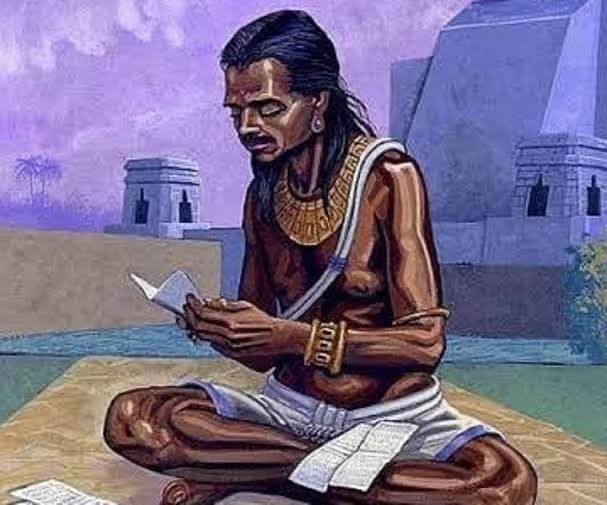
    Brahmagupta reading outdoors

    @sur_27Brahmagupta was a renowned Indian mathematician and astronomer active in the 7th century CE, with life dates approximately spanning 598, 668 CE. His pioneering contributions across number theory, algebra, geometry, and trigonometry left an enduring mark on the field. He stands out as one of the first scholars to treat ZERO as a full-fledged number rather than a mere placeholder. This involved clearly defining its properties and establishing specific rules for arithmetic operations involving it. For instance, he stated that dividing any number by zero yields infinity. He also noted that zero has no multiplicative inverse, meaning it lacks a reciprocal. In arithmetic, Brahmagupta described innovative multiplication techniques. One such method was the 'gomutrika' approach, a zigzag technique resembling the modern lattice or grid multiplication system. He further provided efficient algorithms for computing square roots and cube roots. His work included methods for solving both linear equations and quadratic equations. Brahmagupta made notable advances in solving indeterminate (Diophantine) equations. He offered a recursive solution to Pell's equation, specifically for the form x² − n y² = 1 where n is a non-square positive integer. He also found integer solutions to linear equations like ax + by = c. His geometric and trigonometric contributions are equally significant. These include Brahmagupta's formula for calculating the area of a cyclic quadrilateral. He developed Brahmagupta's identity, which relates to the product of sums of two squares. Another contribution is a theorem concerning the orthocenter in cyclic quadrilaterals. He supplied approximate values for π and developed sine tables along with related trigonometric approximations. Two major texts preserve his ideas. The Brāhmasphuṭasiddhānta, translated as 'The Correctly Established Doctrine of Brahma,' was authored in 628 CE as a comprehensive theoretical text blending astronomy and mathematics. The Khaṇḍakhādyaka, or 'The Edible Bite,' followed in 665 CE as a more practical astronomical handbook. These works preserved and expanded original ideas that profoundly influenced subsequent mathematicians in India, the Islamic world, and eventually Europe. Widely regarded as one of ancient India's greatest mathematical minds, his innovations particularly around zero, negative numbers, algebra, and cyclic quadrilaterals continue to underpin key elements of modern mathematics #Science

    View original post

    Brahmagupta reading outdoors

    Photo by @sur_27· Aug 26, 2026· Science

    About this photo

    The focus is a man reading a book. He is sitting cross-legged outdoors with ancient structures in the background. The mood is scholarly and serene, with a painterly, illustrative style. The man wears a large gold necklace and a bracelet with the numbers "1000" inscribed on it.

    See all Science photos

    ?

    No comments yet. Be the first!

    More Science photos

    See all Science photos
    Daily multivitamin and brain aging study4Daily multivitamin and brain aging studyM87* black hole retest confirms EinsteinM87* black hole retest confirms Einsteinhuman nervous system infographichuman nervous system infographicEuler's IdentityEuler's IdentityAlbert Einstein imagination quoteAlbert Einstein imagination quotePlanet X2 beyond NeptunePlanet X2 beyond NeptuneDark matter wormhole in the Milky WayDark matter wormhole in the Milky WayHuman brain and cosmos quantum linkHuman brain and cosmos quantum linkOctopus editing its own DNA2Octopus editing its own DNASaturn-sized rogue planet discovered2Saturn-sized rogue planet discoveredBlack holes as tunnels theory2Black holes as tunnels theoryBrazil coral rescue and global heat recordBrazil coral rescue and global heat recordGiant wood moth found in QueenslandGiant wood moth found in QueenslandNASA strange objects on Mars4NASA strange objects on MarsGermany fusion reactor grid by 2030s2Germany fusion reactor grid by 2030sMars rover photo of Earth Jupiter VenusMars rover photo of Earth Jupiter VenusFibonacci Day 11/23Fibonacci Day 11/23Elon Musk on the technological Singularity2Elon Musk on the technological Singularity