
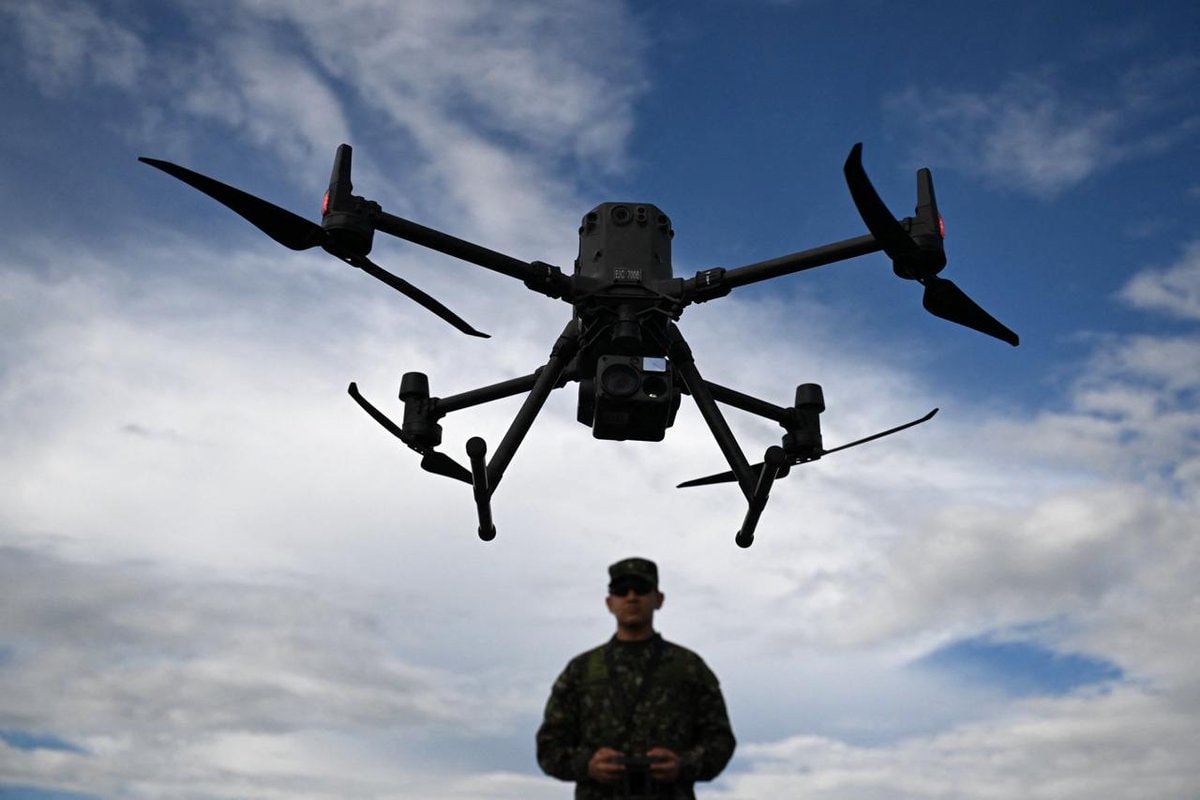

@jolyonA Financial Times investigation lays out a pattern that’s reshaping security in the Americas: Colombian and Mexican cartels are exploiting Ukraine’s foreign fighter legion for frontline FPV drone training. Members of the Sinaloa cartel and CJNG, along with ex-FARC fighters, have posed as volunteers to learn jamming resistance, explosive payload delivery, and encrypted communications. A Kyiv security official put it bluntly: “Some come to learn how to kill with a $400 drone, then sell that knowledge to whoever pays the highest price.” Colombia is already feeling the impact. The country recorded 264 hostile drone attacks in a single year, including one that hit a military base and another that struck a radar station near Ecuador, with soldiers killed in both. While the army’s jamming stops 96% of those strikes, cartels are now chasing fiber-optic drones, a technology Ukraine pioneered to defeat jamming, since a physical cable can’t be disrupted like a radio signal. Mexico’s groups aren’t waiting. Sinaloa has displayed fiber-optic FPVs on camera, and CJNG has created specialized units with patches that read “Drone Operators.” Ukraine’s military acknowledges that it catches and removes people with organized crime ties when detected, but the foreign legion’s vetting of thousands of volunteers was never built to catch professional liars with forged papers. Colombia’s response is a $1.6 billion detection grid and stricter drone import rules. That’s a defense, not a fix, for cartels that now train on the same battlefield inventing the tactics in real time. The war in Ukraine has become a school for the next generation of cartel violence, and the pipeline shows no sign of closing.
View original post